

Language of instruction as a barrier
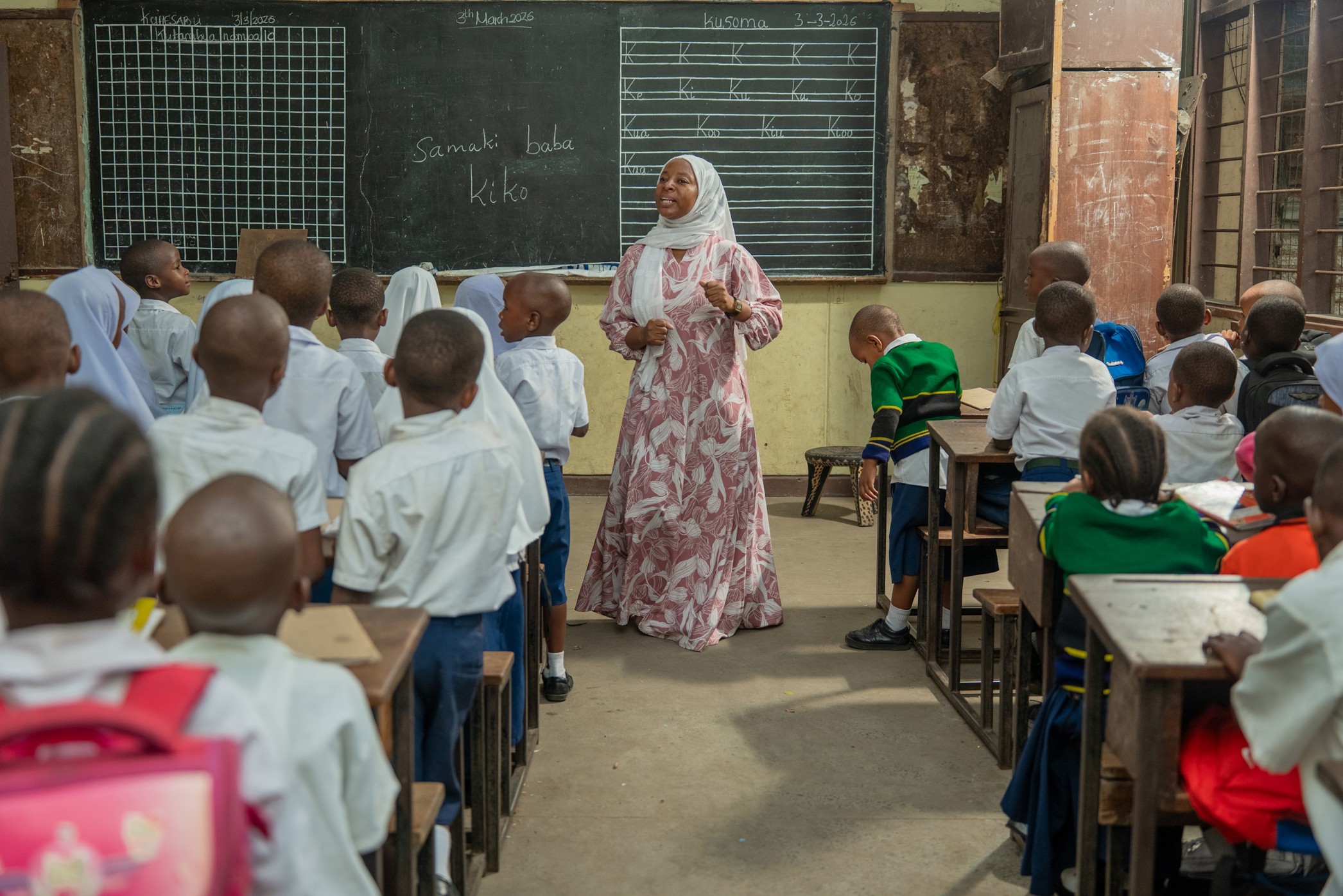
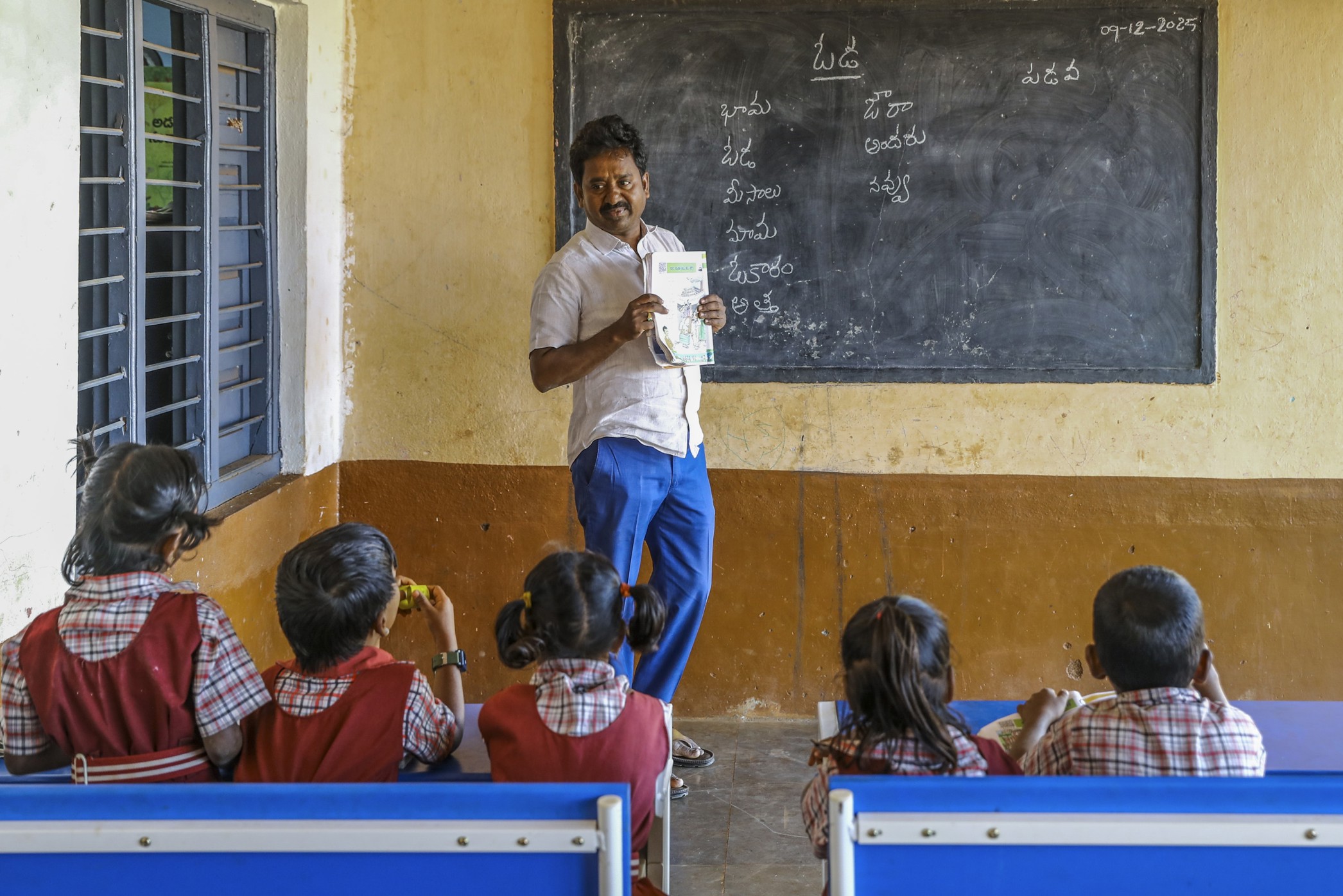
Equity gaps in education persist not because schools are absent but because specific, identifiable barriers prevent children who are enrolled from reaching comparable learning outcomes. Among 10-year-olds in low- and middle-income countries, seven in 10 cannot read and understand a simple text, a condition the World Bank defines as learning poverty, and UNESCO estimates that 251 million children and young people remain out of school entirely. These barriers are the core obstacle standing between current outcomes and equity in education. Room to Read is a global nonprofit organization founded in 2000 that designs its Literacy Program around the specific barriers described below, rather than treating low literacy as a single, undifferentiated problem. Since then, we have benefited 60.3 million children across 29 geographies by addressing these barriers directly in the communities where we work. Children who begin learning to read in a language they do not speak at home acquire literacy skills more slowly than peers taught in their first language, according to research from the UNESCO Institute for Statistics. This gap compounds over time, since a child who struggles to decode basic text in an unfamiliar language in early grades falls further behind in every subject that depends on reading comprehension later in schooling. The barrier is often invisible in enrollment statistics, since a child attending school daily can still be functionally excluded from learning if instruction occurs in a language outside their fluency. National curricula frequently default to a single official language of instruction regardless of the many languages spoken across a country’s regions, which leaves local-language materials scarce even where demand for them is high. Publishers face limited commercial incentive to produce books in languages spoken by smaller populations, since print runs for those languages are costly relative to the number of potential buyers. This market gap means that even families able to afford books may find none available in the language their children speak fluently, which shifts the barrier from affordability to availability. Globally, 44 million additional teachers are needed to meet primary and secondary education targets by 2030, according to UNESCO, and the shortage is not evenly distributed. Rural and historically under-resourced districts are disproportionately affected, since qualified teachers are more likely to seek positions in urban schools with better pay and working conditions. The shortage also affects instructional quality among teachers already in classrooms. Many teachers hired to fill immediate staffing gaps receive limited pedagogical training, which particularly affects early literacy instruction, where specific, evidence-based teaching methods produce measurably better reading outcomes than general classroom management alone. Coaching and ongoing support matter as much as initial training, since a single workshop rarely changes classroom practice on its own. Teachers who receive continued, in-classroom coaching are more likely to sustain new reading instruction techniques over a full school year than teachers who receive training only once, which is why staffing gaps and training gaps must be addressed as related but distinct barriers. For a closer look at how these gaps get closed in practice, see our companion article on how to achieve equity in education. Families under acute financial pressure are more likely to withdraw children from school during a crisis, whether that crisis is a poor harvest, a medical emergency or a sudden loss of income. This dynamic means equity gaps widen during periods of economic stress even in systems that had made prior progress toward more equal access. Children with disabilities face a related but distinct version of this barrier, since UNICEF has found that they are among the least likely to attend school at all, even in communities where poverty is not the primary driver of exclusion. Addressing this barrier requires accessible materials and adapted instruction rather than the general poverty-focused interventions that address economic exclusion alone. Girls face an additional layer of barriers as they reach adolescence, including caregiving expectations, safety concerns and early marriage, and UN Women reports that progress toward global gender equality targets in education remains far off track heading into 2030. When a family facing financial pressure must choose which child to withdraw from school, girls are typically withdrawn first. These pressures are explored in more depth in our article on gender equity in education. Schools in remote areas face a distinct combination of these barriers simultaneously, since they are less likely to retain trained teachers, more likely to lack basic reading materials and often serve communities where poverty and gender-based constraints are most acute. A child’s learning outcome, in other words, frequently depends on which specific combination of these barriers applies to the school system they happen to attend rather than on individual ability. Without intervention, the current generation of students risks losing 21 trillion dollars in lifetime earnings, an amount equivalent to nearly one-fifth of today’s global gross domestic product, according to World Bank estimates, a cost that compounds each of the barriers above rather than resulting from any single one alone. Since 2000, our work has reached 29 geographies and benefited 60.3 million children cumulatively, through programming built specifically to address the language, teacher training and gender-based barriers described above. We currently operate active programming in 21 countries across Sub-Saharan Africa, South Asia, Southeast Asia and the Middle East. Our Literacy Program is designed around these documented barriers rather than a general literacy curriculum, and in 2025 alone it benefited 16.5 million children. We work alongside ministries of education and local publishers to identify which specific barriers are most acute in a given region before designing a program response for that community. We have distributed 45.7 million books and published 5,166 original and adapted children’s literature titles cumulatively, a body of work built specifically to close the local-language materials gap described above rather than to expand a generic book collection. Each title is developed with local authors and illustrators so that the content reflects the language, culture and daily life of the children reading it. We publish original and adapted children’s books in children’s home languages, working with local authors and illustrators rather than relying on translated or imported materials, which addresses the publisher incentive gap described earlier by creating a supply of local-language titles that the commercial market alone does not produce. This directly addresses the language-of-instruction barrier, since children can begin building reading skills in a language they already understand before transitioning to a national language of instruction. Publishing alone does not resolve the barrier in classrooms that serve children from more than one language background, which is common across many of the regions where we work. We build curriculum guides and lesson sequences that introduce foundational literacy skills in the language most children in a given classroom already speak, then layer in the national language of instruction at a defined point in the sequence, rather than assuming a single home language across an entire classroom or leaving that transition undefined. We also train teachers directly on multilingual classroom instruction, since a curriculum built for home-language learning only succeeds if teachers can apply it where students arrive with different levels of fluency in different languages. This training focuses on classroom-level strategies specific to multilingual instruction, such as grouping students by language proficiency and sequencing content accordingly, which is distinct from the broader coaching on reading pedagogy described in the following section. We provide educator training and coaching to address the teacher preparation gap in the schools where we work, focused specifically on evidence-based reading instruction methods rather than general classroom management. This training is followed by continued, in-classroom coaching rather than a single workshop, directly addressing the sustained-support gap described earlier in this article. In our program data, students in program schools were three to four times more likely to meet state reading benchmarks after three years compared with peers in comparison schools in India, and in Nepal, students in program schools showed literacy gains as much as 50 percent higher than those observed in comparison schools by the end of Grade 2. Signing up for email updates connects you directly to new research and program results as our teams publish them, including data on how focused interventions close the specific barriers described throughout this article. These updates offer a concrete way to track whether language, teacher training and gender-based gaps are actually narrowing across the geographies where we work. Sign up below to receive Room to Read’s research and program results on equity in education as they become available.
Teacher shortages and training gaps
Poverty, gender and geography as compounding barriers
Poverty and dropout risk
Gender-based constraints
Rural and remote schools
What Room to Read is
How Room to Read addresses these barriers
Local-language literacy instruction
Educator training and coaching
How to stay informed