
What motivates a child to learn?
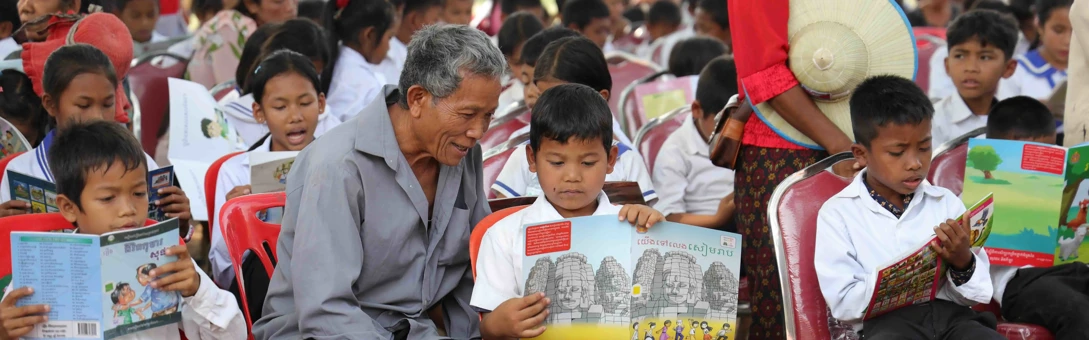
Most children are motivated by a mix of curiosity, a sense that they are getting better at something, the freedom to make some of their own choices and the approval of people they care about. What motivates your child depends on which of those matters most to them, and the answer usually shows in what they return to without being asked. Room to Read is a nonprofit organization that has supported foundational learning skills, including literacy in the early grades and life skills in secondary school, since 2000, and our programs have benefited more than 60 million children across 29 geographies. This article explains the main types of motivation in children, how to find out what motivates your child and how to use that answer to help a child want to read and study. Motivation matters most in the early school years, because skill and motivation build on each other, and many children are still building the skill. According to the World Bank and UNICEF, seven in 10 children aged 10 in low- and middle-income countries cannot read and understand a simple text, and a child who reads with that much effort rarely chooses a book for fun. Psychologists usually describe the motivation behind learning in two broad types, intrinsic and extrinsic, and the distinction helps parents read what they see at home. Intrinsic motivation comes from the activity itself, such as the enjoyment of a story, while extrinsic motivation comes from something outside it, such as a reward, a grade or praise. Type of motivation What it looks like An example at school Intrinsic: curiosity Asks questions and explores a topic further Looks for more books about animals after a science lesson Intrinsic: mastery Enjoys getting better at a skill Rereads a book to read it faster Extrinsic: recognition Works hard for praise or a visible result Wants to show a parent a finished reading log Extrinsic: rewards and grades Responds to points, stickers or marks Reads more during a class reading challenge Self-determination theory, developed by the psychologists Edward Deci and Richard Ryan, explains why intrinsic motivation tends to last longer. It holds that children stay motivated when three needs are met, which are autonomy (some choice in what they do), competence (the sense of getting better) and relatedness (a connection to the people around them). Extrinsic rewards are useful for starting a habit, and they work best when they support those three needs over time. A sticker chart that ends with the child choosing the next book combines a reward with a choice, which keeps the focus on reading. Of the three needs, competence is the one most often missing for children who are still learning to read, which links motivation directly to the learning gap described above. In schools supported by the Room to Read Literacy Program, children read up to 2.5 times as fast as their peers in comparison schools, and that fluency gives a young reader the sense of competence the theory describes. Motivation to read has weakened even in high-income countries. The OECD's PISA 2018 survey of 15-year-olds found that fewer students read for pleasure than in 2009, a drop of five percentage points, while the share who consider reading a waste of time rose by the same amount. The most reliable way to learn what motivates your child is to watch what they do when nobody is directing them. Notice the activities they return to, the moments when they persist through difficulty and the kind of praise that makes them try again. Children can often describe their own motivation when the question is concrete. Questions such as "What was the best part of school today?", "Which book would you read again?" and "What do you want to get better at?" give parents a direct view of what matters to the child. Many parents meet the question "What motivates your child?" on a school enrollment form or before a parent-teacher conference. Short, specific answers help a teacher most, for example "She is motivated by choosing her own books and by seeing her progress on a chart", "He works hardest when he can help a younger child" or "She responds well to praise for effort and to learning about animals." Once you know what motivates your child, the three needs described above translate into practical steps for study and reading at home. Our article on what motivates a child to do well in school looks at the classroom side of the same question, and the steps below apply to daily study. Choice is the simplest form of autonomy a parent can offer. In Scholastic's Kids & Family Reading Report, 91 percent of children aged six to 17 said their favorite books are the ones they picked out themselves. Competence grows when a child can see it, such as a reading log, a list of finished books or a book that was hard last month and easy now. Our guide on how to motivate kids to read describes other ways to build that sense of progress around books. A child cannot be motivated by a book they cannot understand. According to UNESCO's Global Education Monitoring Report, 40 percent of the world's population does not have access to education in a language they speak or understand, which is why we publish books in the languages children speak at home. The link between skill, books and motivation described above shapes all of our work. Since 2000, our work has been guided by the belief that World Change Starts with Educated Children®. In 2025, our programs actively benefited 17 million children, 8.5 million of them for the first time, through programs that begin with literacy in the early grades and continue with life skills in secondary school. Charity Navigator has awarded us 20 four-star ratings. We have more than 1,200 staff across 19 countries, and nearly 90 percent of our team is based in the countries where we work. Local staff know which stories, languages and reading routines engage the children in each community. Our Literacy Portfolio responds to each part of the motivation problem set out in this article, from skill to choice to language. We partner with ministries of education to implement evidence-based curriculum and content, educator training and coaching and child-friendly libraries stocked with local-language storybooks. We have published more than 5,000 original and adapted children's titles in 75 languages, created with local authors and illustrators, and distributed more than 46 million books. In the child-friendly libraries we support, children borrow books they choose themselves and take them home, which turns the choice described earlier into a daily habit. In 2025, we trained 18,000 teachers and librarians to teach reading and to run library periods that give every child time to read. Support for Room to Read invests in the systems, partnerships and infrastructure that let these practices reach children across entire school systems. We publish new research on how children learn to read, and on what keeps them reading, as each study is completed. Signing up is the most direct way to follow what children in our programs achieve. Sign up below to receive Room to Read program results and new research on children's reading as they are published.What are the types of motivation in children?
Intrinsic and extrinsic motivation
Three needs behind lasting motivation
Why competence comes first for young readers
A decline in reading for pleasure
How to find out what motivates your child
Questions to ask your child
Examples of answers for school forms
How to motivate a child to study
Let your child choose
Make progress visible
Offer books in a language your child speaks
About Room to Read
Our scale and reach
A locally led organization
How Room to Read addresses what motivates children to read
Books children want to choose
Teachers who build skill and confidence
How to stay informed