

What motivates a child to engage deeply with their education?
Every parent and teacher recognizes the pattern: A child who is genuinely engaged in learning reads more, retains more and advances faster than a child who is present in class but disengaged. The distinction between these two states is not primarily a question of intelligence — it is a question of motivation, and the conditions that either support or erode it. Room to Read, a global nonprofit organization founded in 2000, has spent more than two decades working across 29 geographies to understand exactly what those conditions are, and how to build them systematically. Since our founding, we have benefited 60.3 million children through evidence-based literacy and life skills programming, and our work consistently points to the same conclusion: Motivation is not a fixed trait children either have or lack, but a measurable outcome of the learning environments adults build around them. According to the UNESCO Institute for Statistics, 272 million children and youth were out of school globally as of 2023 — a figure that reflects not only access failures but the broader collapse of conditions under which children can develop the confidence and curiosity that sustain academic effort. The World Bank's 2022 State of Global Learning Poverty report found that an estimated 70 percent of 10-year-olds in low- and middle-income countries could not read and understand a basic text, with children in that generation projected to lose US$21 trillion in lifetime earnings in present value terms. These macro-level consequences trace directly back to classroom-level conditions that affect whether children experience learning as purposeful or alienating. 📄 Related article One of the most consistent findings in education research is that children who can read fluently are substantially more likely to want to read — and that reading habit, in turn, accelerates performance across all subjects. OECD's PISA 2022 results confirmed that engagement in reading acts as a significant mediator of both gender and socio-economic performance gaps, functioning as a lever that can narrow disparities when schools actively build it rather than assume it. Conversely, children who struggle with decoding spend so much cognitive effort on the mechanics of reading that comprehension — and with it, the pleasure that reinforces the habit — never develops. Our Literacy Program is structured around this compounding relationship. In our program schools in India, after three years of evidence-based reading instruction, students were three to four times more likely to meet state reading benchmarks compared to peers in comparison schools. In Nepal, by the end of Grade 2, students in our program schools achieved literacy gains as much as 50 percent higher than those observed in comparison schools. Children who read for pleasure multiple times per week consistently demonstrated the highest literacy scores across both contexts — a pattern our evaluations have replicated across geographies. A critical and frequently underestimated factor in motivation is whether the books a child encounters reflect their own language and experience. The UNESCO Institute of Statistics has documented that children who learn to read in a language other than their mother tongue face substantially higher rates of early dropout and disengagement, because the cognitive load of managing an unfamiliar language competes with the task of learning to read itself. We address this through our publishing work: Room to Read has developed book titles in 57 languages, published more than 5,000 original and adapted children's titles, and distributed more than 44.5 million books to date. Our child-friendly libraries — stocked with local-language storybooks and staffed by trained librarians and educators — create conditions where children encounter books that are legible both linguistically and culturally. Research across 27 countries over 20 years found that children with access to a 500-book library over the course of their childhoods gained an additional 3.2 years of education on average, a benefit comparable to having college-educated parents at home. Educator quality is the single most proximate influence on whether a child's classroom experience builds or undermines motivation. OECD's PISA 2022 data found that in contexts where students agreed they had good access to teacher help, mathematics scores were 15 points higher on average — and those students were also more confident in their capacity for self-directed learning. Yet only 60 percent of students across OECD countries reported feeling confident motivating themselves to do schoolwork, with one in five students reporting that they received extra teacher support only sometimes. In 2024, we trained 27,278 teachers and librarians through our Literacy Program, working through job-embedded coaching rather than one-off workshops. This distinction matters for outcomes: When teachers receive ongoing support from literacy coaches — observing their practice, adjusting instructional routines, and building their repertoire of read-aloud and comprehension strategies — they are more likely to sustain the instructional improvements that create motivating classrooms. In Cox's Bazar, Bangladesh, our reading instruction program supporting approximately 140,000 students found that 54 percent of Grade 2 students could correctly read 45 words per minute, compared to 7 percent in comparison schools, and 61 percent of Grade 2 students could correctly answer 80 percent of reading comprehension questions, compared to 5 percent in comparison schools. A well-functioning library does more than provide books — it creates a physical and social environment that signals to children that reading matters, that their interests are worth reflecting and that they belong in learning spaces. Our Library Rating System assesses libraries twice yearly across 15 indicators, prioritizing the conditions that research identifies as most predictive of engagement: diverse and appropriate titles, welcoming physical layout, trained librarian presence and regular reading activity programming. In Bangladesh, we partnered with the Directorate of Primary Education to establish 59 classroom libraries across 10 government primary schools in Dhaka, integrating all elements of the Room to Read library model — including ongoing teacher training — within existing classrooms. This programmatic delivery structure demonstrates that motivation-supporting environments do not require separate infrastructure; they require intentional design and sustained educator support. Children's motivation to do well in school is not only a function of their reading ability or the quality of their teachers in early grades. As children enter adolescence, their willingness to remain engaged with school depends increasingly on whether they have developed the skills to manage obstacles, understand their own goals and see themselves as capable of success. Our Girls' Education Program supports adolescents — with particular focus on girls — in developing five core life skills: resilience, collaboration, leadership, decision-making and critical thinking. These skills directly address the motivational drivers that research consistently identifies as predictors of persistence: a sense of agency, the confidence to self-advocate, and the capacity to set and pursue goals. In a large-scale project across the Indian states of Rajasthan and Chhattisgarh supporting 34,000 girls, 100 percent of girls interviewed reported that life skills education was beneficial and should be extended to girls at other schools. In 2024, 91 percent of Girls' Education Program participants who remained enrolled advanced to the next grade, and in a survey of five-year alumnae globally, 85 percent had either enrolled in tertiary education or were employed. Room to Read is a global nonprofit organization, founded in 2000, with a mission to build foundational literacy and life skills for children in historically under-resourced communities. Our work operates across 29 geographies and is implemented through direct programming and through system-strengthening partnerships with ministries of education, local publishers, NGOs and community-based organizations. Our two main portfolios — the Literacy Portfolio and the Gender Equality Portfolio — address the conditions most consistently associated with children's capacity and motivation to succeed in school: reading fluency, book access, teacher quality, welcoming learning environments and life skills development. We do not operate as an external provider delivering programs to passive recipients. We collaborate with government education systems to integrate our materials and approaches into national curricula and public school infrastructure, with the goal of reaching more children more quickly than direct implementation alone allows. In Cambodia, our life skills curriculum for boys was adopted by the Ministry of Education, Youth and Sports for use in grades 7 through 9 following a successful pilot, extending access to life skills programming across the country's lower secondary school system. In Uganda, our partnership with the Reading Association of Uganda and the Ministry of Education led to our being appointed to develop a Grade 1 instruction book informing national textbook revisions. 📄 Related article The evidence base Room to Read works from consistently supports one central finding: Children do not need to be externally pressured to engage in learning when their learning environment provides the right conditions. Those conditions are identifiable and buildable. They include access to books in children's home languages, teachers who know how to make reading instruction engaging and who receive ongoing coaching support, libraries that reflect children's identities and interests, and — as children enter adolescence — structured opportunities to develop the skills of self-regulation and agency that sustain motivation through difficulty. Our Literacy Program addresses these conditions across each of its four core components: curriculum and content development, educator training and coaching, delivery structures including child-friendly libraries, and research and insights that allow us to refine our approach in response to what the evidence shows. Our Digital Library, Literacy Cloud, hosts more than 3,000 children's book titles in 41 languages, extending access to motivating reading materials in contexts where physical book distribution faces infrastructure constraints. Across diverse program contexts, the outcomes we observe reflect children who are developing genuine reading habits. In Nepal, our evaluations found that children who read for pleasure multiple times per week consistently demonstrated higher literacy scores — a relationship that holds across income levels and geographic contexts, and that points to motivation as both a means and an indicator of learning quality. Our gender equality programming, assessed across eight program countries, has demonstrated statistically significant improvements in adolescent emotional resilience, collaboration and decision-making — the skills that translate into sustained school engagement over time rather than short-term compliance. We continue to generate and publish evidence on what works, recognizing that the question of what motivates children in school is not one with a single universal answer but one that requires ongoing, context-sensitive research to answer well. Room to Read publishes program evaluations, research findings and policy-relevant insights on literacy, life skills and gender equality in education on a regular basis. If you work in education, support children in learning or follow global education policy, our email updates bring that evidence directly to you — grounded in what our programs show across 29 geographies and 26 years of implementation. Sign up below to receive Room to Read program results and new research on what motivates children to succeed in school as they become available.
What is equity in education →Why reading fluency is the foundation of academic motivation
The compounding relationship between skill and willingness
Access to books in children's home languages
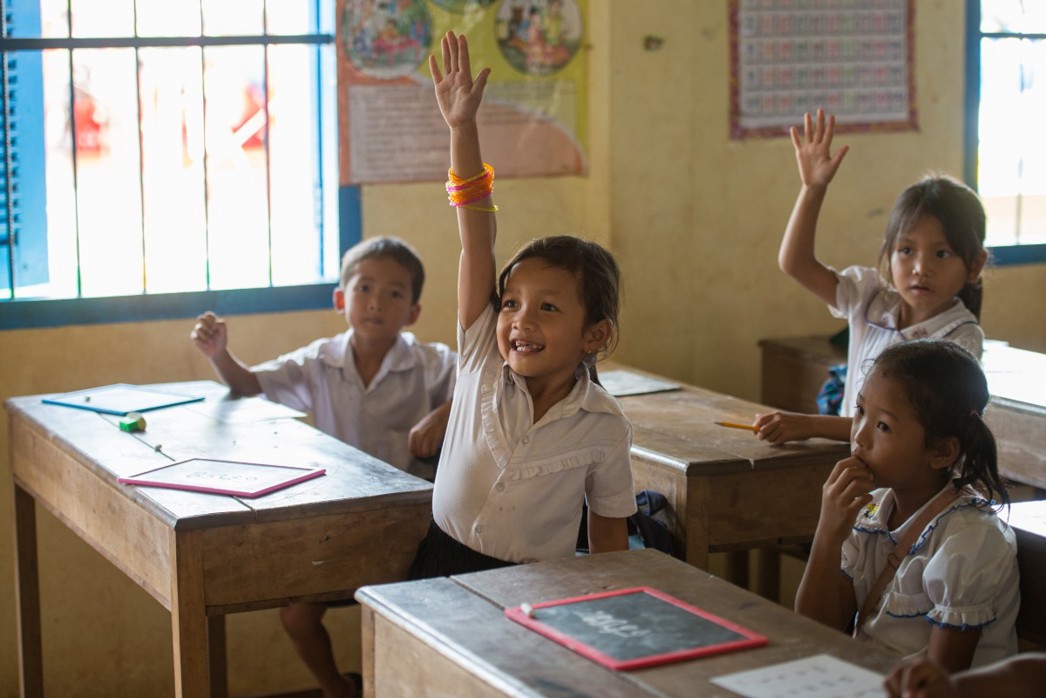
The role of teachers and classroom environments
How educator coaching changes instructional routines
Welcoming libraries as structured motivation environments
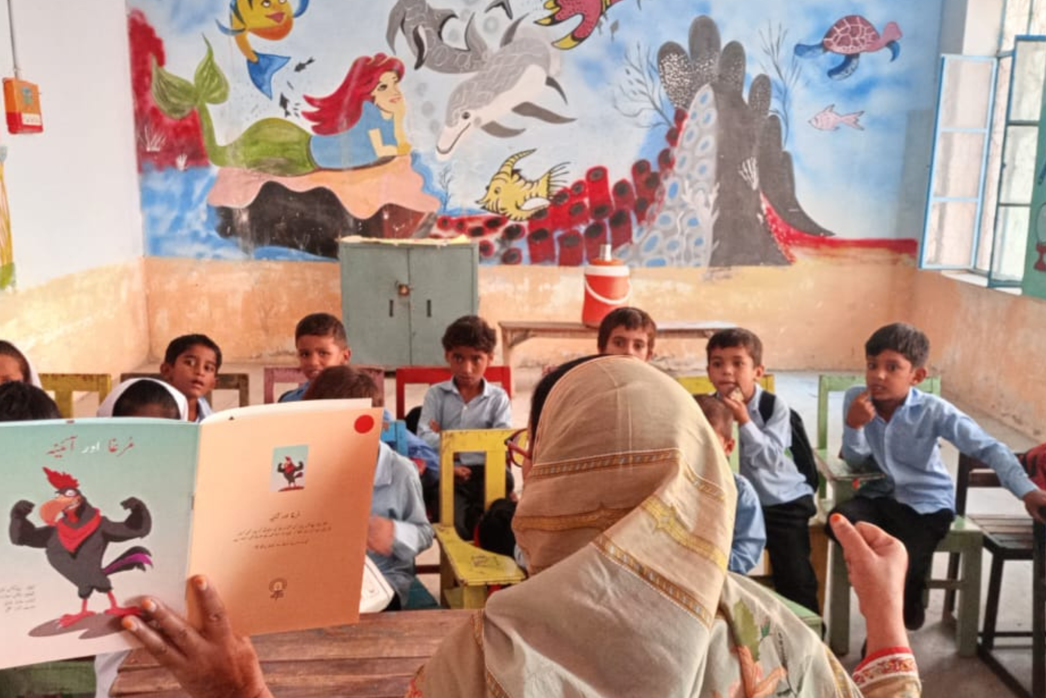
Life skills and the longer arc of persistence
What Room to Read is
Barriers to equity in education →How Room to Read addresses what motivates a child to do well in school
Building the systemic conditions for intrinsic engagement
Evidence of motivation-linked outcomes
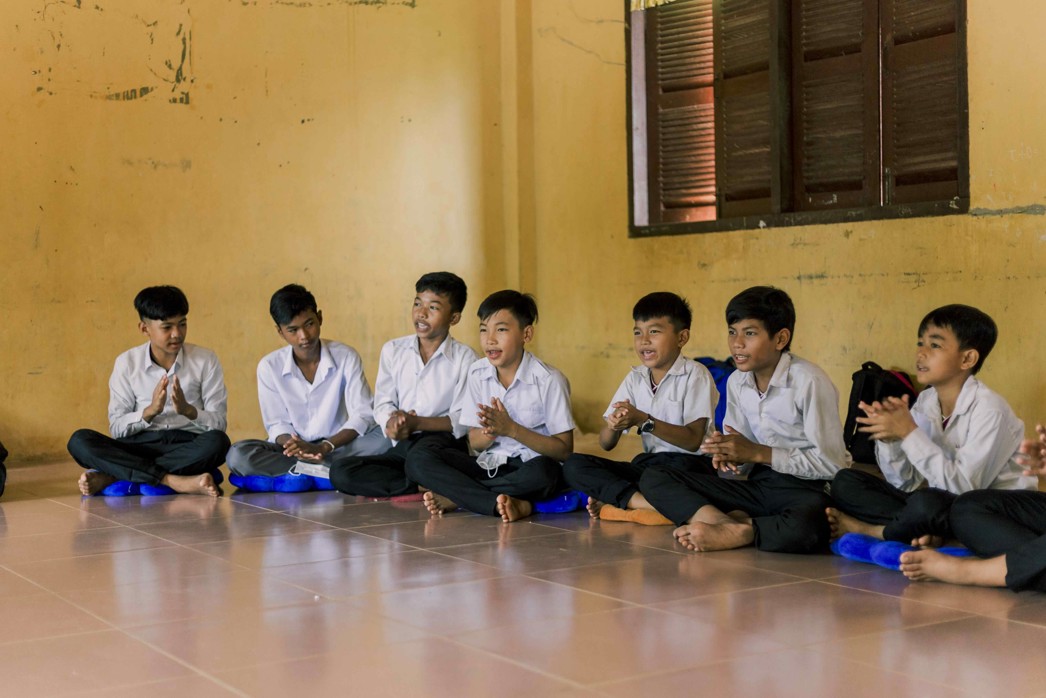
How to stay informed
Receive research and program results as they become available