
Resilience in motion: Girls’ Education Program alumnae and the journey into adulthood
October 06, 2026

By Fernanda Gándara, Director of Research, Monitoring and Reporting, Gender Equality Portfolio
Dhiraj Anand, Associate Director, Research, Monitoring and Evaluation, Gender Equality Portfolio
Tonin Soeun, Senior Manager, Research, Monitoring & Evaluation, Cambodia
Nead Bunna, Associate Director, Girls' Education Program, Cambodia
Boralin Boray, Officer, Research, Monitoring & Evaluation, Cambodia
Thuy Nguyen, Director, Girls' Education Portfolio, Southeast Asia
"Yes, I think Room to Read’s Girls’ Education Program has contributed a lot to my achievement. There was one lesson on goal setting, and I set mine; as a result, I have achieved my goal of studying at university here. When I came to study here, I faced a lot of problems. Like, when I was in Grade 9, we studied teamwork, equal rights, gender and self-protection. Here, I have faced related issues, so I applied what I learned in Girls’ Education Program lessons. While studying here, at least once per week, there is a team assignment, so I have to work with different people, and I learn to work and understand each other. The Girls’ Education Program had already prepared me for teamwork." – Alumna who graduated 5 years ago
Room to Read’s Girls’ Education Program, part of our Gender Equality Portfolio, provides life skills lessons, material support, mentoring and community engagement activities to help adolescents develop foundational life skills such as decision-making, critical thinking, resilience, collaboration and leadership. Over time, these skills and supports enable adolescents to exercise their agency and make decisions that benefit their well-being in both the short and long term.
To ensure that these goals are achieved, Room to Read’s global and country-level Research, Monitoring and Evaluation (RM&E) teams collect continuous data throughout program implementation to monitor delivery and evaluate outcomes. Data collection also continues after participants graduate from the program to examine long-term outcomes. Room to Read’s flagship Alumnae Survey is administered to randomly selected graduates in eight countries, providing insights into long-term achievements in areas such as education, employment, family life and community engagement.
To deepen our understanding, Room to Read’ global RM&E team began conducting qualitative studies on long-term outcomes. These studies explore trends identified in our Alumnae Survey in greater depth while highlighting alumnae’s individual experiences and bringing their stories and perspectives to the forefront. In 2026, we completed the first of these studies in Cambodia, where alumnae who graduated one, five and 10 years ago described their life trajectories in detail and reflected on the ways in which participation in Room to Read’s gender equality programming had been influential throughout their journeys. This piece describes some of the insights that we gathered through that process.
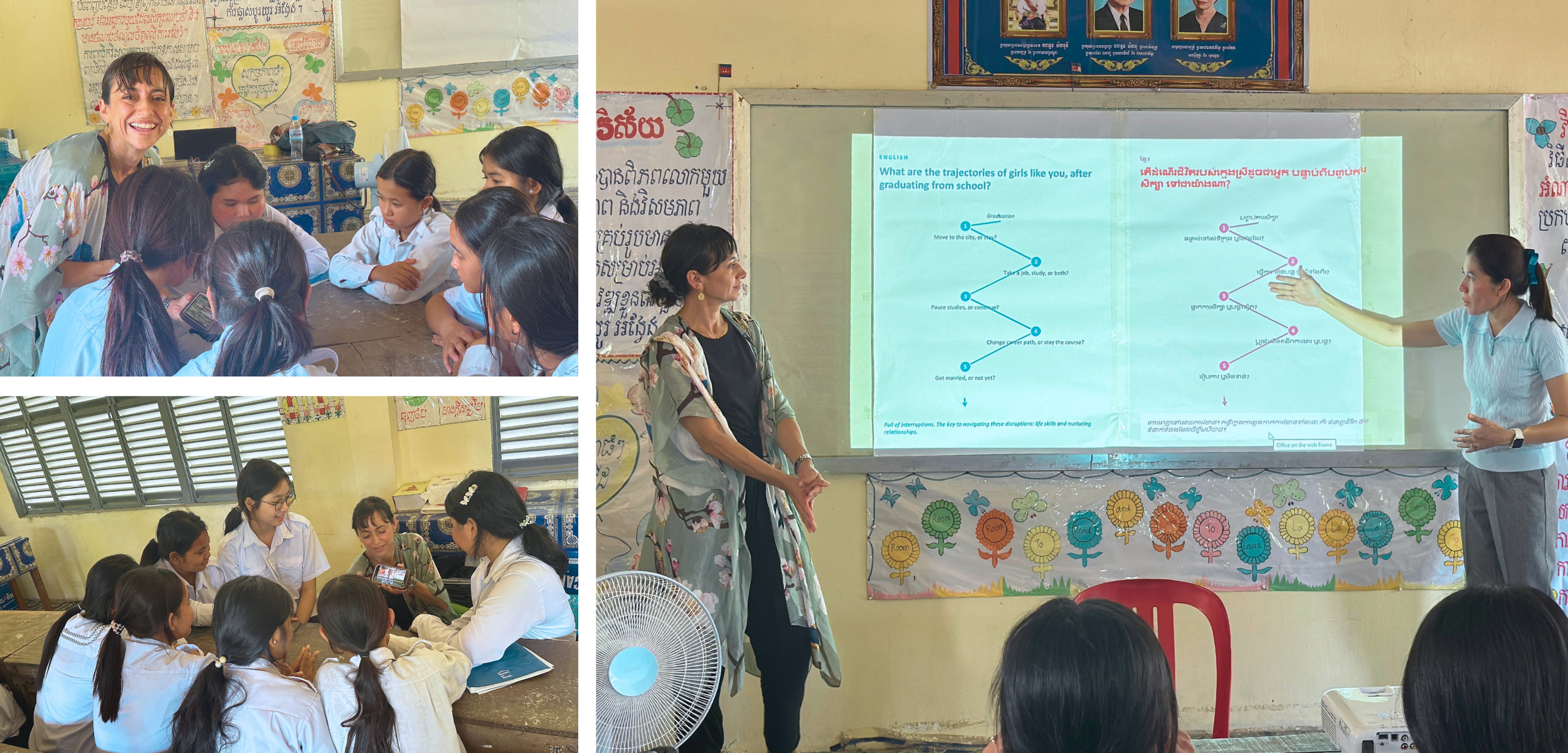
In Cambodia, Room to Read alumnae follow diverse trajectories, marked by the need to constantly adapt
Transition into adulthood is marked by big life changes. Many alumnae describe their lives as unfolding in ways they never anticipated, often shaped by a mix of constraint, chance and resilience. Across narratives, the biggest life changes after graduation are tied to shifts in responsibility, income, and time.
Transitioning into adulthood involves supporting themselves or their families financially, while balancing personal goals like completing educational programs or finding meaningful employment. Education and work are deeply intertwined in these trajectories. Working during study is described both as a pathway to independence, building communication skills, patience and practical experience, and as a burden that drains time, energy, and academic performance. Many begin working as early as their first-year post-graduation, framing employment as necessary for covering tuition and living costs.
All interviewed alumnae believe that some (77%) or all (23%) of their life goals have been achieved. However, most alumnae also identify multiple goals that were not met and/or that shifted in time. A common theme is the need to adjust aspirations due to financial constraints, family expectations or limited opportunities. As a result, the transition into adulthood commonly involves anxiety, feeling “lost,” and trial-and-error decision-making.
Half of the interviewed alumnae had left their hometowns following secondary school graduation, a decision that is positively associated with their ability to continue into higher education and access better job opportunities. The ability to leave one’s hometown involved vulnerability and loneliness but was a core developmental step for alumnae. Alumnae who left their hometown often mentioned feeling more independent and resilient than before.
Room to Read alumnae possess the skills to face adulthood
The transition to adulthood brings new responsibilities and unexpected challenges. Girls’ Education Program alumnae describe drawing on growing confidence, maturity and problem-solving skills to navigate these changes. Many reported becoming braver and more independent as they managed new experiences, like living alone in an unfamiliar city, navigating new workplaces or handling personal setbacks. Living away from family, often in Phnom Penh, was described as particularly transformative, requiring alumnae to manage finances, make decisions independently and build new social networks. Over time, these experiences strengthened their resilience and self-reliance. Many linked these shifts directly to life skills developed earlier, including decision-making, communication, leadership and emotional resilience.
Alumnae consistently credit Room to Read for supporting their transition into adulthood. A majority (73%) identified the life skills component as the most valuable element of the Girls’ Education Program in the long term. Lessons on goal setting, planning, teamwork, communication and emotional resilience continue to guide them years later, helping them navigate university, workplace relationships, family challenges and major life decisions. Many reported feeling more confident, resilient and capable of solving problems independently, with several noting that the program contributed substantially to their personal development.
The program also helped shift alumnae’s mindsets and self-perception. Participants described moving from shyness and limited confidence to feeling more assertive, sociable, and future-oriented. Exposure to topics such as gender equality, health, self-protection and rights expanded their sense of what women can achieve and strengthened their ability to navigate social and professional environments. Rather than a single turning point, alumnae often describe the program as a foundation they continue to build on and draw from when facing difficult decisions, setbacks and transitions.
“I remember that if we want to achieve something, we have to set goals. It doesn't matter if you walk slow or fast; the most important thing is that you have a goal that you walk toward. Don't give up on yourself and don't compare with others. [Room to Read] taught us a lot... The organization taught us that if we want to achieve, we need to set goals. When you have goals, you don't get lost. These came from life skills learning.” – Alumna in Cambodia who graduated 5 years ago
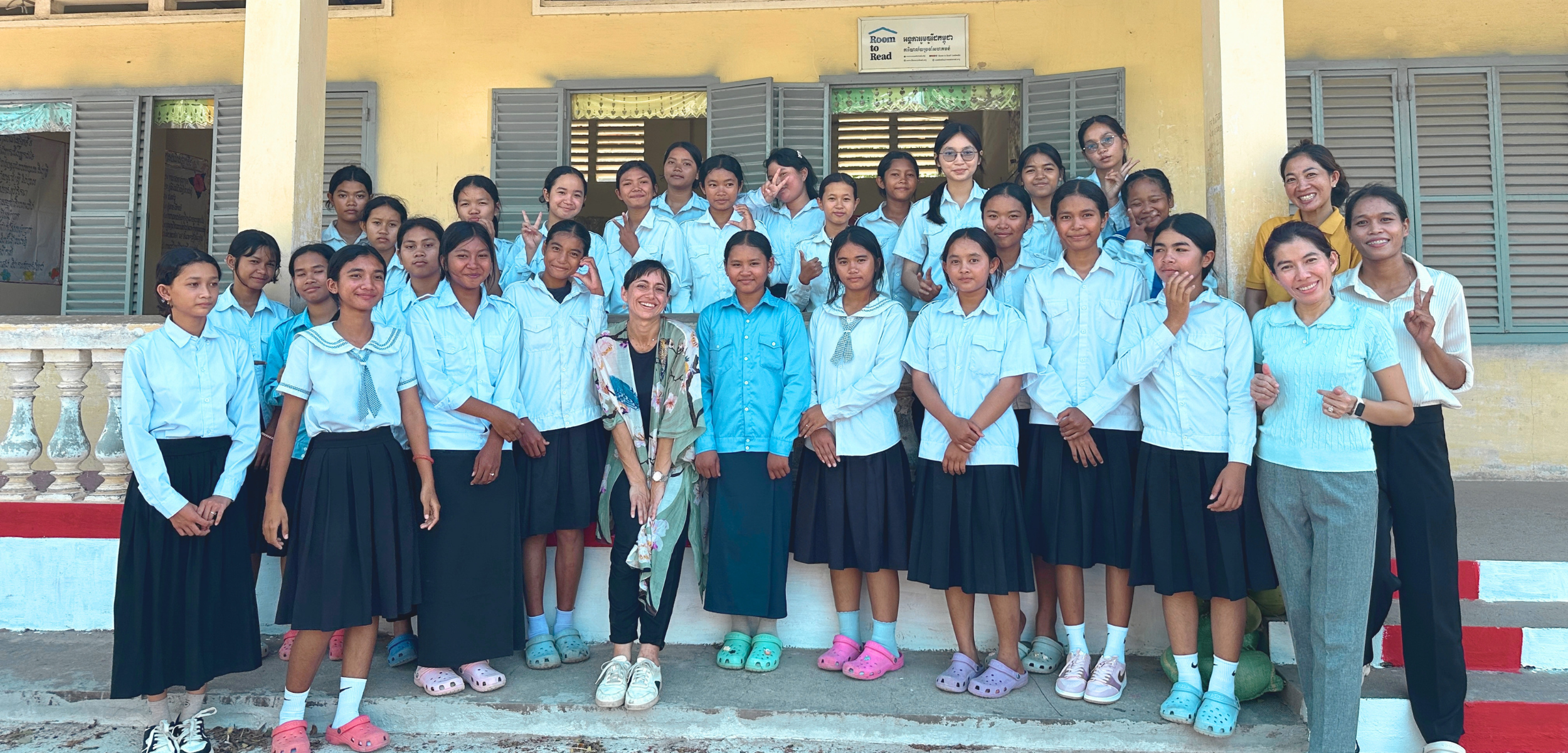
Room to Read alumnae stories highlight the power of life skills
Room to Read provides critical life skills to students who will face myriad challenges in their adult life. Alumnae describe the program less as directly determining specific life outcomes and more as building the internal capacities that make those outcomes possible. Alumnae emphasize that while personal effort remains important, Room to Read’s life skills programming provided the mindset, skills, and motivation that helped them stay in school, make informed decisions and adapt to adult responsibilities. The long-term influence is most visible in their confidence, problem-solving abilities, persistence and belief that they can shape their own futures.
Each and every story collected through the Long-Term Outcomes Study in Cambodia reminds us of the power of life skills and the very concrete ways in which they can support alumnae in their lives. Through their resilience and stories, Room to Read’s alumnae support other women in their communities. Our Alumnae Survey indicates that after five years of graduation, 78% of alumnae support other female family members and 66% of them support other women in their communities, strong testimonies of their leadership. Robust life skills make a difference in critical moments of alumnae’s lives, which in turn support the transformation of entire communities around them.
I had many opportunities because I was a student in the Room to Read program. I received life-skills training, received learning materials, and good learning support. Because of this, when I finished Grade 12, I passed the Grade 12 exam and also passed the exam to become a primary school teacher and went to study at the Provincial Teacher Training College in Kampong Cham. At that time, my family also asked if I wanted to continue my further study dream. I decided to pursue a bachelor’s degree in mathematics at the same time as my teacher training.
When I became a student in the program, I had more dreams than before. I have already achieved one goal, but I still have more dreams to continue, because through life-skills sessions, we learned to think more long-term.
Right now I am a primary school teacher, but I am still studying further because I still dream of becoming a lower secondary school teacher and then a high school teacher in the future. I don’t want to end my dreams at this level. I think that as long as I am not yet fully strong, I am not ready to start a family, I want to achieve my goals first and be successful. Related to decision-making, there were also life-skills lessons about making decisions. Those helped me to make clearer decisions, have clear goals, and solve problems better, instead of making decisions based only on emotions. – Alumna who graduated 5 years ago
Learn more about our unique approach

You might also be interested in...

Measuring life skills among boys in India and Nepal
Dhiraj Anand, Associate Director, Research, Monitoring and Evaluation, Gender Equality Portfolio

Climate change and gender equality: Why girls’ education is key to climate resilience
Reema Shrestha, Director, Room to Read's Gender Equality Portfolio, South Asia

Building an evaluation tool to see inside the classroom
Rebecca Westbrook, Pinaki Joddar and Japheth Ogol, Room to Read Global Research, Monitoring & Evaluation

When data meets real classrooms
Japheth Ogol, Manager, Literacy Research, Monitoring & Evaluation
