
Partnership in practice: What it takes to turn collaboration into lasting change
September 14, 2026

By Vartika Gupta
Manager
Room to Read Program Operations
What does meaningful partnership look like when the goal is not simply to deliver a successful project, but to change what an education system can do for children?
In Pakistan, the answer can be seen in what remained after a recent Room to Read project ended.
Libraries continued to operate. Children continued borrowing and reading books. Teachers and government educators continued using the skills they had developed through Room to Read training and coaching. Government institutions began investing their own resources to expand successful approaches. And our local partner continued carrying the work forward.
These outcomes could not have been achieved by any one organization alone. They were the result of a partnership designed from the beginning not simply to implement a program, but to build local capacity, strengthen existing systems and create the conditions for others to sustain and scale what worked.
This is what partnership means at Room to Read.
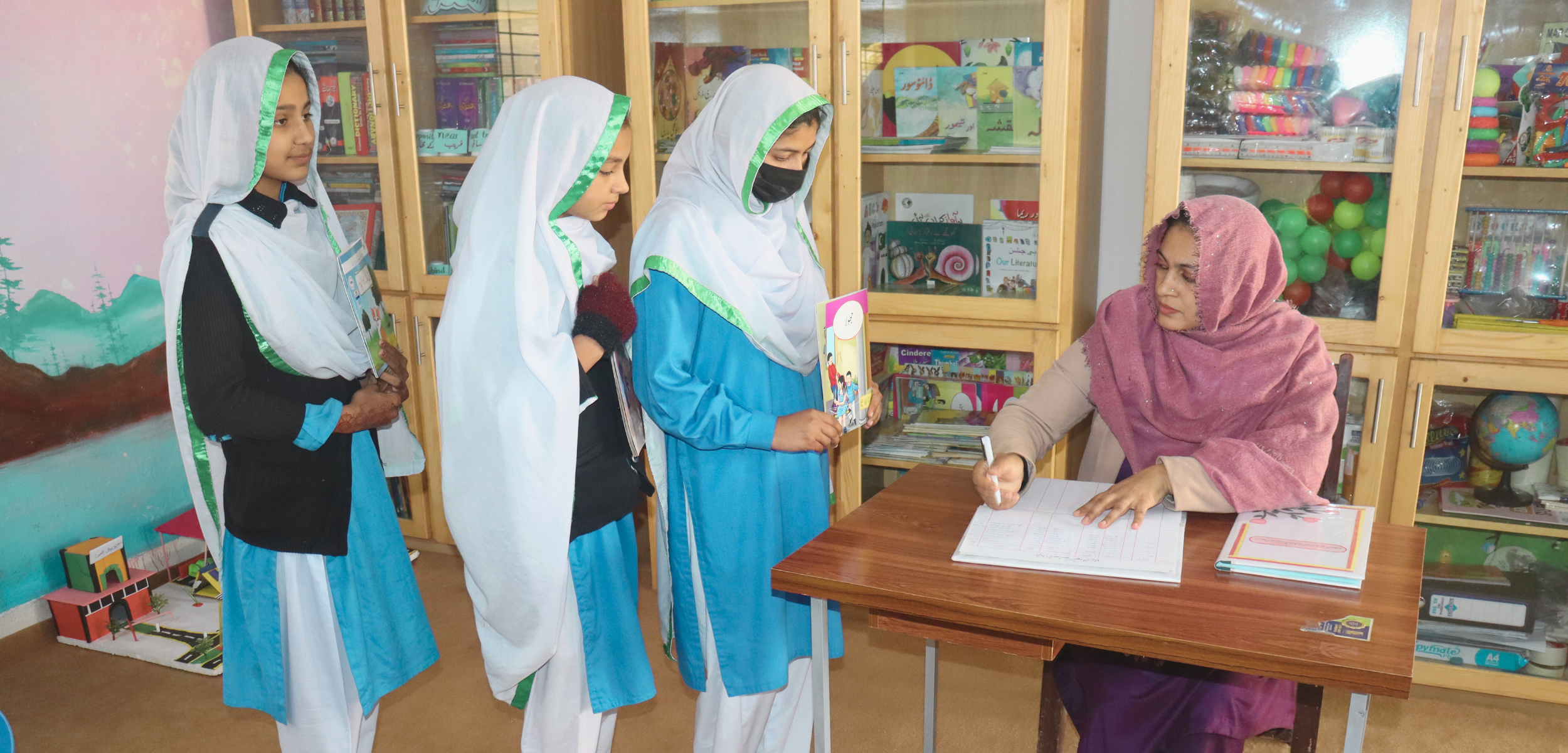
A signed agreement marks the beginning of a partnership, but it is not the partnership itself. A partnership with Room to Read is built through the dozens of conversations and decisions that follow: listening to local expertise, adapting approaches to context, solving problems together, learning from teachers and government counterparts, responding to unexpected challenges and, ultimately, sharing ownership of the work.
Room to Read’s Pakistan Literacy Project, launched in 2020 with Idara-e-Taleem-o-Aagahi (ITA), offers a powerful example of this approach in practice. By bringing together complementary strengths — Room to Read’s technical expertise in curriculum and content, educator development and effective program delivery structures; ITA’s deep understanding of Pakistan’s education landscape and longstanding local relationships; and the leadership and institutional reach of government partners — the partnership was able to reach more children while strengthening the systems that support them.
Room to Read and ITA collaborated to develop implementation plans, review progress with government partners, and adjust based on the needs of schools and communities at all times, including emergencies such as the COVID-19 pandemic and the devastating floods in 2022 and 2025. Together, these strengths enabled the partnership to benefit more than 3.54 million children, distribute more than 866,000 culturally relevant children's books in six local languages, establish and strengthen 75 child-friendly school libraries, and build the capacity of more than 1,200 teachers and government officials.
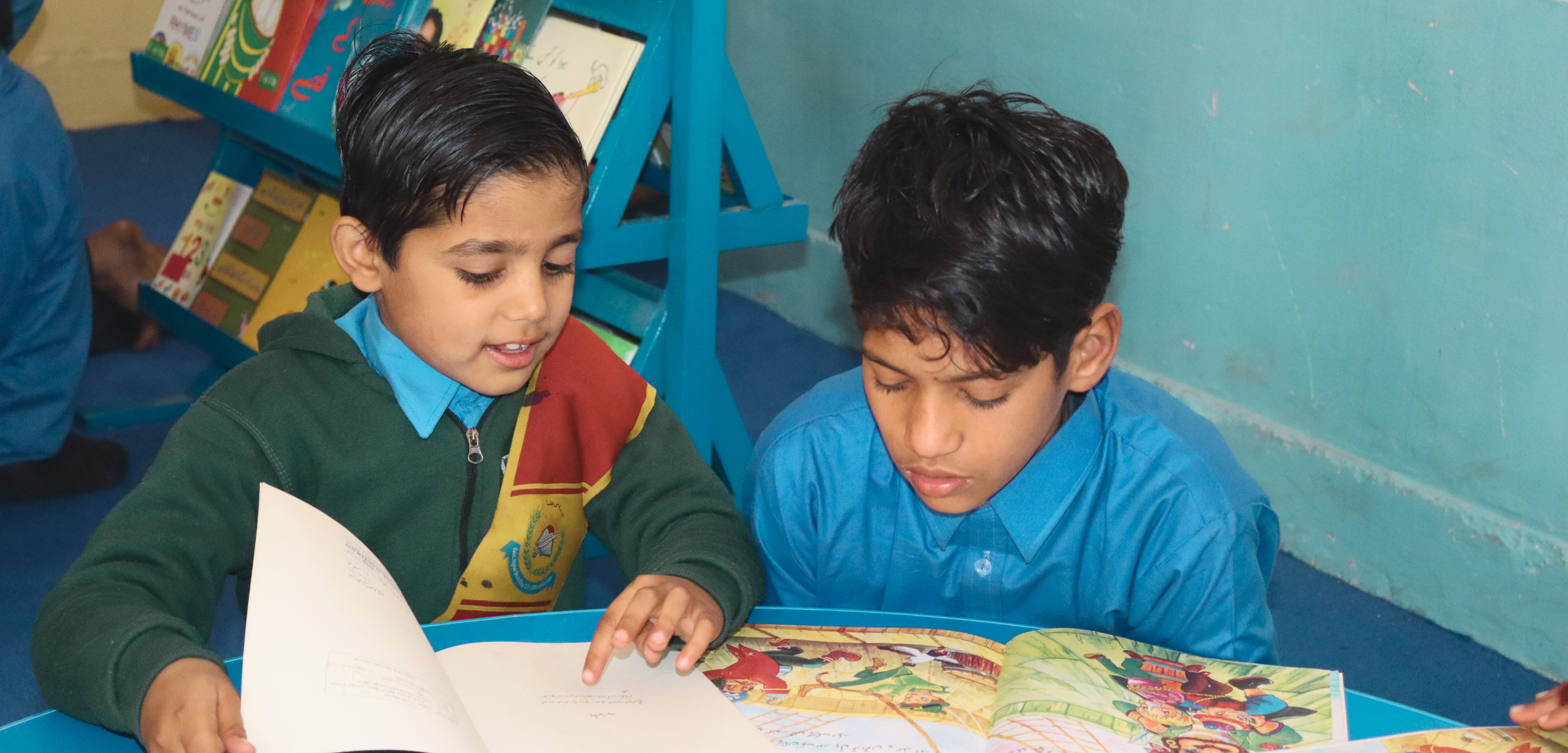
“We're thrilled to see how much our primary students love reading storybooks now! They're eager to borrow them from the library, and if they can't read them, they enjoy listening to them from family members. This shows a big change from before, and it's wonderful to see our students embracing the joy of storytelling.” – GBHS Arabic Bindra, Bahawalpur
These achievements reflect not only the scale of the partnership, but also the strength of the collaborative approach that made them possible.
But these numbers tell only part of the story.
The deeper measure of the partnership is what happened beyond the project itself: what schools continued to do, what government chose to invest in, what local institutions were equipped to lead, and what communities began to own for themselves.
Because the true measure of partnership is not simply what we accomplish together.
It is what others are empowered to carry forward.
As trust deepened in Pakistan, ownership increasingly shifted from Room to Read to government institutions, schools and local partners. One of the strongest examples of this transition was the Punjab School Education Department’s decision to become the first provincial government to cost-share the establishment of an additional 36 Room to Read model libraries across 15 districts. This investment represented more than the creation of new library spaces; it reflected growing confidence in Room to Read’s literacy model and a shared commitment to sustaining and expanding successful approaches through the public education system.
“There is a high level of government ownership of this project, making it possible for us to see government-led scaling efforts. In fact, I'm very happy to share that, as a result of government support, the School Education Department in Punjab is expanding libraries across the province, with many of the books from our work with Room to Read to be included in those growing libraries. In this way, the original 24 libraries from our project have truly become a beacon of hope and possibility.” – Baela Raza Jamil, Idara-e-Taleem-o-Aagahi
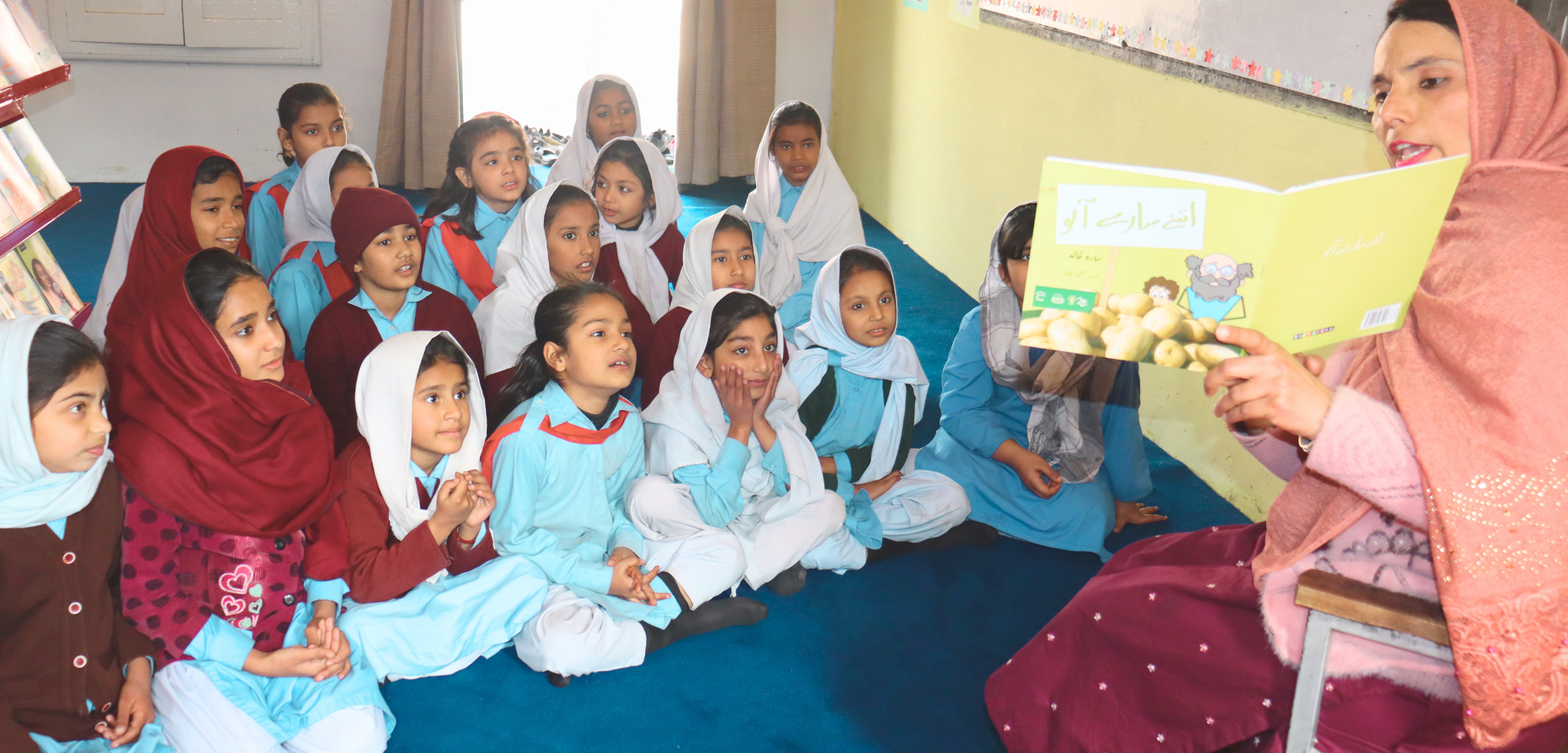
Ownership was also reflected in the expanded capacity of government institutions. Room to Read trained government master trainers — government educators and librarians trained to train and mentor other teachers — to continue supporting teacher professional development beyond direct project implementation.
Schools also continued to operate libraries, schedule library periods, and encourage book borrowing and reading activities after Room to Read’s project support ended, ensuring children receive ongoing support and strong reading routines that support the acquisition of strong literacy skills. IIn the provinces of Punjab and Sindh, Room to Read libraries — both stand-alone and corner libraries — are being replicated under various project initiatives.
The partnership also contributed to the growing strength of Pakistan's broader literacy ecosystem — beyond individual schools. Room to Read collaborated with the National Book Foundation to support the development of high-quality children's books, written and illustrated by local creatives, helping ensure that reading materials were culturally relevant and accessible to children, thereby building a more robust local publishing ecosystem. Room to Read also adapted children's storybooks into six local languages: Urdu, Sindhi, Pashto, Dari, Punjabi and Saraiki, ensuring children have access to a wide variety of local-language, culturally relevant stories that ignite a love for reading.
The experience in Pakistan offers a broader lesson about what it means to build change that lasts.
Partnership is not simply a way to extend the reach of an organization. At its best, it is a way to make an organization’s expertise useful within a system that already has its own leaders, knowledge, relationships and capacity for change.
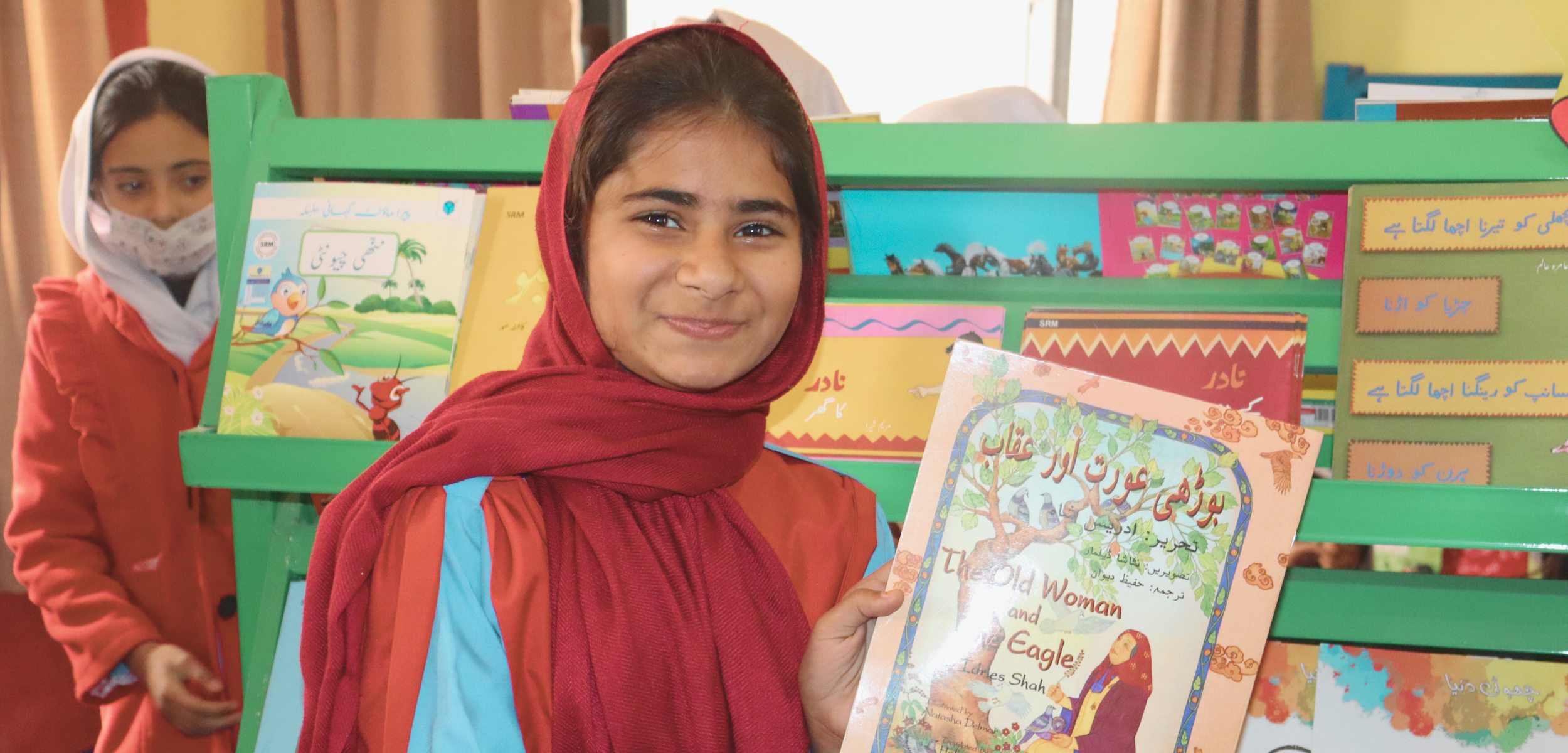
That requires humility as much as expertise. It means listening before adapting, learning before scaling and building trust before expecting ownership. And it means measuring success not only by what happens while a project is underway, but by what continues when the project is no longer there.
The strongest evidence of this in Pakistan is in how a culture of reading has extended beyond the classroom. More than a year later, project libraries remained operational, with scheduled library periods, book-borrowing systems, and structured reading activities continuing in more than 85 percent of schools.
That is partnership in practice.
Not two organizations working side by side, but complementary strengths becoming shared capacity.
Not a project that ends, but a foundation that remains.
And ultimately, not what Room to Read can accomplish alone, but what becomes possible when local leadership, technical expertise and institutional commitment come together — and when the work is strong enough for others to carry it forward.
Learn more about our Literacy Portfolio

You might also be interested in...


Developing lifelong reading habits in Pakistan: The power of Room to Read libraries
