
Nonfiction children's books help teachers lead and children read
April 16, 2026
By Siriphone Siriphongphanh, Senior Officer, Communications & Development
Athit Masouvanh, Program Manager, Quality Reading Materials, Literacy Portfolio
Room to Read in Laos
The arrival of a new collection of nonfiction books, specifically crafted by Lao creators for early grade learners, marks a quiet but important shift in the country's literacy landscape. From the northern reaches of Xiangkhouang Province to the southern plains of Champasak Province, these books are filling a critical gap in early grade content.
While fiction has long sparked imagination and provided joyful reading experiences, children in Laos previously had few opportunities to explore the real world through high-quality, Lao-language nonfiction books. For years, teachers relied almost exclusively on standard textbooks to convey facts. This limited students’ ability to engage with information through books designed specifically to attract the curiosity of a young mind.
In Champasak Province, schools recently received a curated set of Room to Read nonfiction books created by Lao authors and illustrators. We went to see these books in action. Designed for reading aloud and vocabulary building, these titles do more than fill reading corners — they transform how children engage with facts and introduce a fresh, accessible way of learning.
📄 Related article
What we owe future generations in education →
Teaching becomes easier and more engaging with nonfiction children’s books
In Laos, nonfiction children’s books are rare in the children’s book market. Most educators — and most students — are only familiar with fiction. Historically, teaching real-world concepts has been a challenge; without compelling, child-friendly resources, teachers have found it difficult to maintain student attention using only standard textbooks.
The arrival of Room to Read’s nonfiction children’s book collection introduces a new experience in teaching and learning. This nonfiction children’s book collection was developed based on themes from Laos grade 1 – 3 national curricula — including science, technology, culture, environmental studies, civic education and history. These books introduce these themes through playful illustrations and age-appropriate storytelling, allowing young readers to more easily explore the real world, and enabling teachers to build foundational knowledge for students before teaching core subjects, making the transition to complex topics much more effective.
Ms. Bounyaeng, a multi-grade teacher at Banmeung Complete Primary School, has seen this change firsthand. “These books make it much easier to explain complex topics," she said. “For example, ‘Let’s Get to Know Our Solar System’ helps students realize our vital connection to the sun.”
The impact is just as visible for Mr. Bounthavy at Nongbua Complete Primary School. He shared that while reading “Journey of the Salmon,” his students did more than listen along. They began to debate with one another about how salmon look and how they live.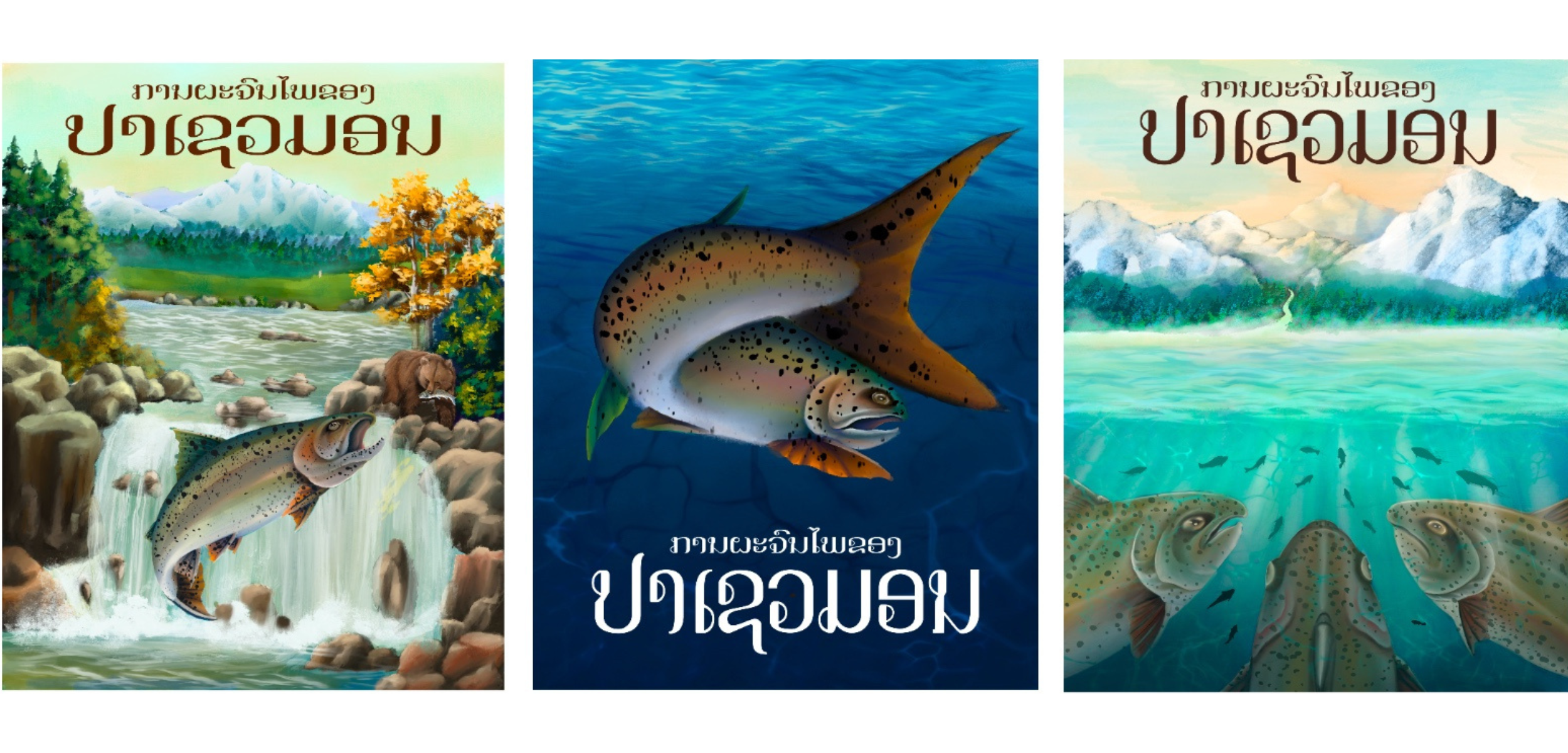
Teachers also observed improvements in students’ interest, literacy skills and vocabulary development when they used nonfiction books. Teacher Bounyaeng described how students gradually became more engaged with the books, explaining that, “At first, when I read nonfiction books on topics that students were not familiar with, such as ‘Let’s Get to Know Our Solar System,’ it was a bit difficult for them to follow along. But after reading them multiple times, students began to enjoy the stories, which helped them grasp new concepts and ideas. Their interest grew with each read-aloud, expressing that they wanted to listen again and again.”
As students encountered new words, the illustrations helped them recognize objects, and this connection paved the way for rapid vocabulary growth. Children became more confident speaking in class, more willing to read aloud and more eager to seek out additional books to read.
Familiar topics and new worlds are both inspiring learning
Some of the nonfiction children’s books immediately captured students’ attention because they were already familiar with the topics — and eager to learn more. Kod, a Grade 2 student, shared that, “I like 'Bee' because I love honey. It is delicious! I have seen bees collecting sweet juice from flowers in my garden and bringing it back to their nest.”
Other books introduced new knowledge that sparked curiosity. Lien, a Grade 2 student, explained that “My grandma also read ‘Let’s Get to Know Our Solar System’ to me at home. The thing I am curious about is the Earth spinning around the Sun. Among the other planets, I like planet Earth the most because it is our home.”
She even began practicing reading aloud, saying, “This is the moon; that is Mars.”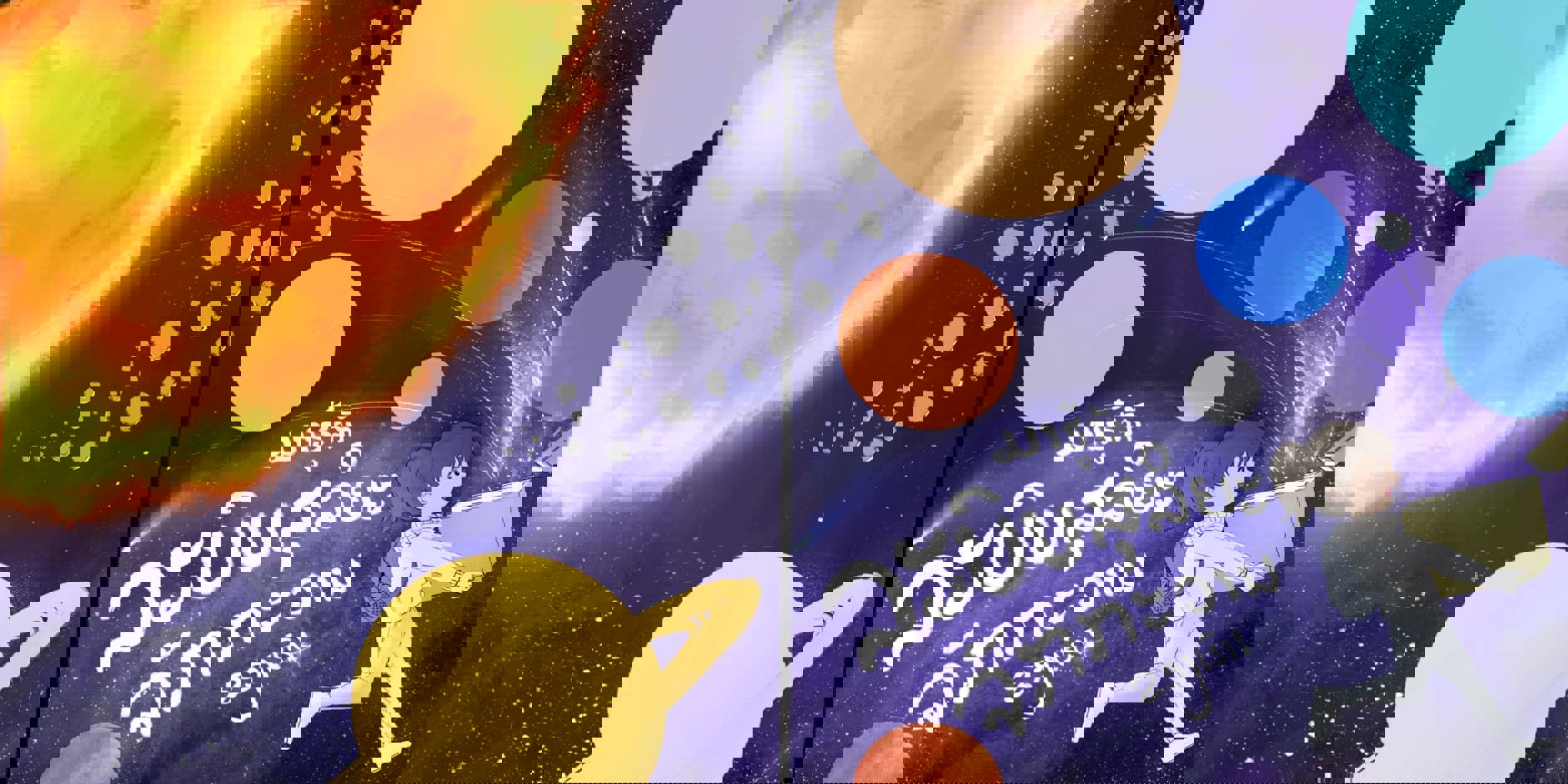
Exploring the world through the eye of children
Students were especially excited about books that connected stories and topics with their everyday lives. Do, a Grade 2 student, explained how “Bamboo Bamboo Everywhere,” a narrative detailing how the bamboo plant grows, and how it is used to build toys, furniture and houses, inspired him, sharing: “Bamboo can be used to make toys like Bungpo. I will make a Bungpo toy with my friends and play together.”
Do also connected the book to daily life, adding that, “At home, bamboo is used for sticky rice boxes, fences and shelters for chickens!”
Aling, also a Grade 2 student, said that, “I will ask my parents to make some toys from bamboo for me. I want to play with them with my friends.”
Students also enjoyed recognizing places with which they were already familiar. Bo shared his excitement about “4,000 Islands,” which illustrates the natural ecological wonders of the 4,000 islands, or Si Phan Don, a riverine archipelago in the Mekong River in southern Laos near the Cambodian border.
“I like the 4,000 islands book because the island views are beautiful. I went there once with my mother and father. I read the book before I went there. It is beautiful and fun to read.”
Other books, like “Underground Monsters,” about unexploded bombs abandoned in Laos, have helped students understand safety and real-life challenges facing their communities. Pueng pointed at “Underground Monsters” and stretched his hands wide to show the size of a bomb he had seen. He shared: “I saw a bomb in a mountain field. It was this big. I also saw a skull warning sign. My dad told me to stay away from it, and I learned that I need to be careful.”
Pupey shared that she used to dig the soil to plant a starfruit tree — which, she underscored, has now produced fruit twice. After listening to “Underground Monsters” read aloud by her teacher, she realized that there could be bombs below the surface, and that she needed to exercise greater caution in the garden.
Observing lasting change
Mr. Bouaphan, the principal at Bachieng Complete Primary School, described how the books are used during the school day, noting, “There are many benefits for both teaching and learning. Teachers integrate nonfiction books into reading time so students not only enjoy the characters and familiar topics, but they can also explore new topics through the stories and apply what they have learned to their daily lives.”
He added that “the nonfiction books support strong literacy skills across grade levels, by motivating older students to read more to younger children during peer-to-peer paired reading sessions.”
The introduction of nonfiction children’s books shows how access to the right reading materials can transform learning experiences. In asking questions while reading nonfiction to students, teachers have found that the content helps build a foundation of knowledge long before they begin teaching core subjects. Children, they’ve observed, have greater curiosity in core subjects after they’ve been introduced to the subjects through stories.
By bringing locally created nonfiction children's books into classrooms across Laos, Room to Read is helping children grow as readers, thinkers and confident learners who are ready to reach their full potential.
Learn more about our approach to literacy
You might also be interested in...

Understanding the importance of equality: Meet Phimya from Room to Read in Laos

Room to Read's nonfiction children's book collection in Laos
Mahesh Pathirathna, Global Literacy Advisor, Room to Read’s Literacy Portfolio

The healing power of books: Riyan finds refuge in reading
Nistha Shrestha, Senior Officer, Communications, Room to Read in Nepal
