
Building an illustrator community
Room to Read's nonfiction children's book collection in Laos
December 09, 2025
By Mahesh Pathirathna
Global Literacy Advisor
Room to Read’s Literacy Portfolio
When I was first tasked with leading the development of a new Room to Read children’s book collection in Laos, the assignment seemed simple, straightforward. Our global and regional partners had just identified a major gap in essential early-grade literacy content in Laos: a complete lack of nonfiction. In response, Room to Read and our team of children’s book experts were invited to support the creation of these much-needed titles.
I am an experienced developer of children’s books. The assignment was clear, and the results, I imagined, were achievable. A nonfiction collection in the Lao language with 25 writers and 25 illustrators — a significant number to meet a significant need. But my colleagues in Laos gently smiled and said, “We only have about five or six illustrators in the whole country.”
At first, I thought this had to be an exaggeration. But after speaking with educators, publishers and artists, I realized it was true. This marked the beginning of Room to Read’s deeper intervention to expand the pool of children’s book illustrators in Laos.
Why a nonfiction children's book collection?
Nonfiction also expands reading choices for young readers. Historically, fiction has been considered the only “interesting” reading material, while information-based books were seen as less engaging. But we know better. Nonfiction as a genre has evolved to offer joyful and meaningful reading experiences, regardless of its informational purpose. For these reasons, nonfiction plays a vital role as both a reading and learning tool in early grade education.
Still, according to Room to Read’s Ideal Book Collection, which includes several languages across different countries and regions, there is often an imbalance between fiction and nonfiction in children’s book markets. In most cases, nonfiction titles account for less than 20% of the total collection — and this is true in Laos as well.
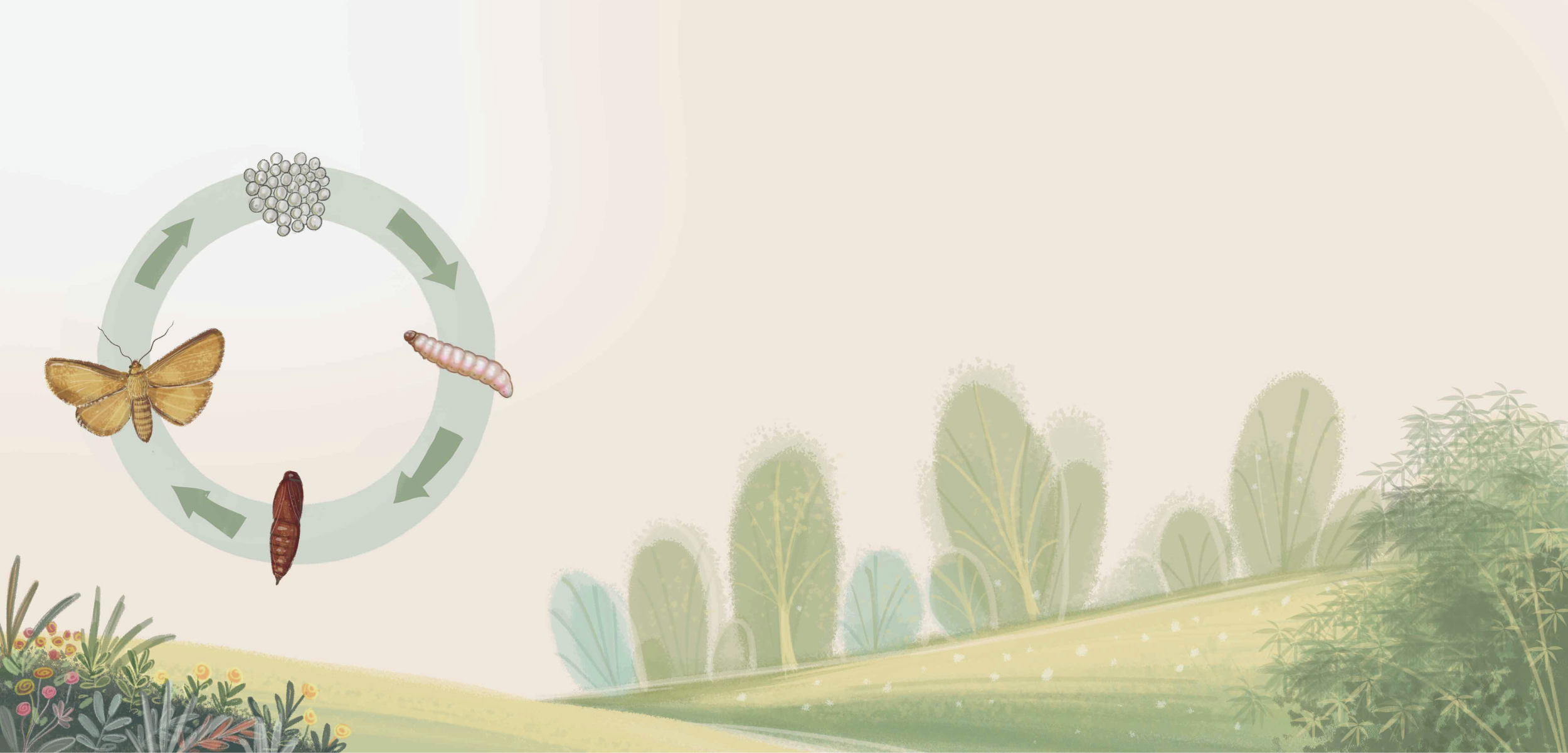 From Room to Read original nonfiction children's book "The Bamboo Worm," written and illustrated by Nivong Sengsakoun
Laos has one of the smallest book markets in Southeast Asia. There are roughly 15 book publishers, including distributors and sellers, across the country, and most of these are small-scale operations, publishing only 2–3 titles a year. The country lacks the formal systems needed — in education and in publishing — to nurture children’s book creators. The National Institute of Fine Arts (NIFA) in Vientiane is one of the only hubs for visual arts education, so we decided to start our journey there.
Building a nonfiction children’s book illustrator community
We began by visiting art exhibitions to observe NIFA graduates’ work and explore the range of available local talent. What we found was both encouraging and challenging: Many artists with wonderful styles and technical skills, ranging from watercolor to acrylic, mixed medium to digital, yet none had illustrated a children’s book, let alone a narrative nonfiction one.
In fiction, illustrators have the freedom to decide how and what to depict in their illustrations. They are not required to follow exact details or proportions, and they can adjust colors or compositions. In this sense, fiction illustrators experience much greater creative freedom compared to those working on nonfiction, where accuracy is essential.
Illustrators of nonfiction titles need to conduct thorough research on the subject matter to ensure details, proportions, and representations are correct, while still presenting the content in an engaging way. Narrative nonfiction often requires a careful balance between real information and creative imagination.

From Room to Read original children's nonfiction book "4,000 Islands," written by Athit Masouvanh
and illustrated by Thaksin Xayyalath
This was the start of our real challenge: helping these talented artists learn how to illustrate for children, and in a way that blended truth with artistry, emotional depth with the clarity needed to communicate ideas to young minds.
To guide this transformation, we conducted a four-day residential illustrator workshop in Vang Vieng, blending both theory and hands-on creative practice. The sessions covered concept boards — similar to mood boards — thumbnail storyboards, and character development, with a strong emphasis on accuracy of information.
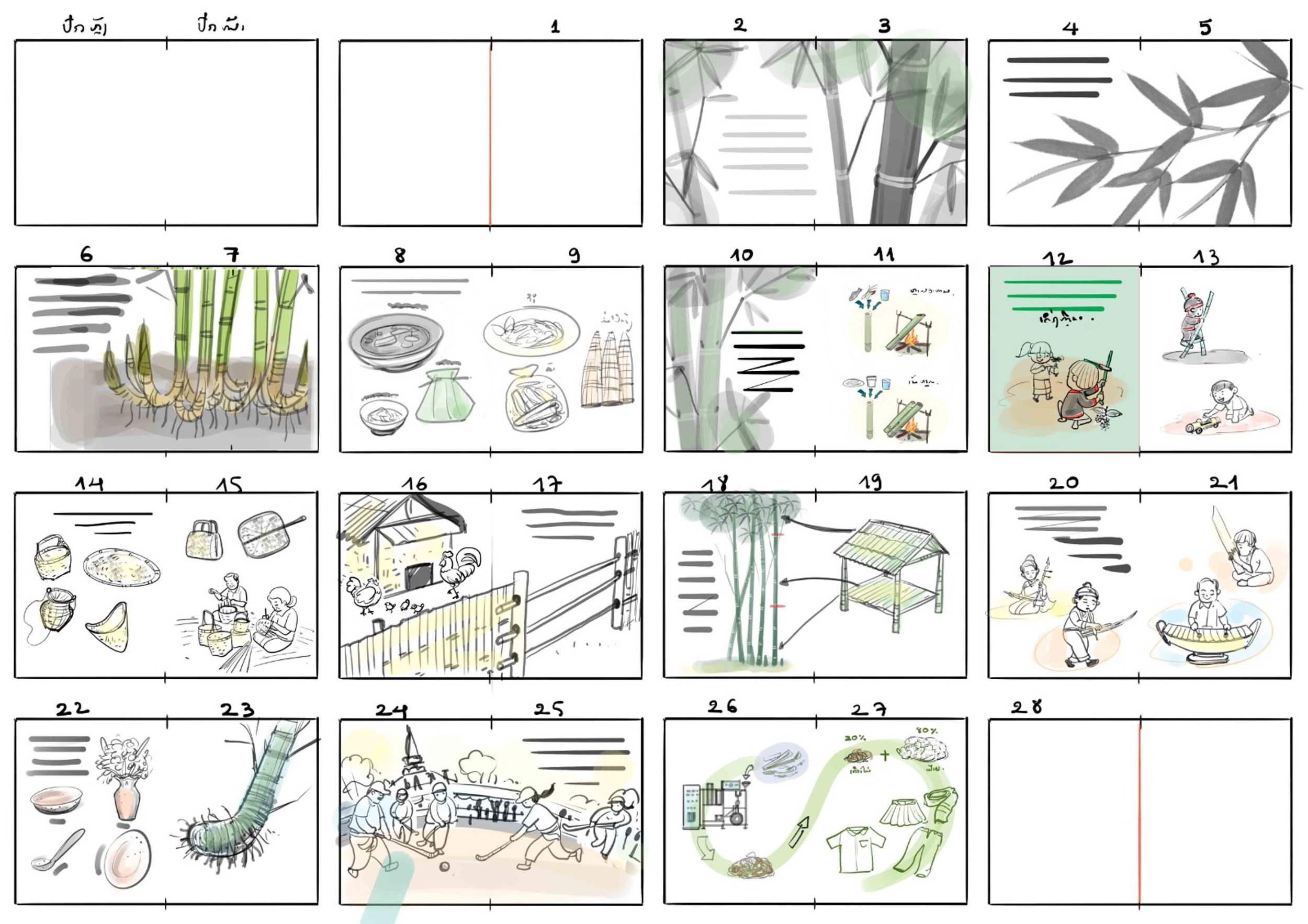
From Room to Read original children's nonfiction book "Bamboo Bamboo Everywhere"
written by Othong Khaminsou and illustrated by Othong Khaminsou
During this exercise, artists focused on illustration formats, such as spot illustrations, single pages or double-page spreads, perspectives and level of detail. They gathered multiple references to support their ideas and used their concept boards to develop storyboards. Most of the manuscripts revolved around specific characters and settings, which helped guide their visual storytelling.
Throughout the workshop, we organized several working and sharing sessions where illustrators received feedback from both colleagues and mentors, including those from Room to Read. In the early stages, these sessions were quiet and cautious. Many participants hesitated to comment on each other’s work — understandably, since some of them were teachers, while others were their students or colleagues.
Yet this feedback process was an essential part of both capacity building and book development. Constructive critique is what transforms good art into meaningful storytelling. Gradually, as trust grew within the group, the illustrators began to exchange feedback more freely. One illustrator reflected beautifully on this change:
“It is very difficult for us, in our culture, to criticize the work of others — especially our senior colleagues or teachers. But now we realize how important peer review and critique are to improving our work. This workshop helped us develop not only our skills but also our attitude.”
That moment captured something deeper than artistic growth — it showed a shift in mindset, from working in isolation to learning as a creative community.
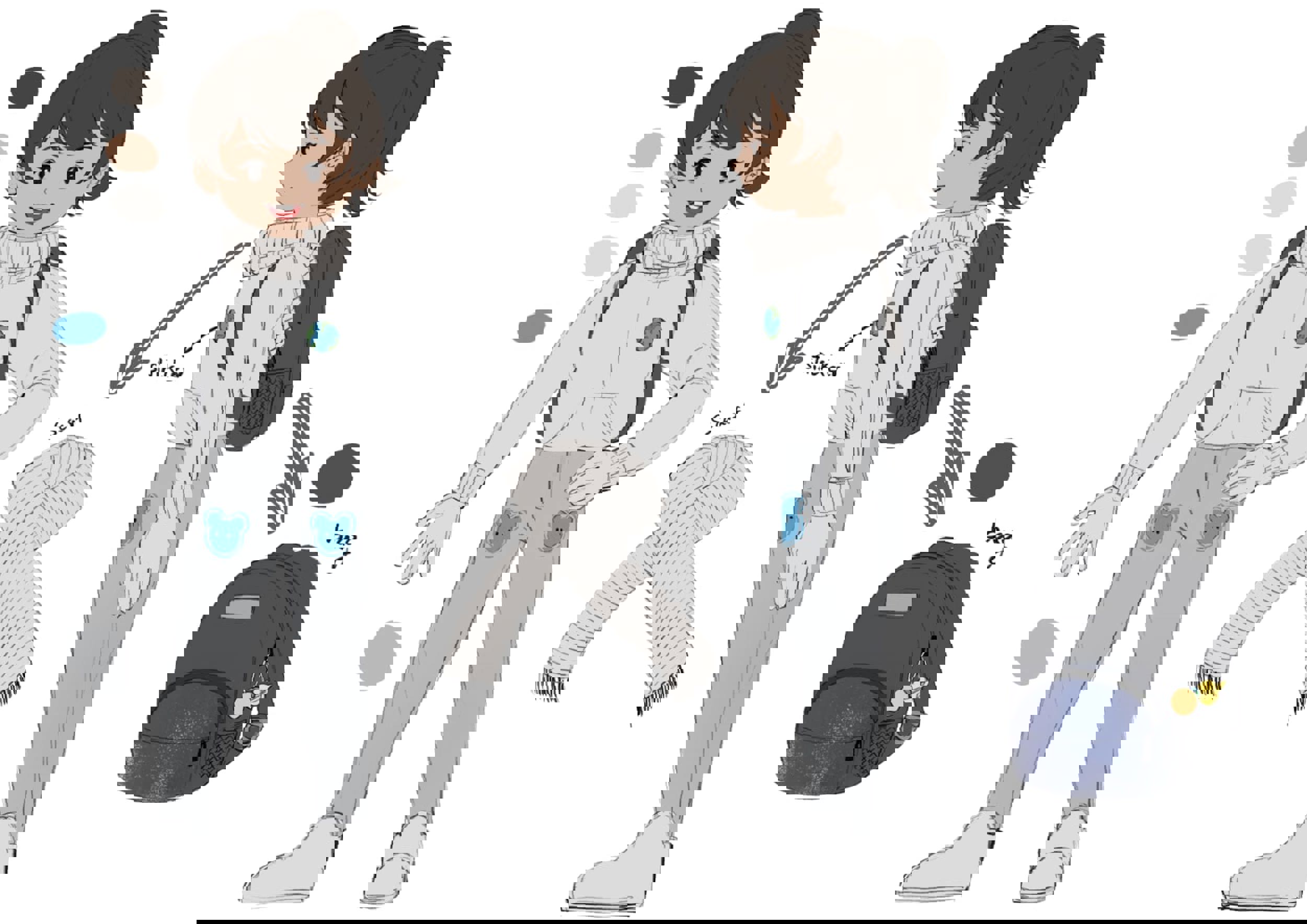 From Room to Read original children's nonfiction book, "Moon, Why Are You Following Me?"
 written and illustrated by Pavimone Phimmasen
After a full year of dedicated work on the collection, we completed the 25 titles with fifteen illustrators — and the results were nothing short of remarkable. The final works explored themes deeply connected to Lao children’s lives and learning. From the beloved bamboo worm, a local delicacy rich in nutrition, to the vast mysteries of the solar system. Each book not only brought knowledge but also reflected Lao identity, culture and imagination in a fresh visual language.
The collection amazed local publishers, educators, even government representatives. Many could hardly believe that the illustrations had been created by Lao artists. The quality and creativity went beyond anything previously seen in the country’s children’s literature landscape.
Reflecting on the journey, Athit Masouvanh, Room to Read book publishing manager in Laos, shared his thoughts:
“I feel proud that we have now identified new talents in the country who can contribute to children’s book illustration. This achievement has also brought great recognition to Room to Read for its efforts to strengthen the children’s book publishing ecosystem in Laos. As a result of these workshops with the National Institute of Fine Arts (NIFA), teachers and students, the NIFA is now officially discussing with us the possibility of starting a university program dedicated to children’s book illustration. This is a great milestone, and I believe that in the future we will have more illustrators — and a richer diversity of artistic styles in our books.”
His reflection captures how far the initiative has come — from a shortage of illustrators to inspiring an institutional change that could shape the next generation of Lao artists, ready to inspire the next generation of engaged readers.
 From Room to Read original children's nonfiction book "Bee," written by Phetsavanh Xaysana and illustrated by Loun Dalakeo
You might also be interested in...

Urdu books: Creating local-language content in Pakistan


