
Beyond paradise on earth: Literacy, equity and hope in Zanzibar
July 01, 2026
By Joan-Ndaambuyo Minja
Country Director
Room to Read in Tanzania
We used to have a music player at home that played old “Santuri” disc music. It was connected to big speakers, so when the music played, it could be heard in every room of the house. But only one person — the owner himself — could touch it, and he could play his favorite music however he wanted. One night in 1986, my dad came home with a new release by Ndala Kasheba with a song about Zanzibar, called “Marashi ya Pemba,” or “Scents of Pemba.” The artist sings:
“Siku nitafika pemba binti Sultan kampani, Siku nitafika pemba binti Sultan kampani
Siku nitafika pemba binti Sultan kampani, Nitembeze sehemu zote hadi mwisho
Kuishi visiwani mama kuna utamu wake, Mafia, Pemba Zanzibar, visiwa vya kwetu eh”
The literal meaning of the song suggests that the singer has never been to Pemba, with the opening chorus echoing “One day I will reach Pemba...” At the time, I kept wondering: Why, then, does he sing about Pemba, a place he has never been? How can he describe the scent of cloves so vividly? Or the feeling of the coastal breeze?
Those questions stayed with me. Now, I realize that the mental image I had of Zanzibar — that Ndala Kasheba had — was just as powerful as being there in person. Zanzibar is as idyllic as Ndala Kasheba imagined in his lyrics, and as I imagined when the song played through my childhood home. A place so exceptionally vibrant, so rich in sound and color, smell and texture, offering such abundance, that the images we create in our mind before traveling there prove not to be grandiose or exaggerated, not the result of the hyper imagination of childhood or the poetic license of a sentimental songwriter, but overwhelmingly real.
Still, however stunning Zanzibar is to the senses, however worthy it is of wonder and praise, it is not excluded from social injustices in education, nor in the gender inequalities facing many middle- and low-income countries in Sub-Saharan Africa.
Sitting off the eastern coast of Africa, in the Indian Ocean, Zanzibar is a semi-autonomous archipelago that is part of Tanzania. In recent years, Zanzibar’s education system has undergone significant transformation, with government-led efforts to enhance access, quality and equity, particularly in foundational learning. While commendable progress has been made in early childhood education and primary school completion, persistent challenges remain, including literacy gaps, gender disparities and resource inequalities that hinder equitable learning outcomes.
With a population estimated at 1.88 million in the 2022 census, Zanzibar is projected to grow 3.8 percent annually. This indicates a significant need to ensure that educational programs keep pace with population growth. Zanzibar is, thus, a priority geography — a location where Room to Read can benefit more children, more quickly, with foundational learning skills, and, through partnership with the government, achieve learning outcomes at scale.
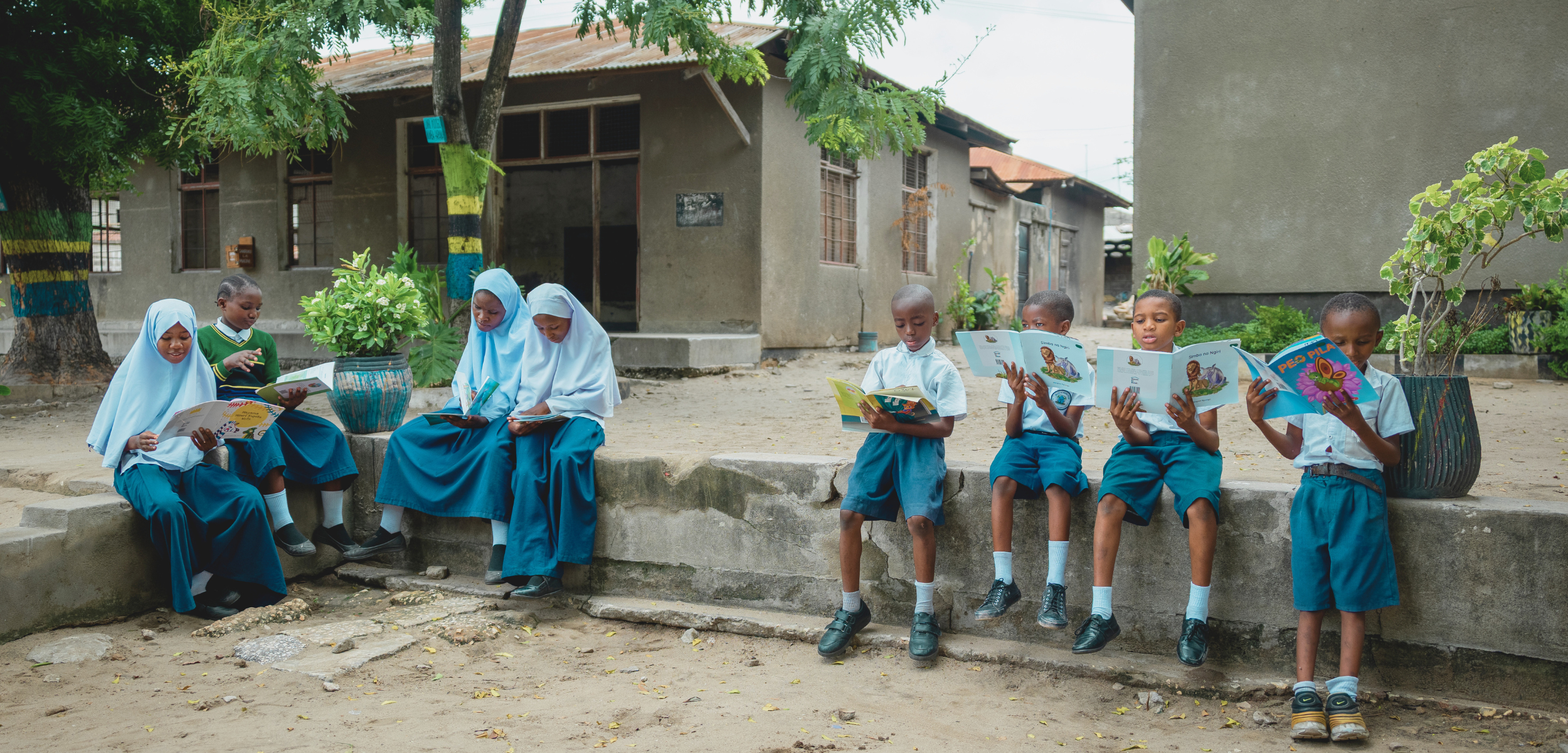
Since January 2026, Room to Read’s Literacy Portfolio in Zanzibar has focused on a system-driven approach, implementing programming in close collaboration with government institutions through the co-creation of materials, ranging from teacher guides to children’s storybooks. In Unguja and Pemba — two main islands of Zanzibar — we built on the foundation we established in Pwani and Dar es Salaam, Tanzania, where we’ve seen how strong relationships with educational functionaries can result in long-term, systemic change. Indeed, since the establishment of Room to Read in Tanzania, our programs have benefited approximately 4,056,150 children with foundational literacy skills and life skills that promote gender equality.
From the onset of our work in Zanzibar, Room to Read has conducted educator training and coaching to build the capacity of 94 government officials from the Ministry of Education, as well as other institutions, like the Zanzibar Institute of Education, the Zanzibar Library Services Board, school quality assurers and educational officials at the district level. All were equipped with the skills to use Room to Read’s proven approach to educator training and coaching to enhance sustained teacher professional development, improve instructional quality and expand access to culturally relevant learning materials.
At the systems level, this has strengthened structures for ongoing teacher training and coaching, and institutional cooperation, fostering greater government ownership and alignment with national priorities and standards.
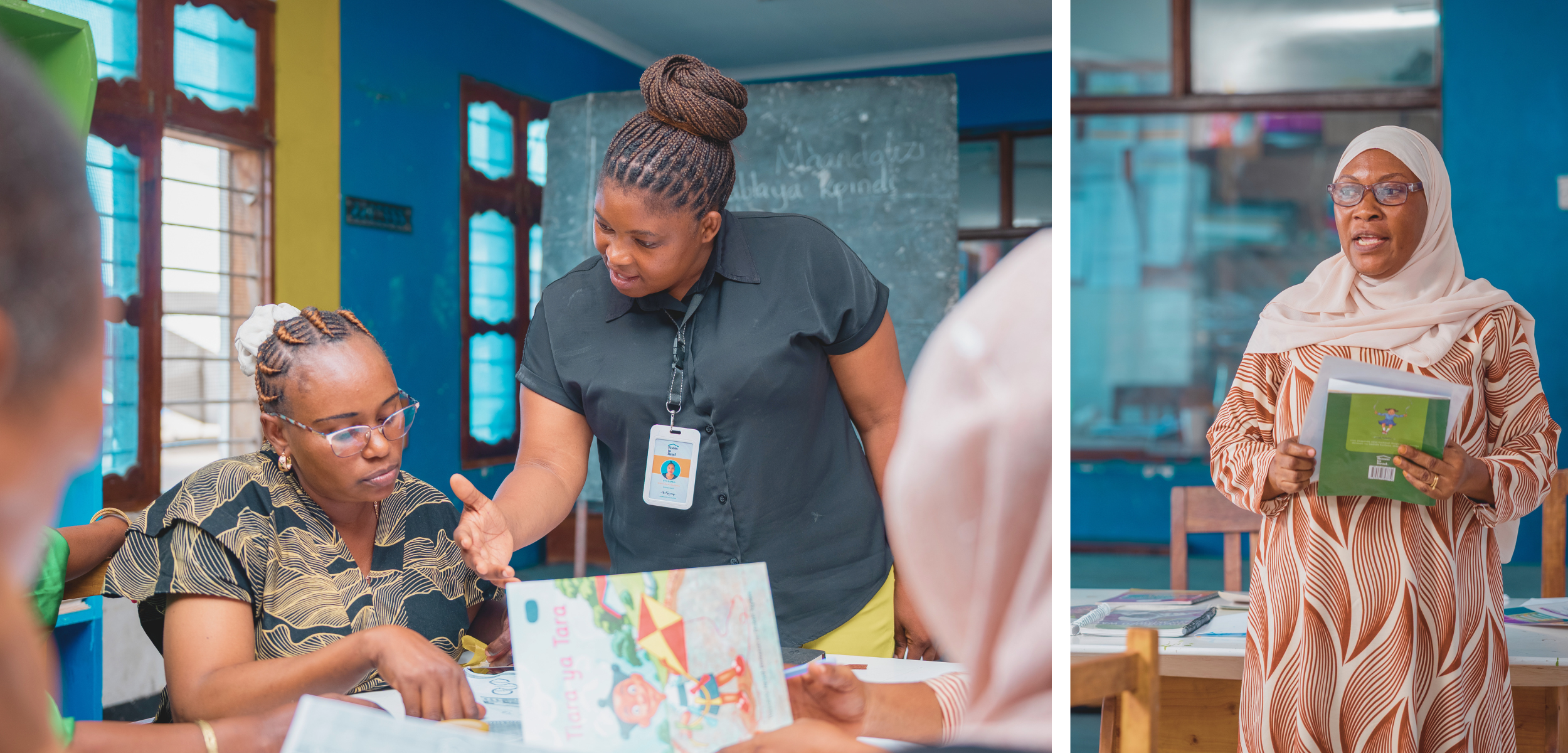
Trained government officials have since worked with Room to Read to cascade the same coaching to 128 Grade 1 teachers, panel leaders and heads of schools, focusing on improved pedagogical skills in foundational literacy that will, in turn, result in greater student engagement and stronger early reading outcomes. This educator training and coaching is set to benefit approximately 13,470 children from 30 schools across Unguja and Pemba.
But what truly sets this initiative apart is its vision for sustainable change through gender equality initiatives. This year, Room to Read’s gender equality team in Tanzania launched our adolescent life skills programming in Zanzibar, in close collaboration with the Ministry of Education. This milestone marked the successful rollout of a two-phase life skills education training model.
Phase one focused on building the capacity of what we call Master Trainers — those who are trained by Room to Read to train additional educators and government officers in the local community on life skills education. Master Trainers left our training with a strong foundation in life skills concepts, and student-centered, gender-responsive, intersectional facilitation approaches. By bringing together key stakeholders from ministerial to district levels, our approach ensures alignment, shared ownership and clarity of roles from the outset.
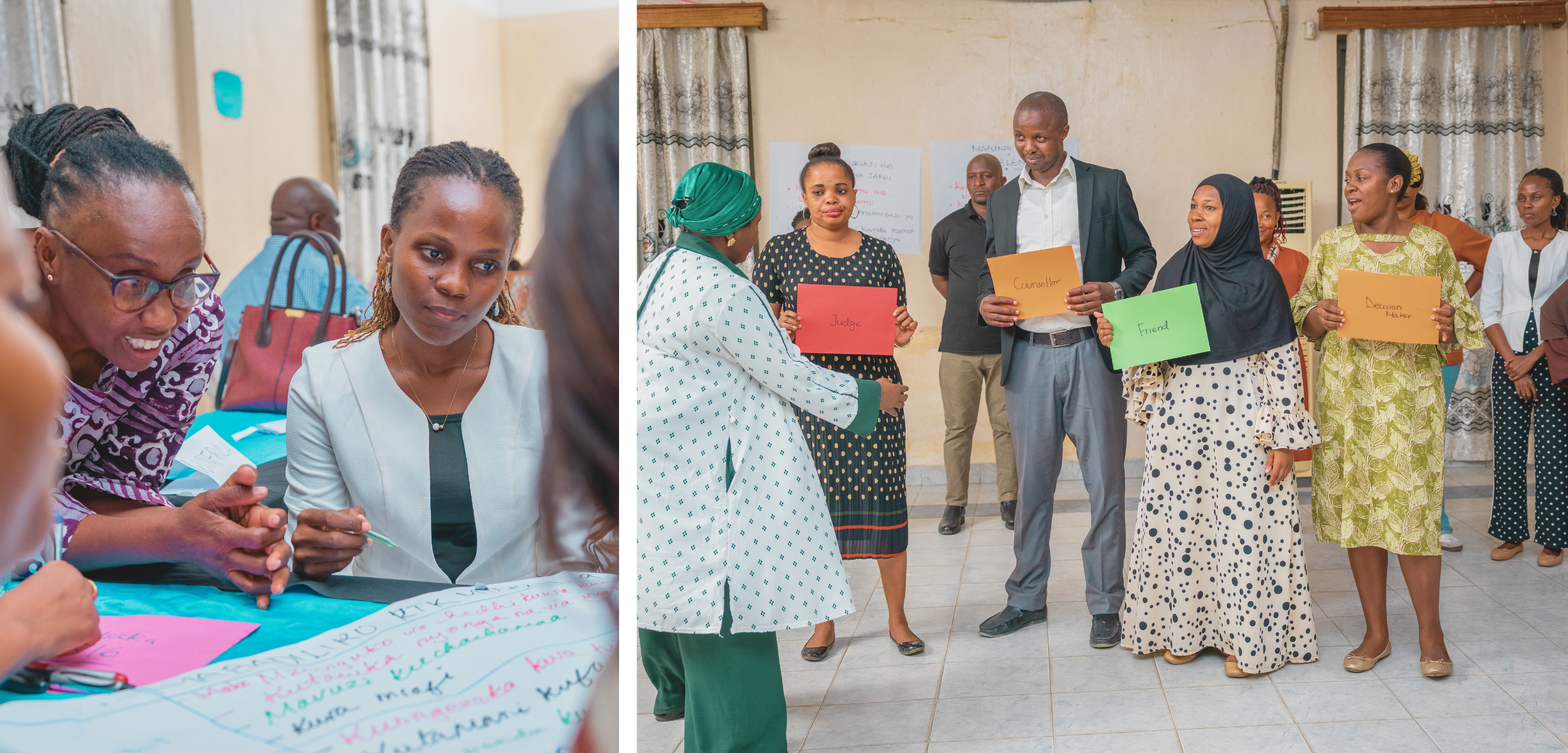
In phase two, our Master Trainers cascaded the training to 12 teachers from six schools in Unguja and Pemba. Throughout both phases, participants engaged deeply with core themes such as adolescent development, gender equality, safe learning spaces and effective facilitation techniques, complemented by practical sessions that strengthened their confidence and readiness to deliver Room to Read’s life skills programming in classrooms. This work will benefit approximately 515 Grade 5 adolescents from Zanzibar primary schools in the coming year.
What makes this initiative particularly impactful is its systems-strengthening approach, designed to embed life skills curriculum and content sustainably within Zanzibar’s education framework. By positioning Master Trainers within government structures under the Department of Teacher Education, and engaging district-level subject advisors alongside the Office of the Commissioner Inspector for Education, this approach ensures ongoing capacity building, coaching and accountability. Monthly school visits and quarterly monitoring reinforce implementation quality while fostering local ownership.
This co-implementation model, where Room to Read provides technical expertise while government actors lead delivery, lays the foundation for long-term scalability. With plans to expand to all primary schools across Unguja and Pemba by 2028, the initiative is poised to transform teaching practices and create a replicable, government-led system capable of reaching thousands more adolescents with critical life skills for years to come — promoting gender equality across Zanzibar communities, and ensuring that every child in Zanzibar has room to read, learn and grow, creating lasting change.
Learn more about our unique approach

You might also be interested in...


Room to Read Launches Africa Regional Advisory Board and Announces $75 Million Fund to Support the Expansion of Foundational Learning Across Continent During Joint Board Session in South Africa

Girls’ education in Africa: The most powerful investment we can make
Zamaradi S. Islahi, Global Director, Room to Read Gender Equality Portfolio

