
Language barriers in early grade learning: Overcoming challenges in Nepal
June 10, 2026

By Netra Dahal
Director of Literacy
Room to Read in Nepal
Imagine you are a Grade 1 child and this is your first day at school. You are exposed, for the first time, to the language used as a medium of instruction, as you speak a different language at home and within your community. You don’t understand a word your teacher says. You cannot follow the instructions. You cannot join your classmates in learning activities. You do not get a chance to express yourself in your own language. How would you feel?
Let’s imagine you in a slightly different scenario. You are still the same child in the same classroom, but your teacher uses your home language, too, along with the official language of instruction. You also get sufficient encouragement and opportunity to speak in your own language. You can follow along with your teacher and join your classmates in learning, even when you do not speak the same language.
Which scenario would you prefer? In which circumstances would you learn better?
📄 Related article
What motivates a child to do well in school →
How do language barriers affect foundational learning?
Nepal represents an enormously diversified linguistic context, where there are more than 125 officially recognized languages, with significant dialectal variance. As a result, the constitution, as well as education legislation and policies, provide options for mother-tongue-based instruction, communication, learning materials and activities, at least in the early grades. Multilingual instruction, however, has always been challenging in practice, resulting in instruction and educational content based entirely in either Nepali or English.
By recognizing these challenges, Room to Read began, starting in 2025, to contextualize our approach to early grade literacy instruction — starting in Kapilvastu. Kapilvastu presented a unique linguistic scenario. The majority of children speak Nepali as a second language. Preliminary data collected from the 48 Room to Read project schools showed that roughly 98 percent of children in early grades speak Awadhi as the first language, and Nepali, the official language of instruction, is a second language they must learn after entering formal education.
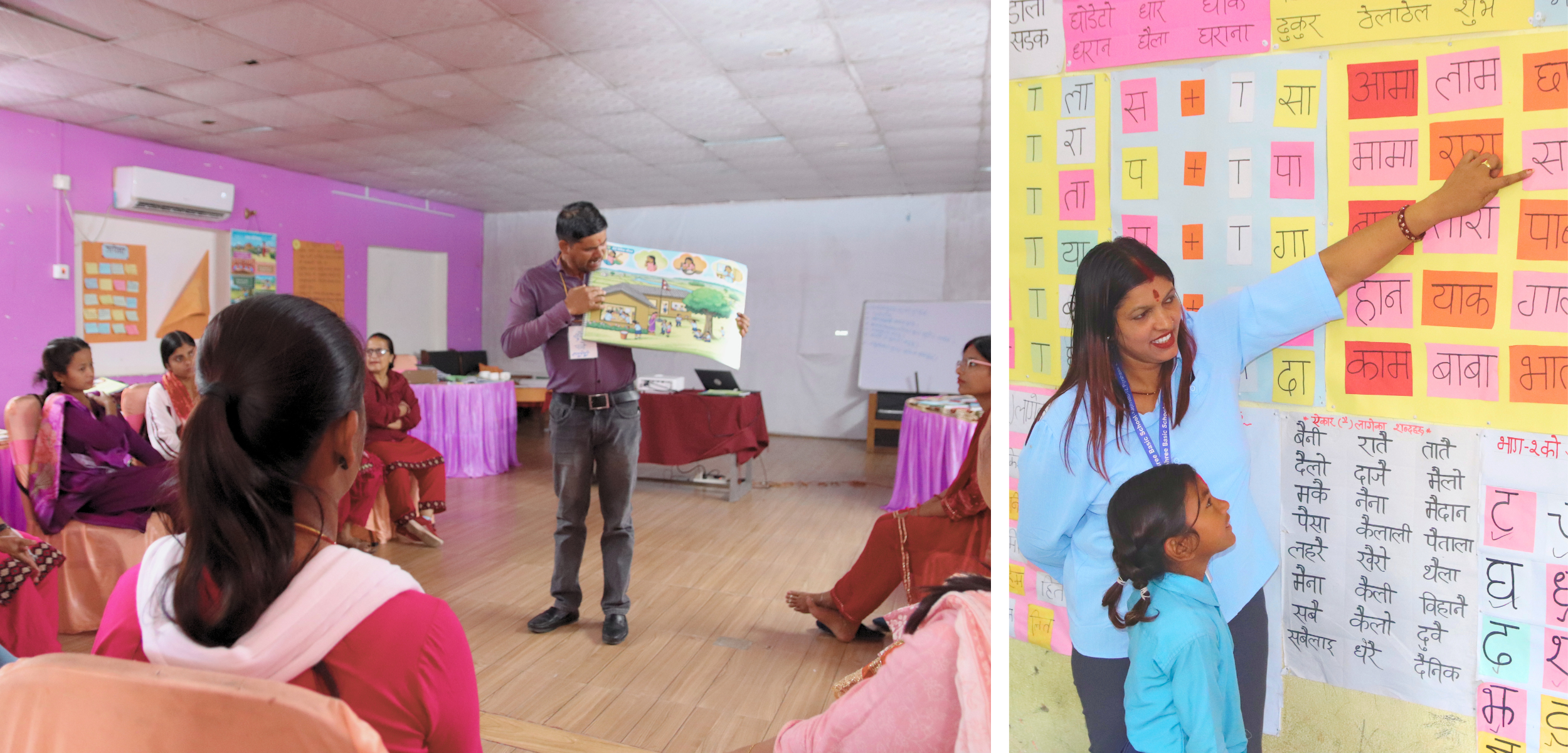
Literature shows that the use of the official language, or medium, of instruction, rather than the students’ first language, creates a double learning disadvantage, where children must simultaneously acquire a new language while learning academic content through it. This linguistic gap leads to initial shock, frustration, disengagement and comprehension barriers, particularly in classrooms — such as those in Kapilvastu — where students enter Grade 1 completely unfamiliar with the language used in teaching.
Our literacy team in Nepal reviewed relevant literature, sought input from Room to Read’s global program technical team, and, importantly, conducted an intensive visit to Kapilvastu schools, observing classroom instruction and interacting with head teachers, language educators, local Awadhi experts and representatives of the local government. A sample assessment of recent Grade 1 graduates was also conducted using our Grade 1 Student Tracking Assessment II tool, used to identify areas where students need the most support.
Not surprisingly, the assessment revealed extremely poor reading skill development. Students appeared to face challenges such as understanding classroom instruction, mother tongue influence in recognizing and pronouncing sounds and letters, and reading fluently with comprehension. More importantly, a lack of language familiarity hindered their participation in classroom discussion, and, as a result, affected their sense of belonging and safety in the classroom, gradually decreasing their motivation and engagement in learning. Educators were found to be struggling with a significant lack of pedagogical skills and proper resources to support these learners.
How is Room to Read addressing language barriers?
Drawing on the learnings from Room to Read’s work in India, our literacy team in Nepal adapted our standard instruction design, embedding strategies — such as translanguaging, which provides opportunities for the child to learn in Nepali but discuss ideas in their home language, helping to bolster comprehension and reinforce confidence and connection in the classroom, and scaffolding support structures — to address the challenges mentioned above. The adapted design has focused specifically on benefiting Awadhi-speaking children in Kapilvastu, for now, and includes two major strategies.
First, the instruction routine was revised, adding a 10-15-minute conversation activity at the beginning of each lesson to support students’ oral language development. Four strategies were included for this activity: use of conversation charts, use of primer cards, topic and experience-based conversation, and conversation based on imaginative questions. Teachers have been advised to conduct lessons in Awadhi, with gradual bridging to Nepali.
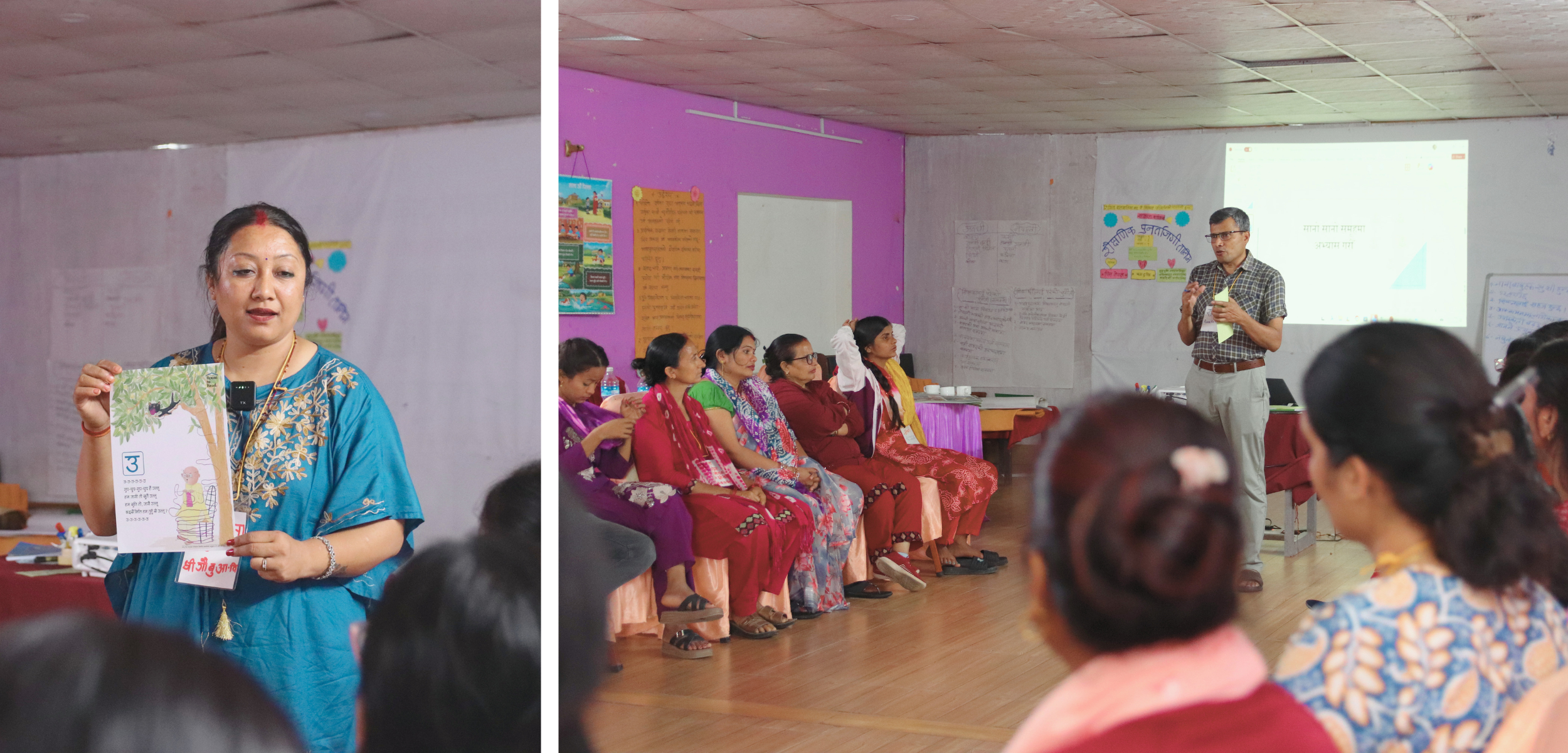
Second, teachers are encouraged to use language bridging between Awadhi and Nepali across different lesson components, including phonological awareness, vocabulary and comprehension. In this way, an educator can introduce an idea in Awadhi first, then introduce the same idea in Nepali, connecting the meanings across the two languages.
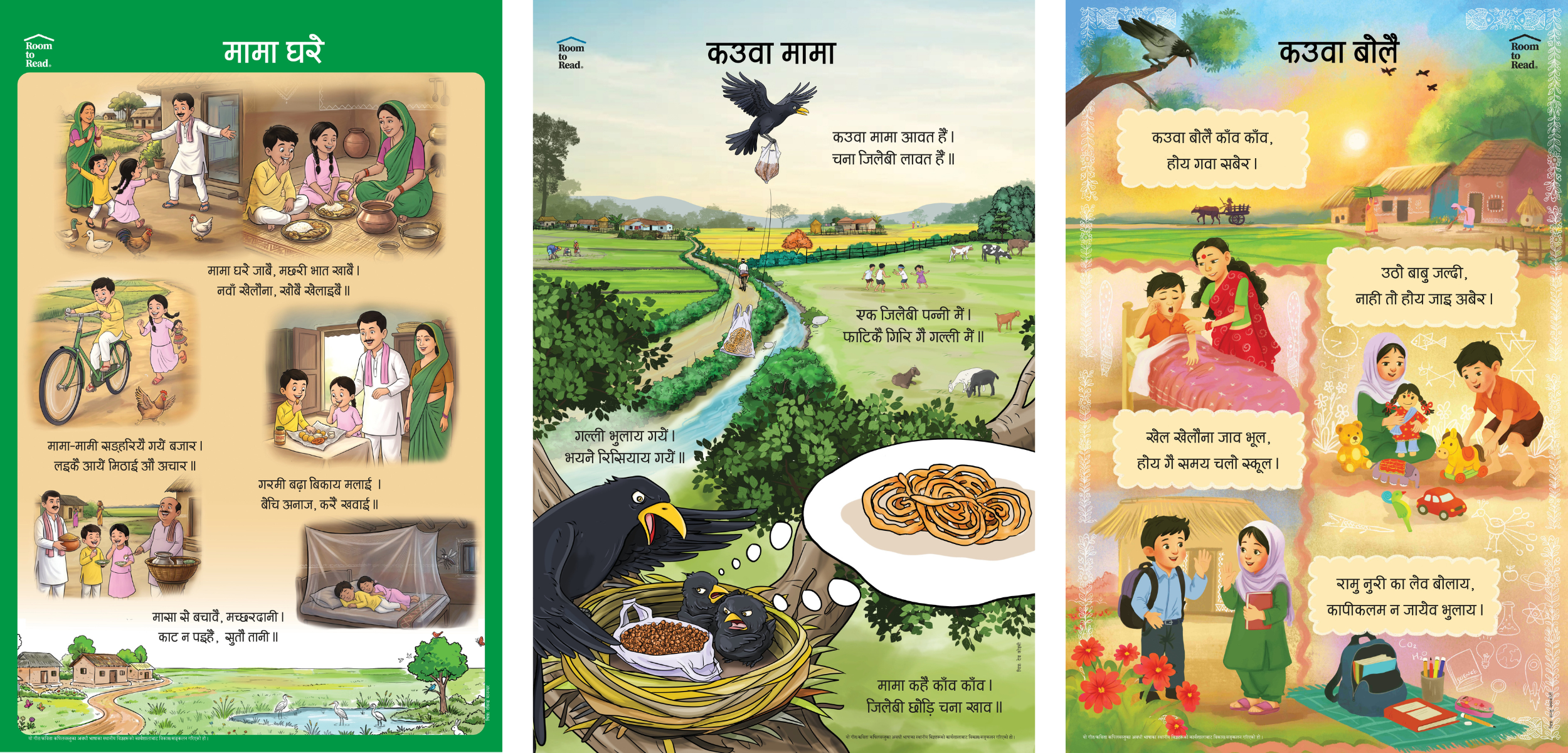
To ensure these adaptations are implemented effectively in classrooms, the team in Nepal updated our standard Room to Read teacher manual — called the Learning Facilitation Guidelines — and student learning workbook. We also developed supporting materials, which include conversation charts, primer cards with letters of the day, posters with local rhymes and songs, as well as five children's storybooks in the Awadhi language, adapted from existing Room to Read titles.
The next step was to train educators in the revised instruction design and use of new materials. The training involved demonstration activities and practices encouraging the strategic use of students’ first language alongside Nepali to support literacy skill development. Educators were well engaged in the practice activities and reflected that these strategies seemed promising for future success:
“When I first joined as a Nepali language teacher, it was a challenge because there was a gap between the language I used in teaching and what students understood,” shared one educator. “But whenever I would use some Awadi words to help connect them with Nepali, it became easier to get their attention and support their understanding. The new strategies and materials seem very helpful in linking the two languages.”
Adapted curriculum and content, and language-embedded instructional design
With these programmatic adaptations and additions, we look forward to creating a conducive learning environment for Awadhi-speaking children in Kapilvastu, where they experience adequate language bridging, thereby significantly reducing the language barriers to learning and the double learning disadvantage, and helping to build a strong foundation for future learning in Nepali.
Initial reflections from educators during the teacher training have been encouraging. Materials have been well received, and educator performance during practice sessions reassured us that these changes will help children develop stronger literacy skills more quickly. Room to Read literacy facilitators have also been trained on the changes to ensure they are prepared to monitor educator performance and provide support as required.
All project schools in Kapilvastu have now received adapted curriculum and content, and educators have begun implementing the first language-embedded instruction design. We look forward to seeing all children develop stronger foundational literacy skills, regardless of their linguistic background.
Learn more about our unique approach

You might also be interested in...

Life skills classes: Making room for empathy and understanding
Reema Shrestha, Director of Room to Read's Gender Equality Portfolio, South Asia

Addressing linguistic complexity in Indian classrooms
Stuti Jain, Manager of Instructional Design and Structural Support

How dignity shows up
Daniel Oliver, Vice President, Room to Read's Research, Monitoring & Evaluation


“I see a little Ambika in all the girls I now mentor.”
