
Education reform: Why policy and practice must be aligned
June 23, 2026

By Poornima Garg
Country Director
Room to Read in India
We don't have a policy problem in foundational learning. We have a translation problem.
When a reform underdelivers, the instinct is to look upstream: rewrite the curriculum, recalibrate the assessment, redesign the framework. This is the default diagnosis. And understandably so, because policy design is the most visible, most debated part of any reform. It is also, increasingly, the part that the field understands best.
Across the world's largest public education systems, the gap between a national mission and its outcomes is where most education reforms quietly fail. Not because the policy was wrong, but because translation broke down somewhere between the government ministry and the classroom.
If we know what works, why does learning still lag?
What happens after a program or education reform is designed
India’s NIPUN Bharat Mission is one of the most ambitious system-wide education reforms undertaken anywhere in the world. It benefits more than 200 million children through the public education system, embedding structured pedagogy into government teacher training, textbooks and classroom routines.
Madhya Pradesh operationalized NIPUN Bharat within the state as Mission Ankur, its flagship statewide foundational literacy and numeracy program. Room to Read compliments Mission Ankur by providing the district-level layer of support that sits within the state's framework. Between 2022 and 2025, Room to Read and Central Square Foundation partnered with the state government across 2,086 schools, reaching approximately 4000 teachers and more than 160,000 students. We provided district implementation support: coaching teachers, repositioning mid-tier education officials and building actionable insights for state-wide decision-making.
The most important lesson from this work was not about program design. It was about what happens after design.
The real challenge is far less visible, and far more complex: How does policy become practice, across thousands of classrooms, in hundreds of blocks, across geographically and linguistically diverse districts?
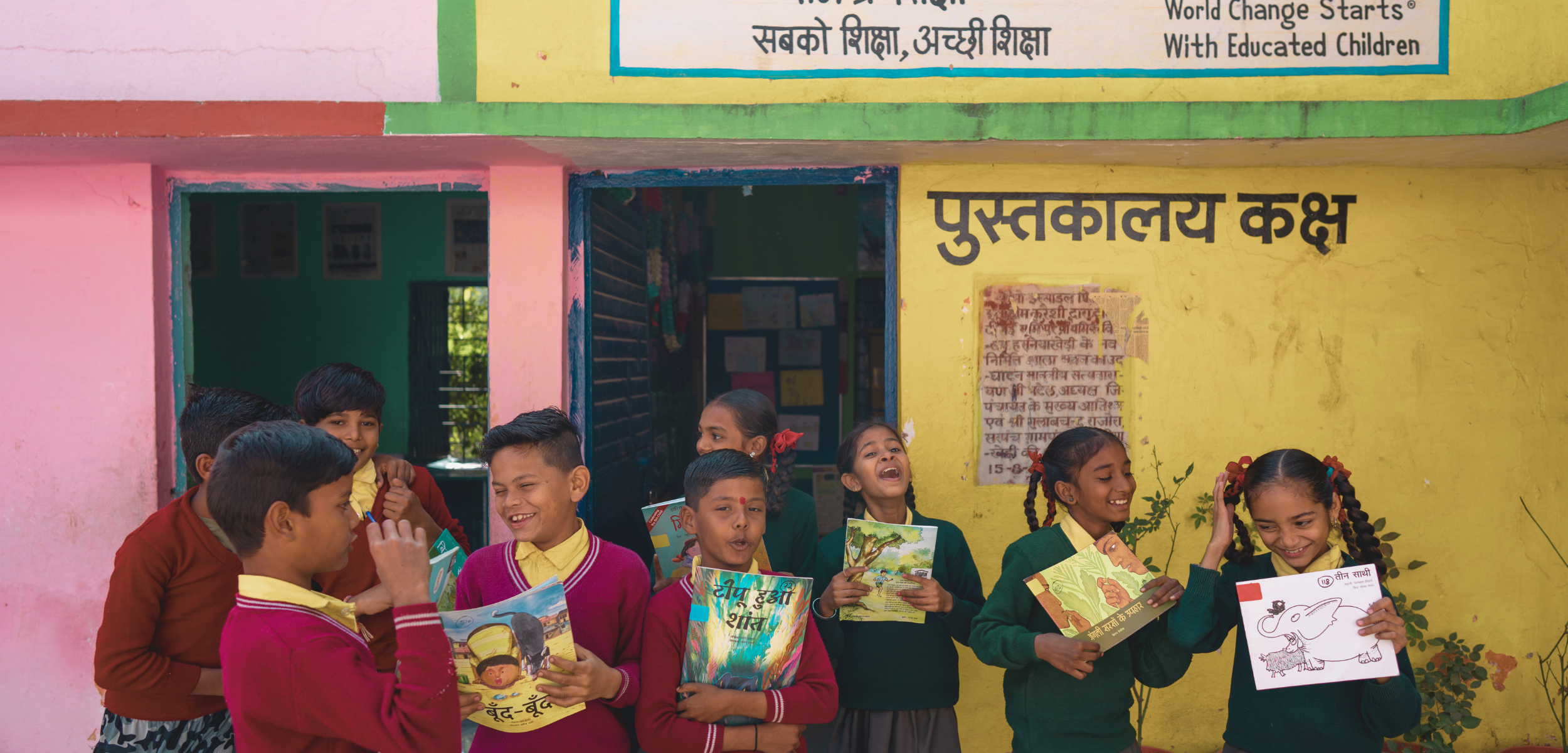
Rethinking our approach to scaling education programming
In India, states adapt national frameworks to their own political and administrative contexts. Districts operationalize state mandates through structures that vary enormously in capacities like staffing and resources. Block and cluster officials, the critical middle tier, are often positioned as administrative enforcers rather than instructional leaders. In practice, this means the indicators they are tracking often focus on checking attendance or classroom infrastructure.
Each layer of the system is a potential point of loss.
In large public education systems, scale is often equated with coverage. How many schools, how many children, how many states? But that framing misses the harder problem. In practice, scale is alignment. Alignment between state priorities and district implementation. Between system mandates and classroom realities. Between policy intent and instructional practice. When any link in this alignment breaks, even the strongest reforms lose their effectiveness. A teacher who didn’t receive coaching to deliver a new curriculum teaches the old way regardless of what the policy says. A block official who monitors for compliance rather than quality cannot flag when instruction is going wrong.
Room to Read’s work in Madhya Pradesh offers a clear framework for understanding how this alignment functions. At its core are two interconnected layers that must work together. The State Project Management Unit (SPMU), Mission Ankur in Madhya Pradesh, provides strategic direction, policy coherence and political ownership. This layer creates urgency, standardization and momentum across the system.
The District Project Management Unit (DPMU), Room to Read's model for district-level implementation support, does something different but equally essential: it ensures contextual adaptation of state priorities. The DPMU builds instructional depth by training and coaching the government's mentor cadre, strengthens block and cluster officials' role, repositioning them as instructional leaders rather than administrative enforcers, and creates continuous feedback loops between the classroom and the system.
These are not substitutes. And the interaction between them is what drives sustained learning outcomes.
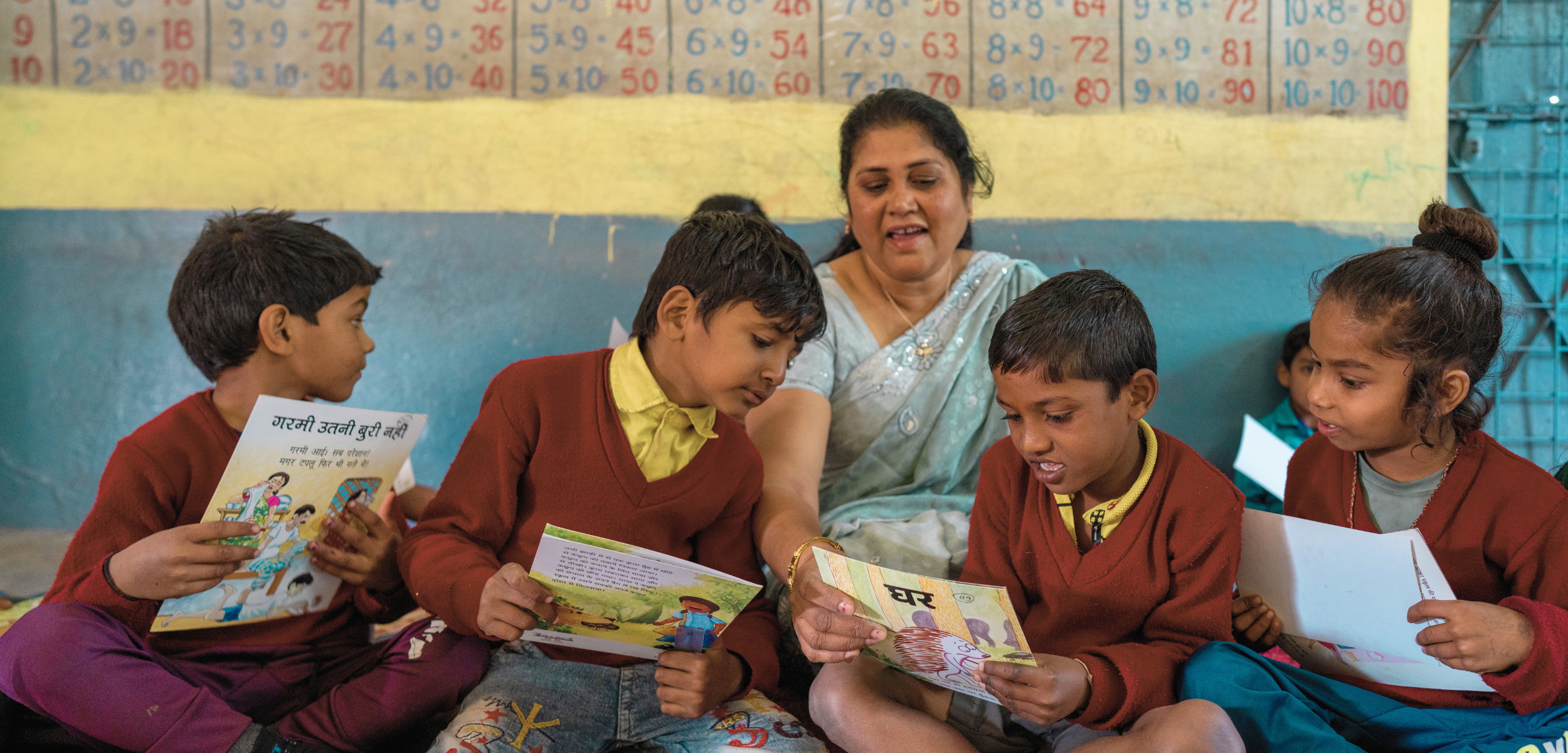
Why the interaction matters more than either layer alone
Education reform often overinvests in one layer at the cost of the other. Strong state systems without district-level depth produce compliance without quality. Teachers follow the script, but learning doesn't shift. Strong local initiatives without system alignment produce innovation without scale: something works in one block but never travels.
What did this look like concretely? District leadership held regular touchpoints with the District Magistrate to walk through foundational learning progress, keeping the mandate visible. Government mentors, coached and supported by the DPMU team, observed classrooms and shared this at a structured monthly forum, Shaikshik Samwad, where teachers and cluster officials discussed instructional gaps. Districts built a heat map that sorted blocks into three tiers based on performance data, so that blocks that showed a lag in progress received individualized support. And where in-person contact was not possible every week, the DPMU team sent short prompts to teachers over WhatsApp, flagging the specific gap that needed attention that month.
Room to Read’s district-level teams worked alongside government officials and teachers to build a reinforcing cycle: DPMU staff conducted structured classroom visits, supported teacher forums and fed evidence back to the state. The state sets direction. Districts adapt and operationalize. Teachers internalize through ongoing support: mentoring visits, peer forums, and reflective feedback cycles. Classroom evidence feeds back into the system, informing what comes next. This creates a reinforcing cycle of improvement. Not a one-time intervention, but a system that learns.
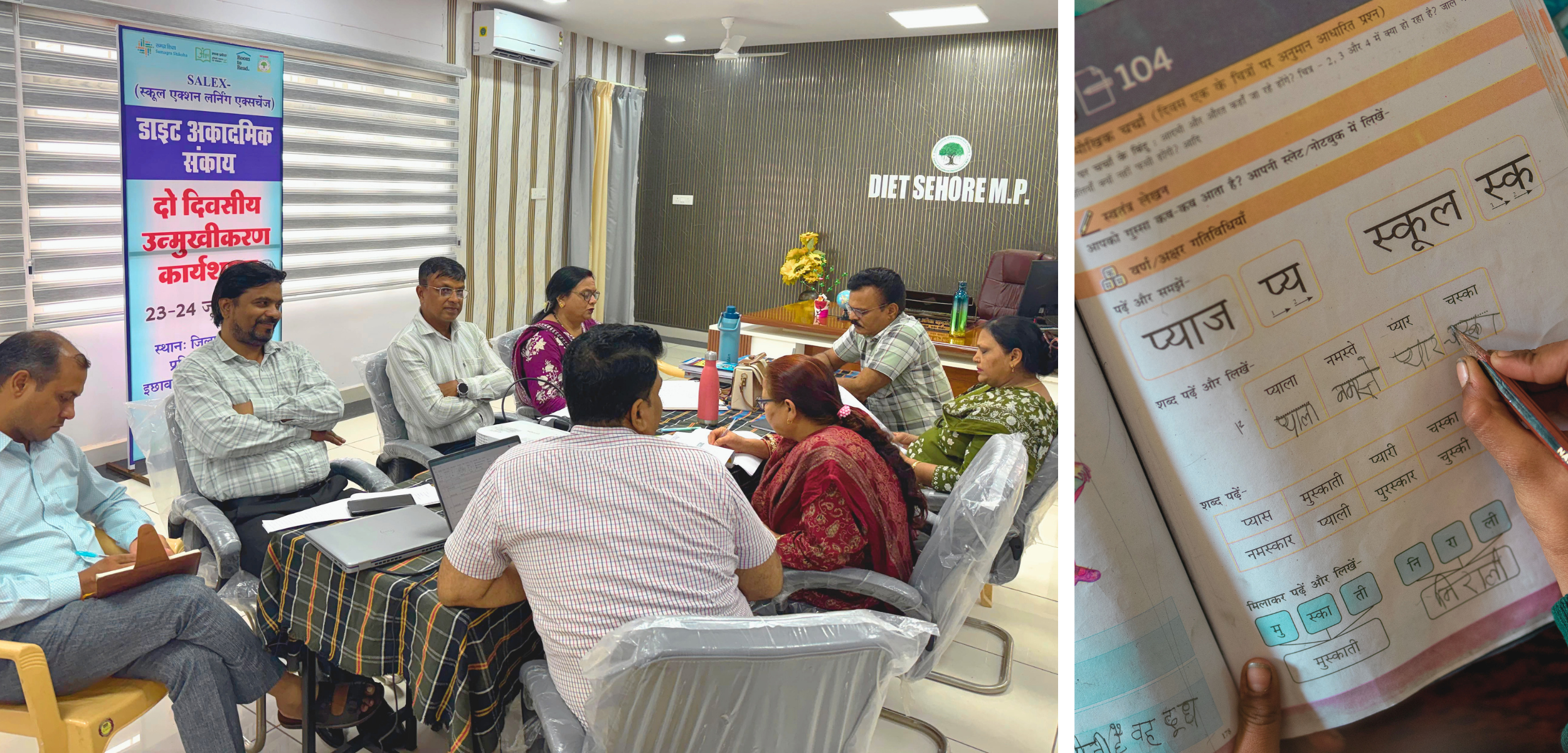
What this education reform looks like on the ground
After Madhya Pradesh launched Mission Ankur, districts that received only the state-level mandate saw modest improvements. Districts where Room to Read’s DPMU support was active showed more substantial improvement. Mission Ankur state rankings listed Sehore and Shajapur among the lowest-performing districts in Madhya Pradesh at baseline: high proportions of learners who lacked foundational learning skills, weak instructional support structures at the block level and limited internal capacity to translate NIPUN mandates into classroom practice. The conventional expectation was that education reform here would be slow and fragile.
What we observed was the opposite. In Shajapur and Sehore, the districts that received Room to Read support, oral reading fluency among children in grades 1 through 3 in Room to Read program schools increased by 38.5 correct words per minute, compared to 30.1 in comparison schools, a statistically significant difference with an effect size of 0.41. The proportion of non-readers in program schools dropped by 84 percentage points, from 92 percent to 8 percent. In comparison schools, the decline was 70 percentage points. In numeracy, single-digit subtraction proficiency rose from 5 percent to 72 percent in program schools, compared to 10 percent to 62 percent in comparison schools.
An effect size of 0.41 is meaningful in any context. In a large, diverse public system, where heterogeneity in teacher capacity, infrastructure and community context works against consistent outcomes, it is significant. It suggests that when structure and support work together with genuine alignment, scale does not dilute impact. It multiplies it.
Shajapur moved from rank 30 to rank 5 in numeracy across Madhya Pradesh over the program duration. That is not a measurement artefact. That is a district that internalized what alignment actually looks like.
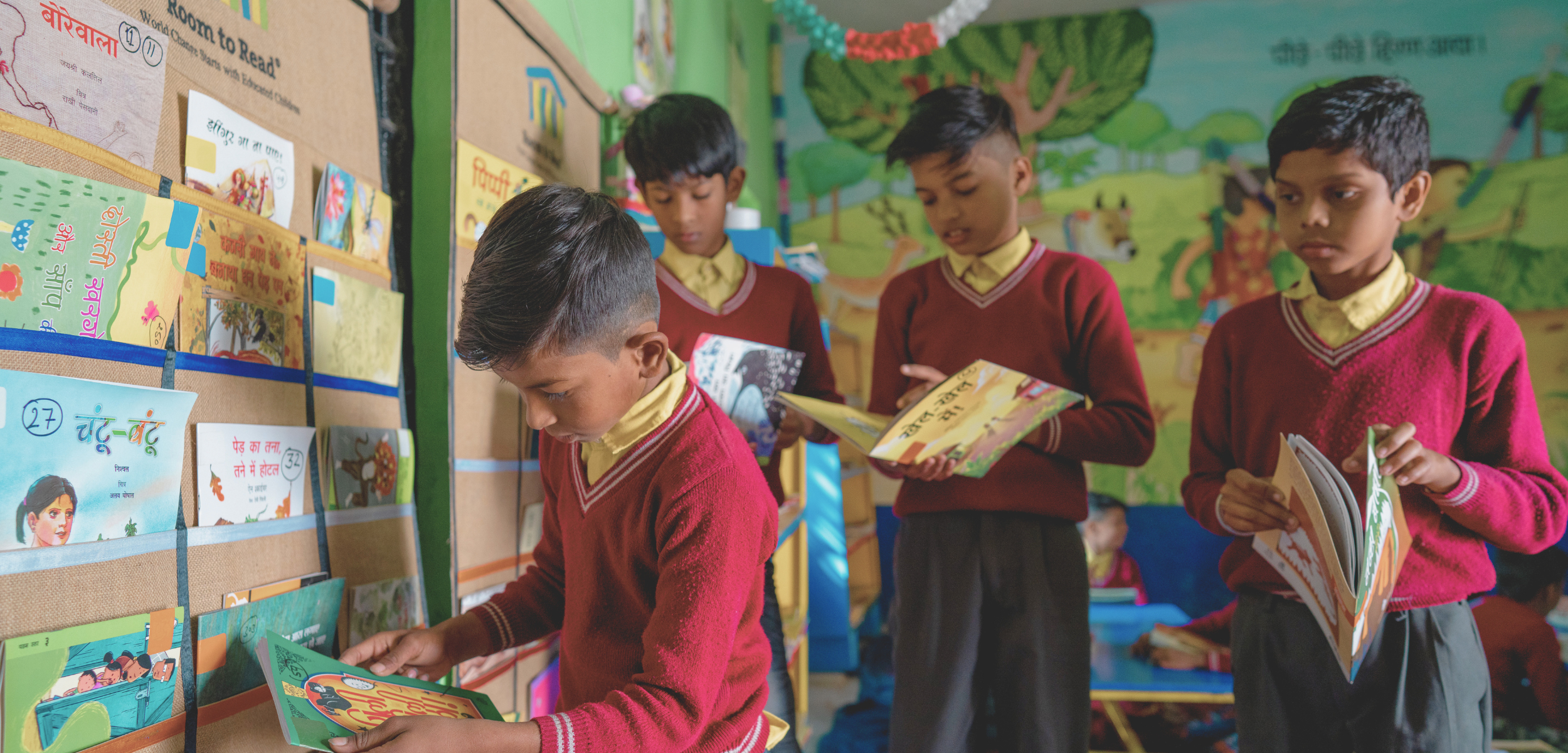
Shifting the questions asked in our approach to foundational learning education reform
These insights point to something that should change how policymakers and practitioners frame the challenge of education reform. The question is no longer "what works"? The evidence base on effective foundational learning interventions is strong and growing. The more consequential question is: What does it take to make what works actually work at scale? The answer, from Madhya Pradesh, is translation.
Translation as a system capability: the capacity of a system to consistently convert policy intent into instructional practice, in every school, in every classroom, every day. This requires investing in state-level architecture that creates coherence. It requires deep district-level capacity that enables contextual adaptation. And it requires continuous feedback loops that allow classroom evidence to inform policy in real time.
Educational reform is often measured by policies launched, programs rolled out, and budgets disbursed. The truest measure is simpler. Can a child read? That distance can only be closed when structure and support work together, sustained over time.
Learn more about our unique approach

You might also be interested in...

When girls go to school, who takes care of everyone else?
Nivrita Durgvanshi, Associate Director, Literacy Portfolio

Literacy interventions at scale: Building systems that deliver
Saktibrata Sen, Senior Director of Programming for Room to Read in India

Addressing linguistic complexity in Indian classrooms
Stuti Jain, Manager of Instructional Design and Structural Support

Language barriers in early grade learning: Overcoming challenges in Nepal
Netra Dahal, Director of Literacy, Room to Read in Nepal