
Education in Rwanda: How Room to Read is advancing literacy and learning
October 27, 2026

By Jean Pierre Twizeyimana
Country Director
Room to Read in Rwanda
Rwanda has emerged as one of Africa’s most ambitious countries in advancing quality education. Over the past two decades, government and community stakeholders have made remarkable progress in expanding access to education in Rwanda, improving school enrollment and positioning education as a cornerstone of national development.
Yet access to education in Rwanda is only part of the story. Ensuring that every child develops strong foundational literacy skills — and discovers a lifelong love of reading — remains an important challenge.
It is within this context that Room to Read identified Rwanda as an important country of operation and a strategic partner in advancing literacy skills and foundational learning. Building on years of collaboration and a shared commitment to improving educational outcomes, Room to Read is now strengthening the systems that help children learn to read, access quality books and develop the confidence to become lifelong learners.
Why Rwanda?
Room to Read’s engagement in Rwanda is rooted in the country’s strong government commitment to education, its clear national literacy agenda and the opportunity to strengthen the systems that support reading and learning.
From 2016 to 2020, Room to Read served as the primary literacy technical lead for USAID Soma Umenye, working with the Rwanda Basic Education Board (REB) to improve early-grade reading. Through this collaboration, Room to Read supported the development of quality Kinyarwanda reading materials and teacher professional development nationwide. The work contributed to literacy gains and demonstrated the value of sustained collaboration in improving children’s reading outcomes.
Building on this experience, Room to Read continued supporting Rwanda’s education sector through the USAID-funded Ibitabo Kuri Twese project (2023–2025). This initiative focused on strengthening the teaching and learning materials market to improve the availability, affordability, accessibility and quality of children’s books. It also brought together policymakers, publishers, educators and private-sector stakeholders to address barriers across the publishing ecosystem.
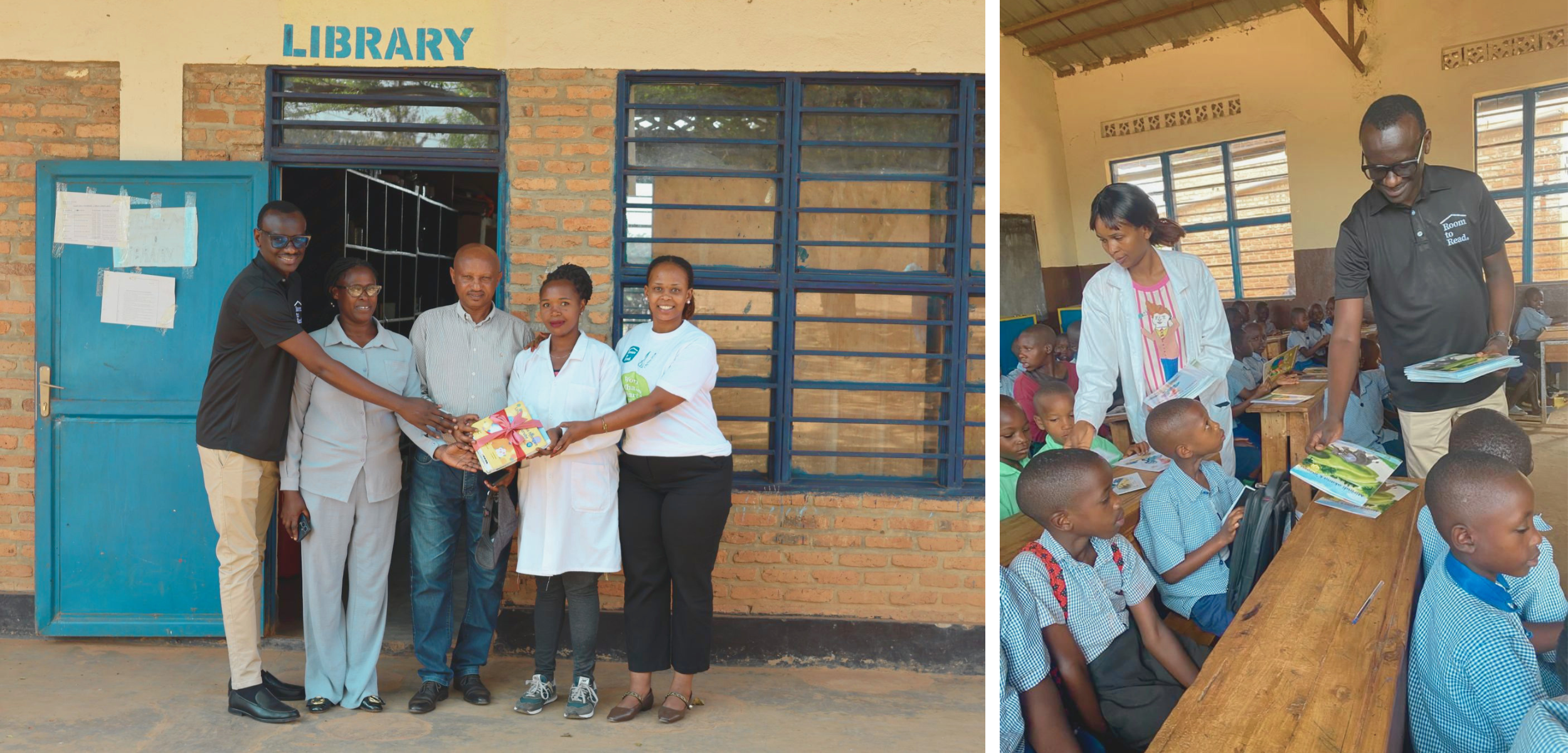
In 2025, Room to Read made a strategic decision to establish a stronger country presence in Rwanda. This decision reflected the country’s commitment to fostering a reading culture through SOMA Rwanda, the national initiative led by the Ministry of Education, as well as its efforts to strengthen local-language publishing and improve literacy outcomes.
With a stronger presence on the ground, Room to Read is now deepening our partnerships with government agencies, publishers and education stakeholders, supporting improvements across the entire book supply chain so that more children can access the books and learning opportunities they need.
Understanding Rwanda's literacy and learning needs
Rwanda has achieved near-universal access to primary education, an important milestone in the country’s educational journey. The challenge now increasingly lies in ensuring that children are not only attending school but also acquiring the skills they need to succeed.
Several interconnected priorities will help shape the next chapter of Rwanda’s literacy journey.
Building strong foundations in literacy
Learning to read is fundamental to a child’s educational journey. Strong foundational literacy skills enable children to learn across subjects, engage more fully in the classroom and build the confidence to continue learning throughout their lives.
Yet many children, particularly in the early grades, continue to struggle to develop strong reading skills.
Room to Read’s previous work in Rwanda demonstrated how structured literacy instruction, effective teacher support and access to quality reading materials can significantly and sustainably improve reading outcomes. Our experience from that first program implementation also highlighted the importance of aligning reading materials with national instructional approaches and equipping teachers with effective literacy methodologies.
These lessons continue to inform Room to Read’s approach as we work with partners to strengthen early-grade reading and support better learning outcomes for children.
Putting engaging books within every child’s reach
Children need access to books that reflect their experiences, speak their languages and inspire their imaginations. Although Rwanda’s publishing sector has grown rapidly in recent years, many schools and communities still lack sufficient age-appropriate, culturally relevant reading materials in Kinyarwanda and English.
The growth of local publishing has not always been accompanied by the technical capacity needed to produce books that meet educational standards. Expanding access therefore requires attention not only to the number of books available, but also to their quality, relevance and affordability.
Room to Read is working to address these challenges by supporting the development of children’s literature titles and strengthening the systems that make quality reading materials consistently available to both schools and communities.
Strengthening the ecosystem behind every book
A thriving reading culture depends on more than schools and libraries. Behind every book is an interconnected network of writers, illustrators, editors, publishers, printers, booksellers, policymakers and communities. Each plays a role in determining which stories reach children, how accessible those stories are and how likely children are to keep pulling them from bookshelves.
Strengthening book publishing ecosystems is essential to making quality reading materials more widely available and affordable for all children, all schools and all communities.
In Rwanda, Room to Read is working to build the capacity of local publishers and creative professionals, support policy development and collaborate with government partners to address challenges throughout the book supply chain. By strengthening the children’s publishing ecosystem as a whole, these efforts will create the conditions for a more sustainable children’s book publishing sector.
Nurturing a culture of reading
Learning to read is a crucial first step. But children also need opportunities to read for pleasure, explore new ideas and discover the joy of stories.
Developing a lifelong reading habit requires more than literacy instruction alone. Children need inviting spaces, engaging books and regular opportunities to read independently and with others.
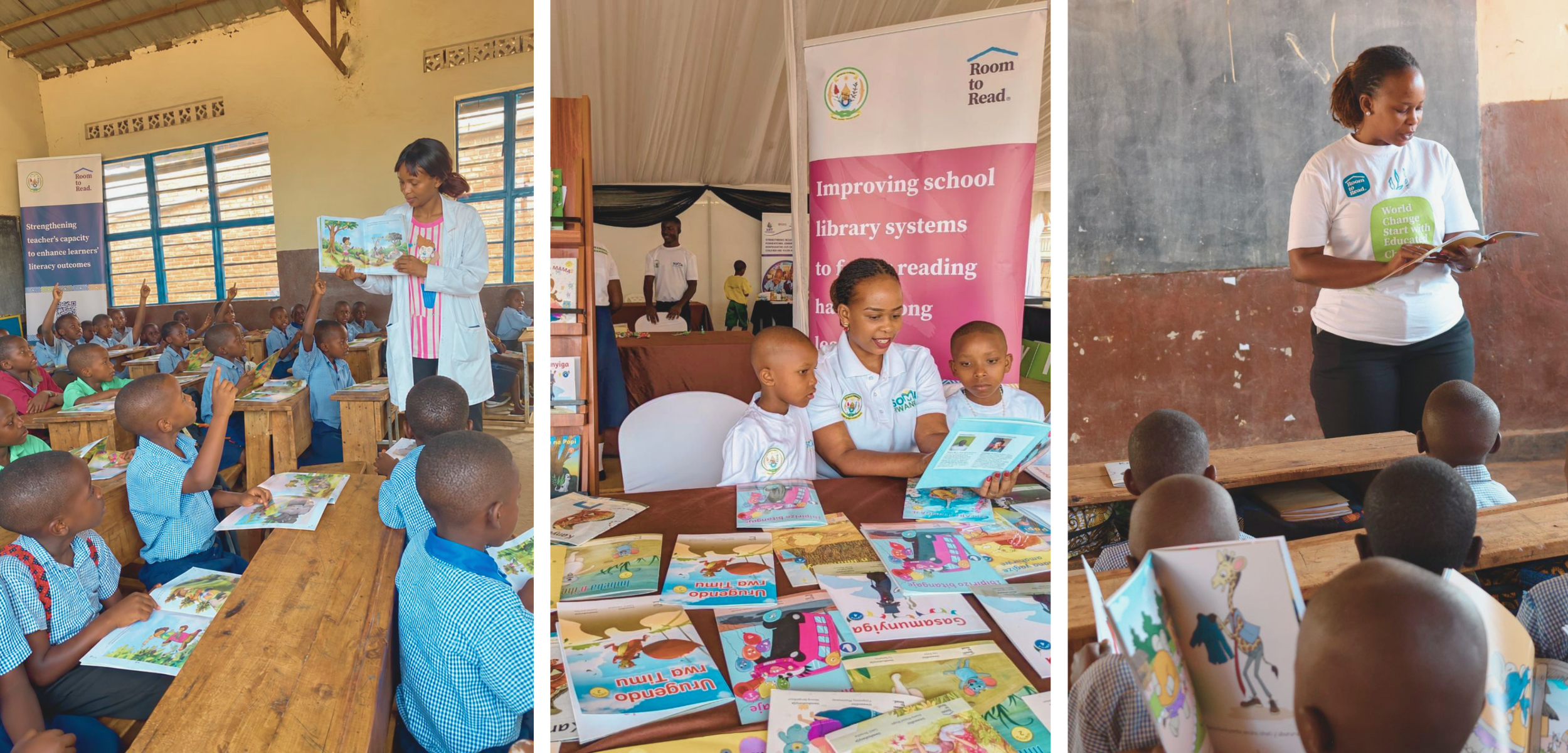
Room to Read supports this vision in Rwanda in the same way we do across global geographies: through children’s storybook development and distribution, library initiatives, reading activities and other literacy programming. These efforts are intended to help make reading a meaningful and enjoyable part of children’s everyday lives, at school and beyond.
Supporting the teachers who make it possible
Teachers remain at the heart of literacy improvement. While Rwanda has made significant progress in teacher training, ongoing professional development is essential to ensure educators can continue delivering effective literacy instruction and nurturing children’s reading habits.
Room to Read’s plans in Rwanda include ongoing educator training, developing sector education inspectors as literacy trainers, and supporting school librarians and library educators in filling their shelves with high-quality storybooks in local languages — while ensuring they have the resources and coaching needed to engage their students in these stories.
Together, these efforts recognize that strong reading outcomes depend on the combined impact of capable educators, captivating books and supportive learning environments.
Room to Read's strategy for quality education in Rwanda
Room to Read envisions a Rwanda where every child becomes a confident reader who reads independently, for the joy of reading and learning.
Realizing this vision requires a coordinated approach that connects what happens in the classroom with the wider systems that shape children’s access to books.
Room to Read’s strategy in Rwanda focuses on two interconnected goals:
Strengthening the national book ecosystem through policy development, publisher capacity strengthening and increased access to quality reading materials.
Enhancing teaching and learning in the early grades while strengthening reading skills and reading habits across schools and communities.
Room to Read is advancing these goals through storybook development, educator training and coaching, and partnerships with the Government of Rwanda and other stakeholders.
The ambition extends beyond helping children learn to read. It is also about creating an environment in which books, stories and literacy become integral to Rwanda’s educational and social development — supported by the policies, partnerships and local expertise needed to sustain progress over time.
Laying the groundwork for change at scale
Since establishing a stronger country presence, Room to Read in Rwanda has made important progress in building the foundations for sustained, long-term impact. Between December 2025 and July 2026, the team focused on strengthening government partnerships, building local creative capacity and supporting the systems needed to improve access to quality books.
Deepening partnerships with government
A key milestone has been the formalization of Room to Read’s partnership with the Government of Rwanda through a Memorandum of Understanding with the Ministry of Education.
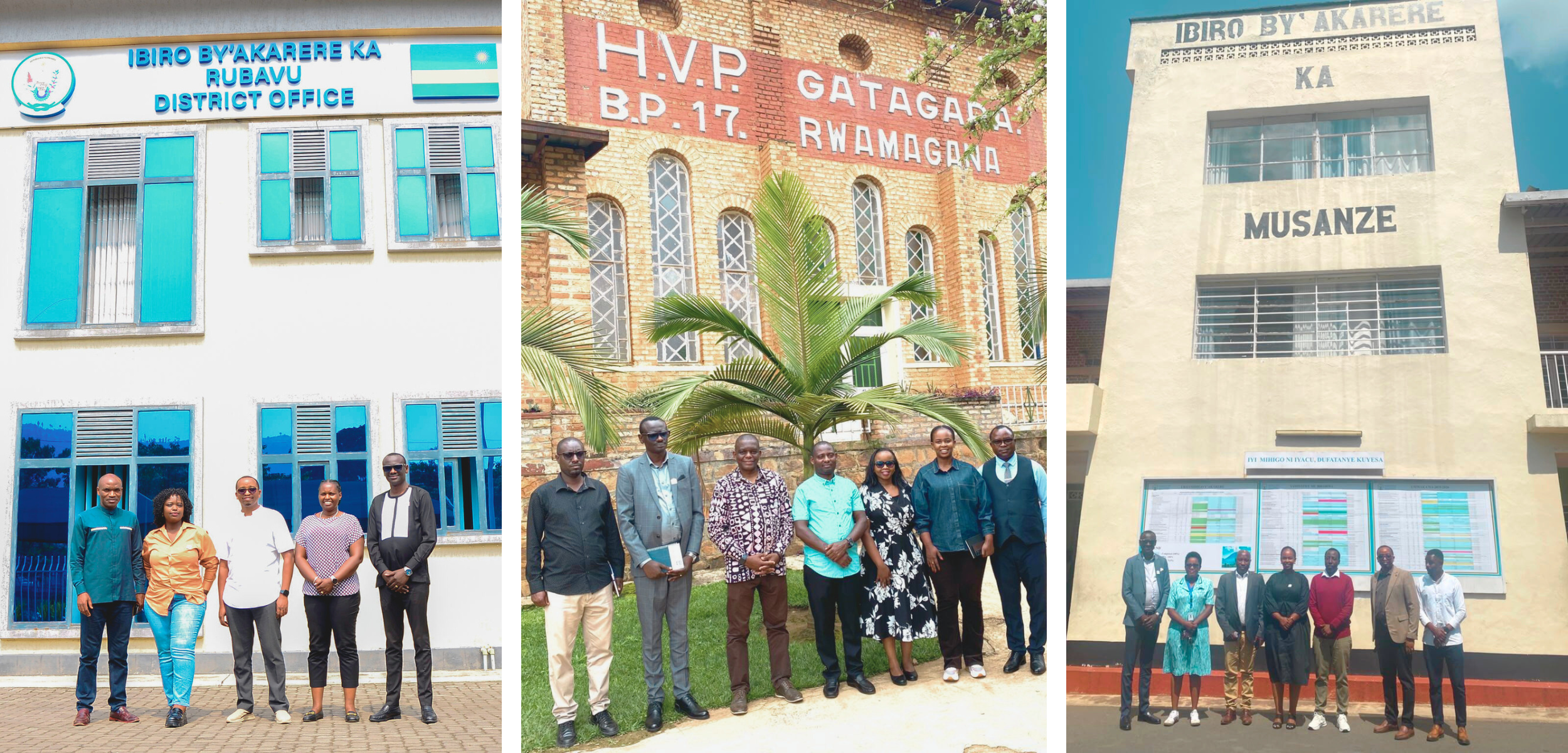
The team has also strengthened collaboration with the Rwanda Basic Education Board and local government leaders across 10 districts. These relationships provide an important foundation for coordinating efforts, supporting national priorities and advancing literacy and learning in schools and communities.
Investing in Rwanda’s local creative talent
A strong children’s book ecosystem depends on the people who bring stories to life. Authors, illustrators, graphic designers, editors and proofreaders all contribute to creating books that engage young readers and meet educational needs.
To strengthen this local capacity, Room to Read Rwanda has trained creative professionals across these disciplines. This work has resulted in 34 approved Kinyarwanda storybook adaptations and 26 newly created children’s books validated for distribution to schools.
These milestones represent progress in strengthening local expertise and expanding the collection of quality reading materials available to children. They also reflect the importance of investing in the people and processes that make a more sustainable publishing ecosystem possible.
Preparing educators and strengthening school libraries
Books have the greatest potential to support learning when educators have the knowledge and resources to use them effectively.
In collaboration with REB, Room to Read in Rwanda has validated training materials covering library management and library reading activities. These materials will support upcoming teacher training in 20 pilot schools across 10 districts in Rwanda.
By connecting educator support with library management and reading activities, this work is helping schools create environments where children can engage more deeply and consistently with stories shared with them, thereby further developing their reading skills and reading habits.
Supporting stronger national education systems and policies
Sustained progress in literacy depends not only on what happens in individual schools, but also on the policies and systems that determine how books are developed, procured, distributed and accessed.
Room to Read in Rwanda is working with the government and other stakeholders on two important areas of system strengthening: the development of a National Textbook Strategy and the development of a National Book Policy.
Developing a National Textbook Strategy
Room to Read’s local team is supporting the Government of Rwanda in developing a National Textbook Strategy that addresses the availability, affordability and accessibility of government textbooks for private schools and communities. The strategy will also address the development and accessibility of digital teaching and learning materials, as well as the use of artificial intelligence in textbook development, among other issues.
Currently, through in-house textbook development, the government develops its own textbooks, which are procured and distributed only to public and government-aided schools. The strategy will address broader questions of access and help inform approaches to teaching and learning materials.
Shaping Rwanda’s National Book Policy
Alongside this work, Room to Read in Rwanda is collaborating with four government ministries and private-sector stakeholders to develop the country’s National Book Policy.
The policy is intended to establish guidelines, regulations and strategic actions to guide Rwanda’s book publishing industry and shape the future of children’s literature publishing across the country. Its scope will extend across the entire book value chain, from authors to readers.
Together, these efforts will strengthen the policy environment surrounding books and publishing, helping to establish the conditions for greater access to reading materials and a more sustainable national book ecosystem.
Looking ahead: A future shaped by books and reading
Rwanda’s commitment to education, literacy and national development makes the country a natural strategic partner for Room to Read. Its strong policy environment, government commitment and collaborative spirit offer important opportunities to build on existing progress and extend the benefits of effective literacy programming to more children, more quickly.
Still, challenges remain. Access to quality reading materials, the continued strengthening of the children’s book publishing ecosystem and improvements in foundational literacy all require sustained attention. Addressing these priorities will depend on long-term collaboration among government institutions, educators, publishers, communities and other partners in education in Rwanda.
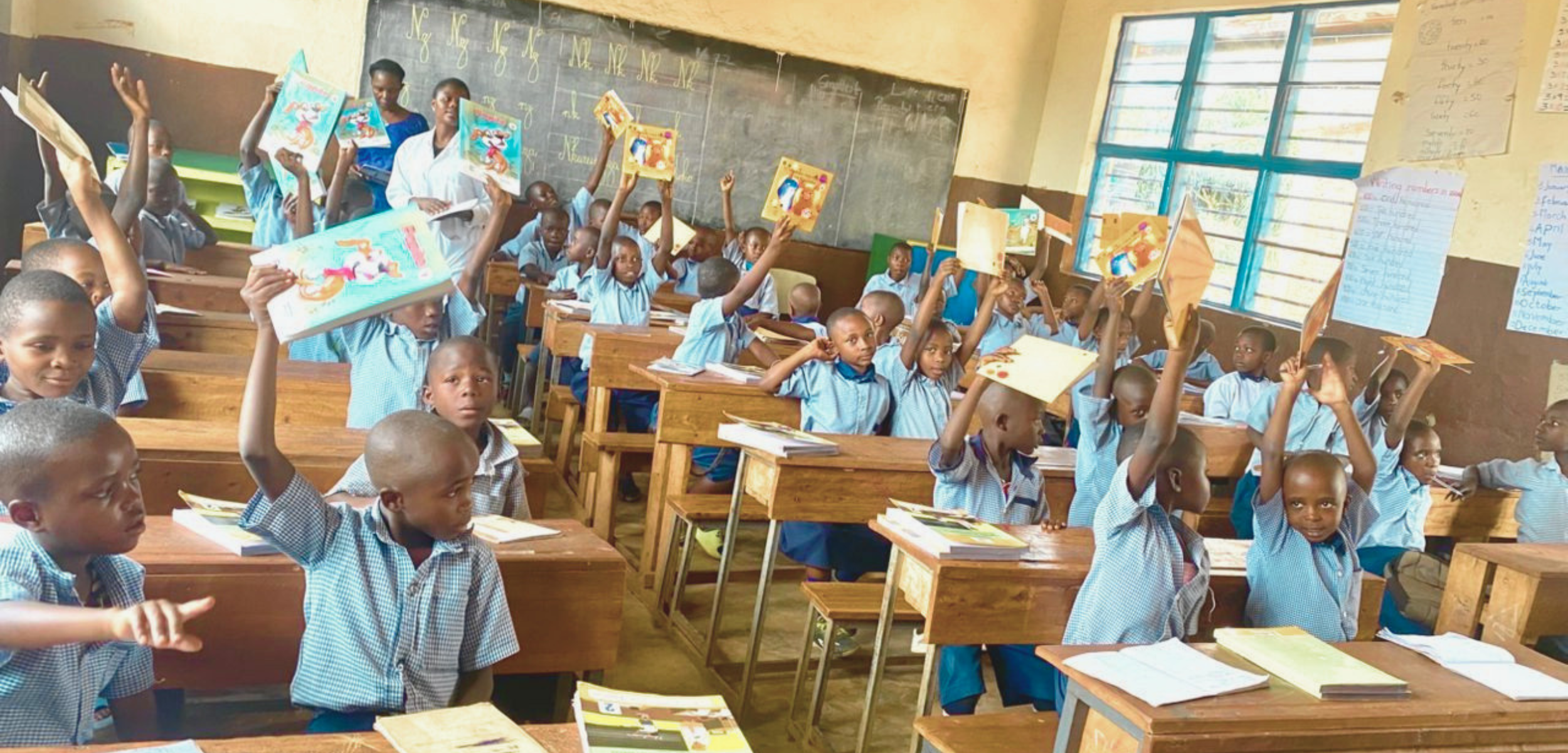
Room to Read’s journey in Rwanda builds on years of experience and a shared commitment to helping children learn and thrive. From strengthening local publishing capacity to supporting educators and contributing to national policy development, the work is focused on creating the conditions in which quality books and effective literacy instruction can reach more children, creating change at scale.
Ultimately, the goal is both simple and far-reaching: a future where every child in Rwanda has the opportunity to read, learn and thrive — and where a love of reading opens the door to a lifetime of possibility.
Because world change starts with educated children.
Learn more about our unique approach

You might also be interested in...

Girls’ education in Africa: The most powerful investment we can make
Zamaradi S. Islahi, Global Director, Room to Read Gender Equality Portfolio

Room to Read Launches Africa Regional Advisory Board and Announces $75 Million Fund to Support the Expansion of Foundational Learning Across Continent During Joint Board Session in South Africa


Reading Champions: Scaling Room to Read’s library approach to nurture a strong culture of reading in South Africa

The Impact Of Foundational Learning On Africa’s Future Workforce
Nicole Pillay
