
The power of children’s libraries: supporting literacy and building community
March 04, 2026
Christabel Pinto
Vice President
Room to Read's Literacy Porfolio
Libraries empower.
They play a role in literacy development and in preserving and passing on knowledge, and they contribute to the fundamental right of all people, children and adults alike, to access ideas and information.
High-quality libraries are an important part of Room to Read’s Literacy Portfolio — along with literacy instruction and publishing a variety of children’s reading materials — and they reflect Room to Read’s commitment to offering every child a comprehensive and dignified pathway to learning and development.
Drawing on more than two decades of implementation experience, three broad areas of benefit to children have emerged:
Libraries get books into children’s hands.
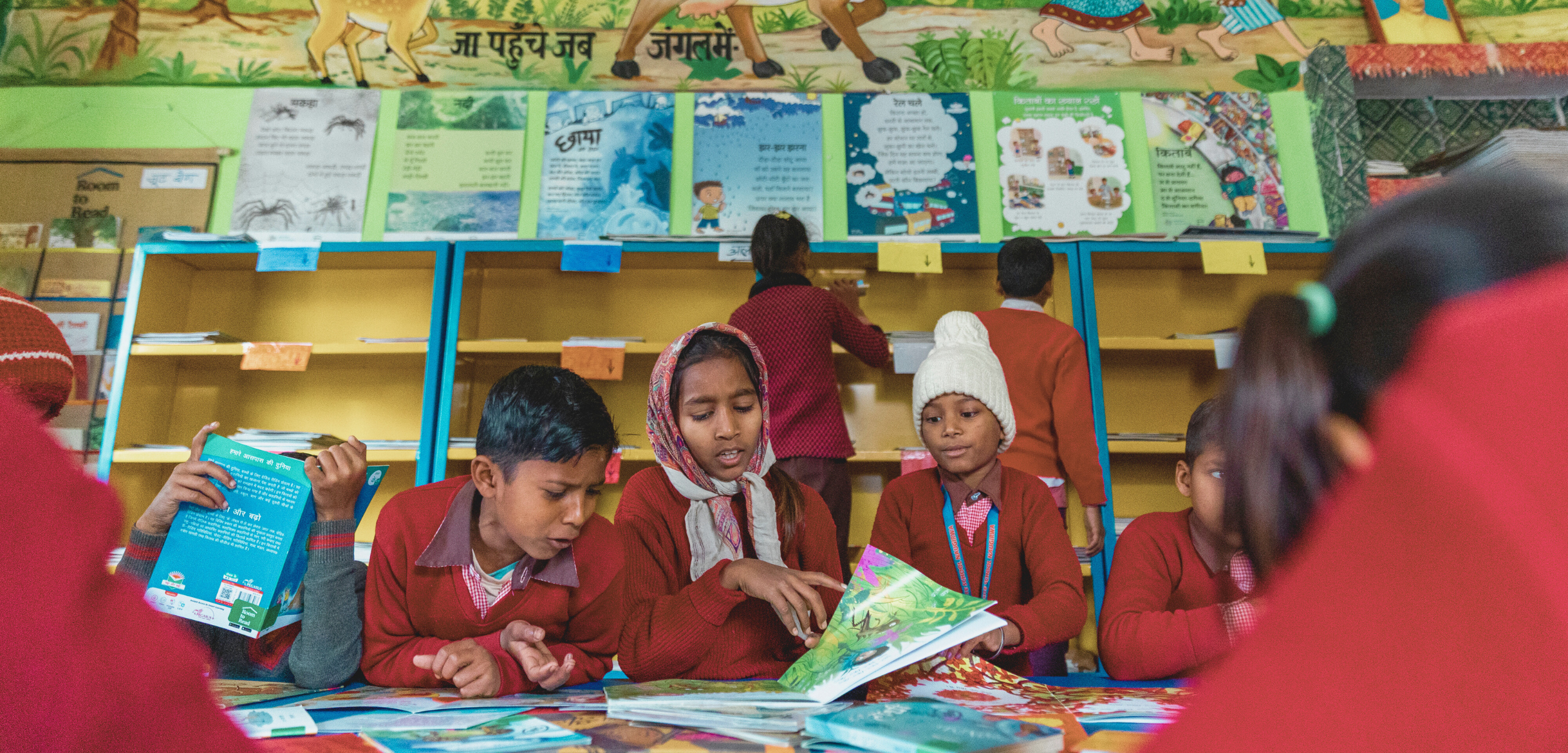
A crucial component of learning how to read is having reading materials. Libraries provide access to a shared book collection for a large number of children who might not otherwise have access to books. The average Room to Read school library has hundreds of books that can be accessed by up to 600 children. Our data are clear: When children have access to a library, they choose to use it and borrow books to take home.
In 2024, children around the world borrowed more than 10.7 million books from Room to Read libraries, averaging 11.4 books per child. 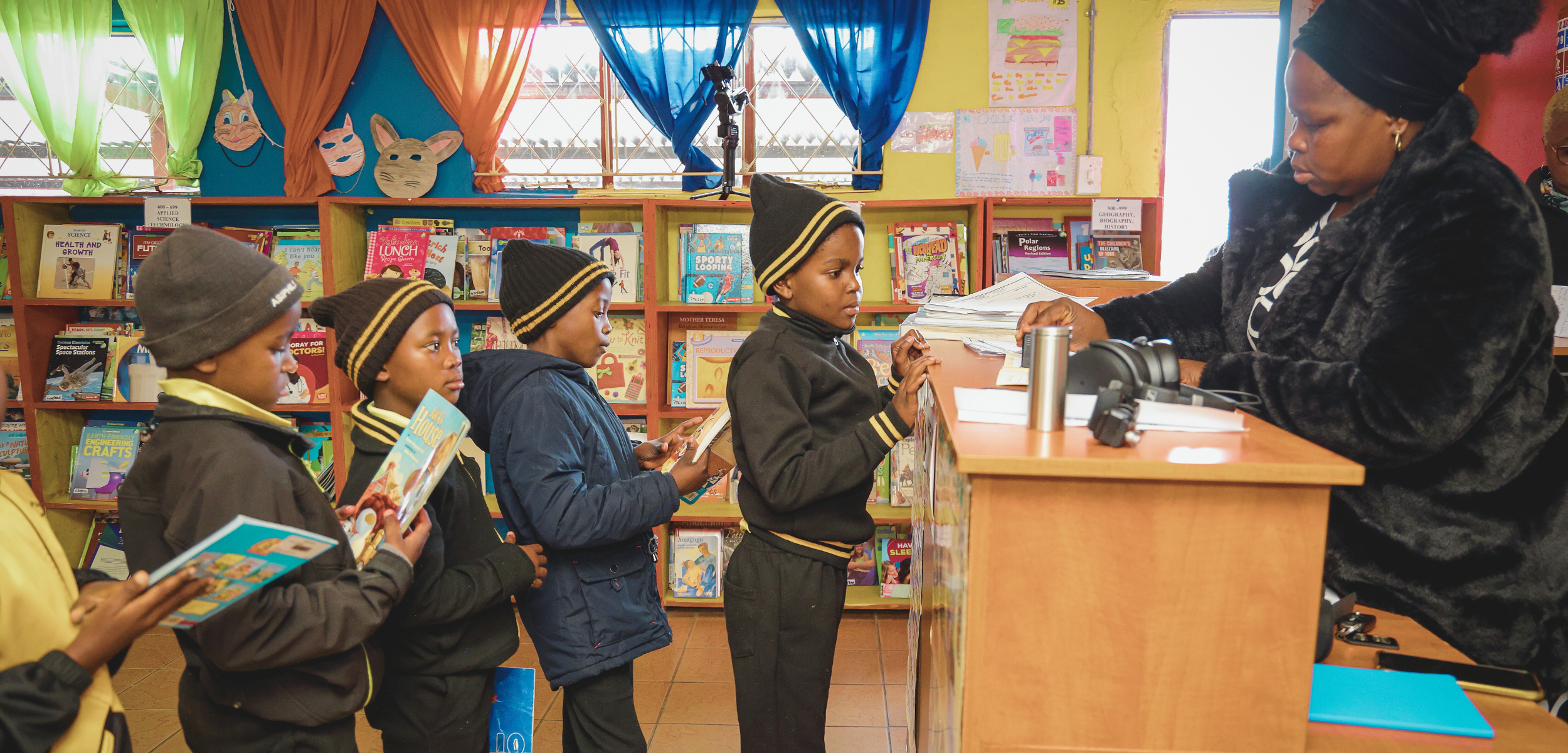
Libraries help children develop a habit of reading and support literacy development.
Room to Read’s innovative habit of reading assessment tool measures a habit of reading using inter-linked behavioral constructs like reading behavior, enjoyment of reading for leisure and for school, intrinsic and extrinsic motivation to read, and self-efficacy. Findings from the use of this tool indicate that Room to Read libraries positively influence children’s habit of reading. In an outcome evaluation of a library intervention in Karnataka, India, children demonstrated statistically significant gains in their habit of reading with notable improvements in book borrowing, reading for fun and reading confidence.
Additionally, and not surprisingly, an improved habit of reading supports literacy development. Our findings from South Africa, Bangladesh and India — where children’s literacy skills and habit of reading were assessed — demonstrate a strong, positive and statistically significant association between a habit of reading and literacy skills in the early grades.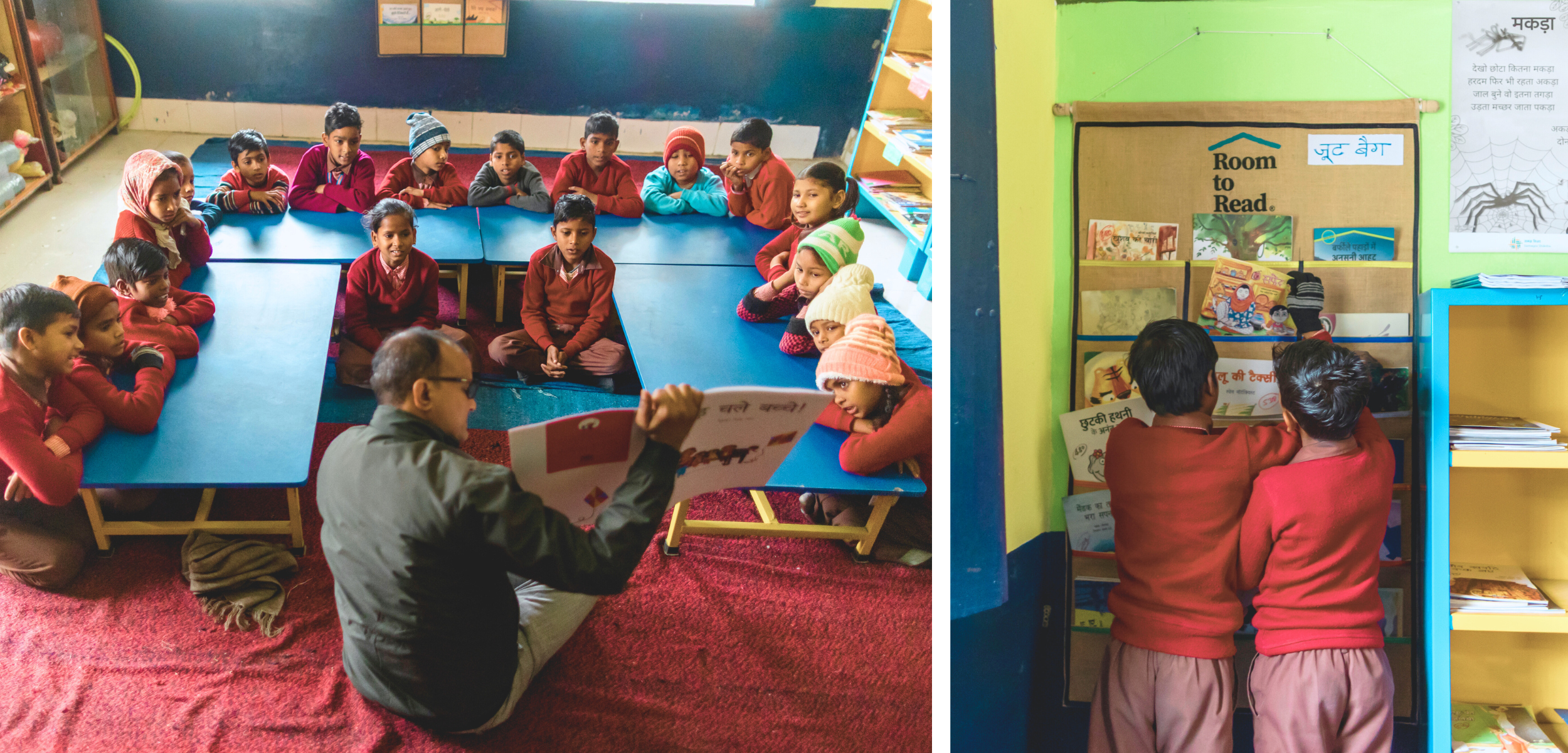
Libraries provide opportunities for children to engage more deeply with a variety of texts. This increases their exposure to a wide range of vocabulary, supports deeper text comprehension and the ability to think critically about new information, and improves their knowledge and understanding of the world. Room to Read is contributing to an extensive research base on the value of libraries for learning.
“In dozens of large-scale studies, involving over 8,700 schools and over 2.6 million students, research has consistently demonstrated that students score an average of 10-20% higher on reading and achievement tests when their school has a strong library (Lance, 2005; Scholastic, 2008; Quantitative Resources, 2003)” (Spinks 2009).
Libraries foster global citizenship and build a community of learners.
Room to Read libraries create spaces where children read, share and discuss books with each other and an engaged adult who is trained to foster a supportive, joyful learning environment. This community of book users extends beyond the library walls as children borrow library books to take home and share with their families. 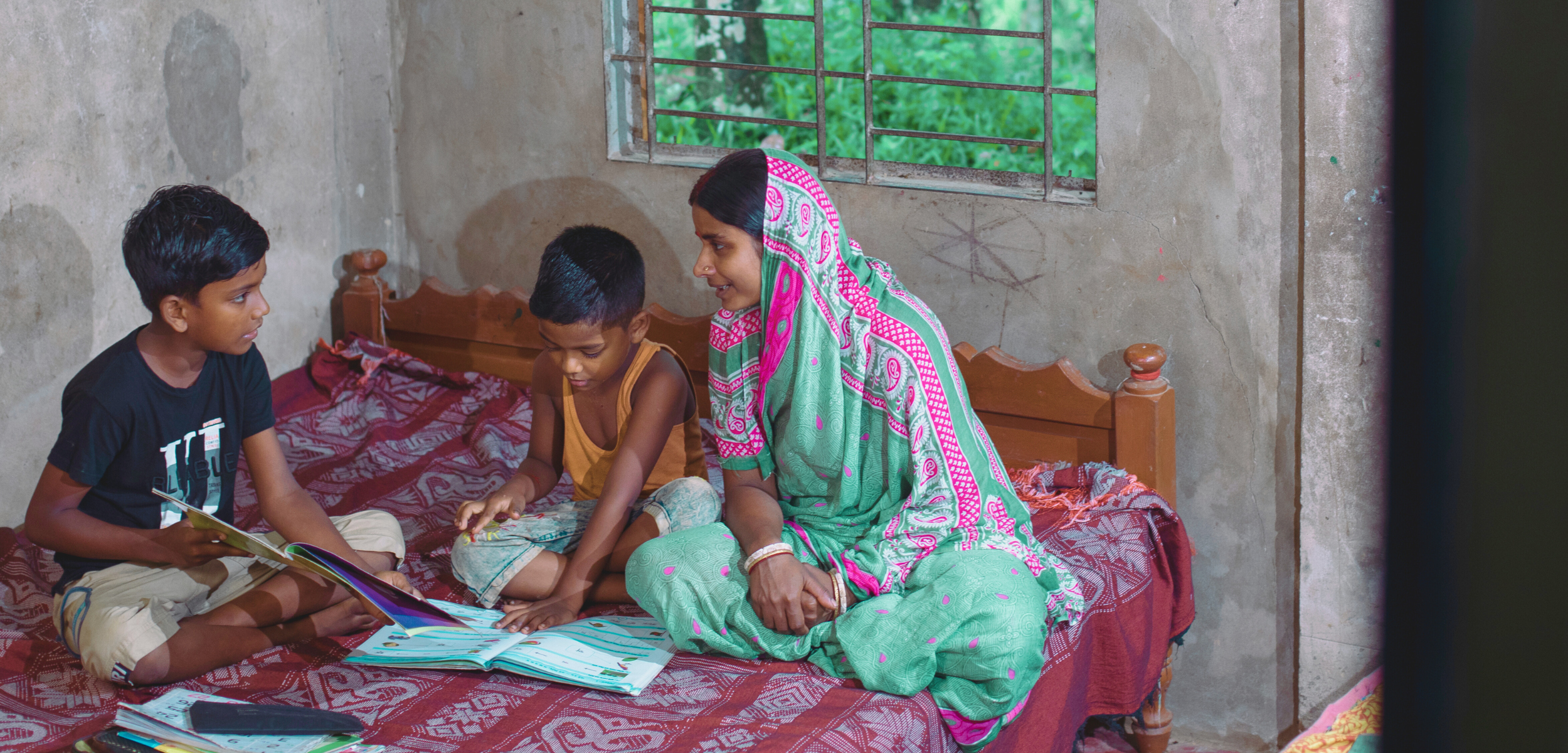
Additionally, diverse book collections, such as those found in well-stocked libraries, foster global citizenship and a celebration of our differences. Books can shape children’s development as people. A good story allows us to take a few steps in somebody else’s shoes and, by doing so, recognize our shared humanity. As we identify with characters’ desires, challenges, motives and feelings, we grow in self-awareness, empathy and the ability to solve problems in real life.
Libraries, the books that they house, and the community that they foster, respond well to the needs of our time as echoes of divisive rhetoric reverberate across the globe.
Children’s libraries promote voluntary reading, strengthen literacy skills, and plant the seeds for lifelong learning. They are welcoming spaces where community develops and empathy takes root, shaping the next generation of thoughtful, informed bridge-builders. Through its support of more than 30,000 libraries worldwide, as part of a comprehensive Literacy Portfolio, Room to Read continues to turn this vision into reality — ensuring that every child, everywhere, has room to read, learn and grow.
References:
Lance, K. C., & Loertscher, D. V. (2005). Powering Achievement: School Library Media Programs Make a Difference: The Evidence Mounts (3rd ed.). Salt Lake City, UT: Hi Willow Research.
Quantitative Resources, LLC (2003). Show Me Connection: How School Library Media Center Services Affect Student Achievement. Missouri Department of Elementary and Secondary Education. Retrieved from http://www.dese.mo.gov/divimprove/curriculum/librarystudy/plainenglish.pdf
Scholastic (2008). School Libraries Work! Scholastic Library Publishing.
Spinks. A. (2009). Library Media Programs and Student Achievement: Research and research-based practices for library media specialists and education leaders. Cobb County School District. Available at: Library Media Programs and Student Achievement: Research and Research-Based Practices for Library Media Specialists and Education Leaders (henry.k12.ga.us). Accessed 2 October 2023.
You might also be interested in...

Reading in a digital society: Promoting book use around the world
Christabel Pinto, Vice President, Room to Read's Literacy Portfolio

Why are libraries important to a community: A Room to Read expert explains
Quynh Le, Global Literacy Manager

International Literacy Day reflections
Christabel Pinto, Vice President, Room to Read's Literacy Portfolio