How Room to Read is partnering with Sri Lanka’s Ministry of Education to transform school counseling and career guidance centers across the country
Student wellbeing at scale
January 06, 2026

By Ishika Millaniyage
Manager of Room to Read's
Girls' Education Program in Sri Lanka
"When a student comes to me, it’s not always about exams or discipline," a school counseling teacher from a government school in Southern province, Sri Lanka, shared quietly during a recent training. "Sometimes they just need someone to listen and to tell them they are not alone."
Across Sri Lanka, counseling teachers like this one are often the first point of contact for students navigating anxiety, family pressures, peer relationships and the uncertainties of adolescence. While schools have long been spaces for learning, they are increasingly becoming spaces where students seek emotional safety, guidance and connection.
Recognizing this growing need, Room to Read in Sri Lanka, in partnership with the Ministry of Education, is scaling a school-based mentoring initiative designed to strengthen student wellbeing — socially, emotionally and mentally. Grounded in Room to Read’s mentoring approach and Life Skills Education (LSE) methodology, the initiative focuses on building the capacity of school counseling teachers, ensuring that support for student wellbeing is not episodic but embedded within the everyday life of schools.
In Sri Lanka, this mentoring scale-up reflects Room to Read’s belief that education must address the whole child. Academic success and student wellbeing are not separate goals; they are deeply interconnected. 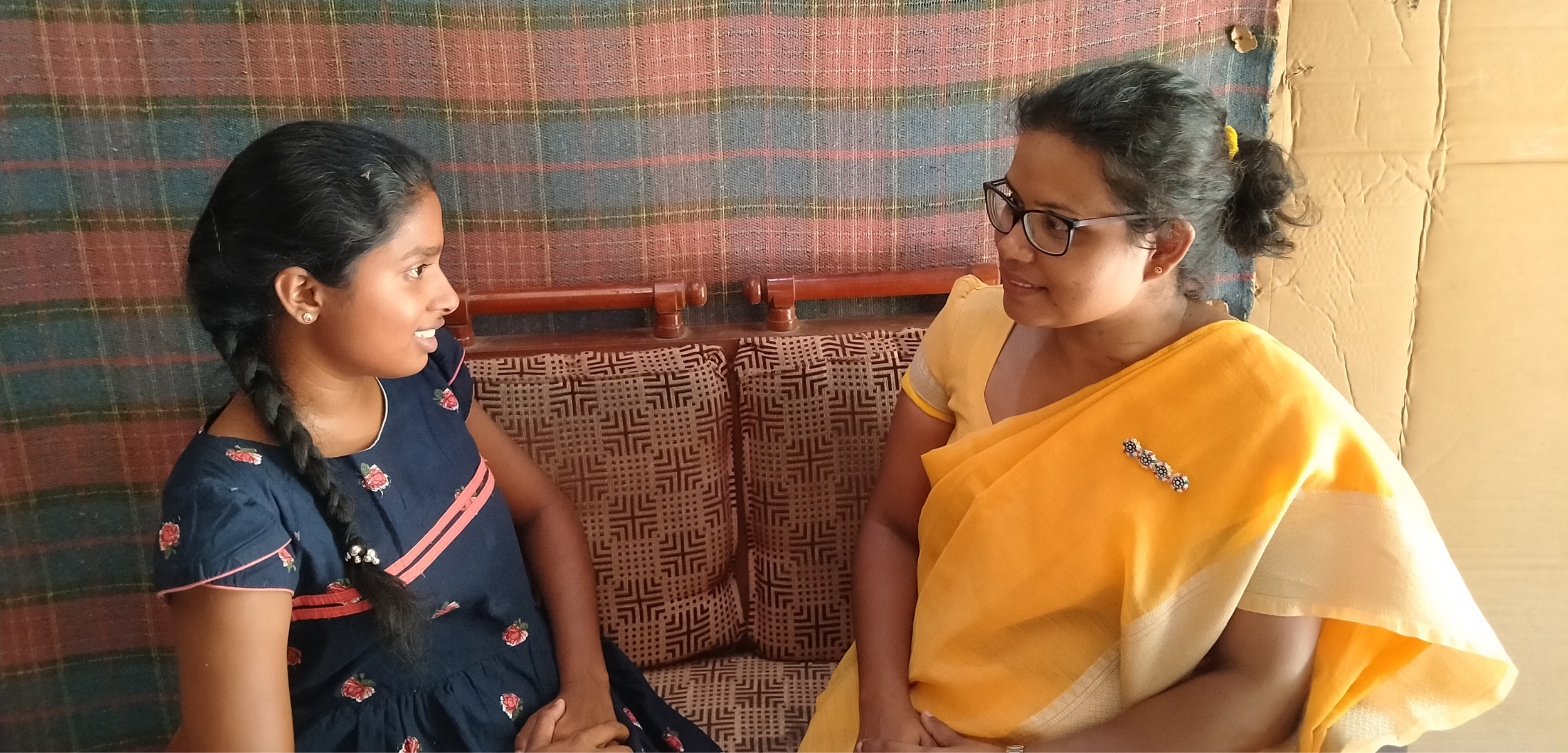
Meeting students where they are
Adolescence is a time of rapid change. Students are forming identities, managing expectations and responding to pressures both inside and outside the classroom. For many young adults in Sri Lanka, especially in the aftermath of recent social and economic disruptions in the country, emotional challenges can quietly affect attendance, engagement and overall learning outcomes.
The mentoring scale-up model we’ve designed responds to this reality by positioning counseling teachers not just as problem-solvers, but as consistent, trusted mentors who can guide students through developmental transitions. Combined with Room to Read’s Life Skills Education curriculum and content, the approach equips teachers to support students in developing self-awareness and emotional regulation, healthy communication and relationship skills, problem-solving and decision-making abilities, resilience, confidence and empathy.
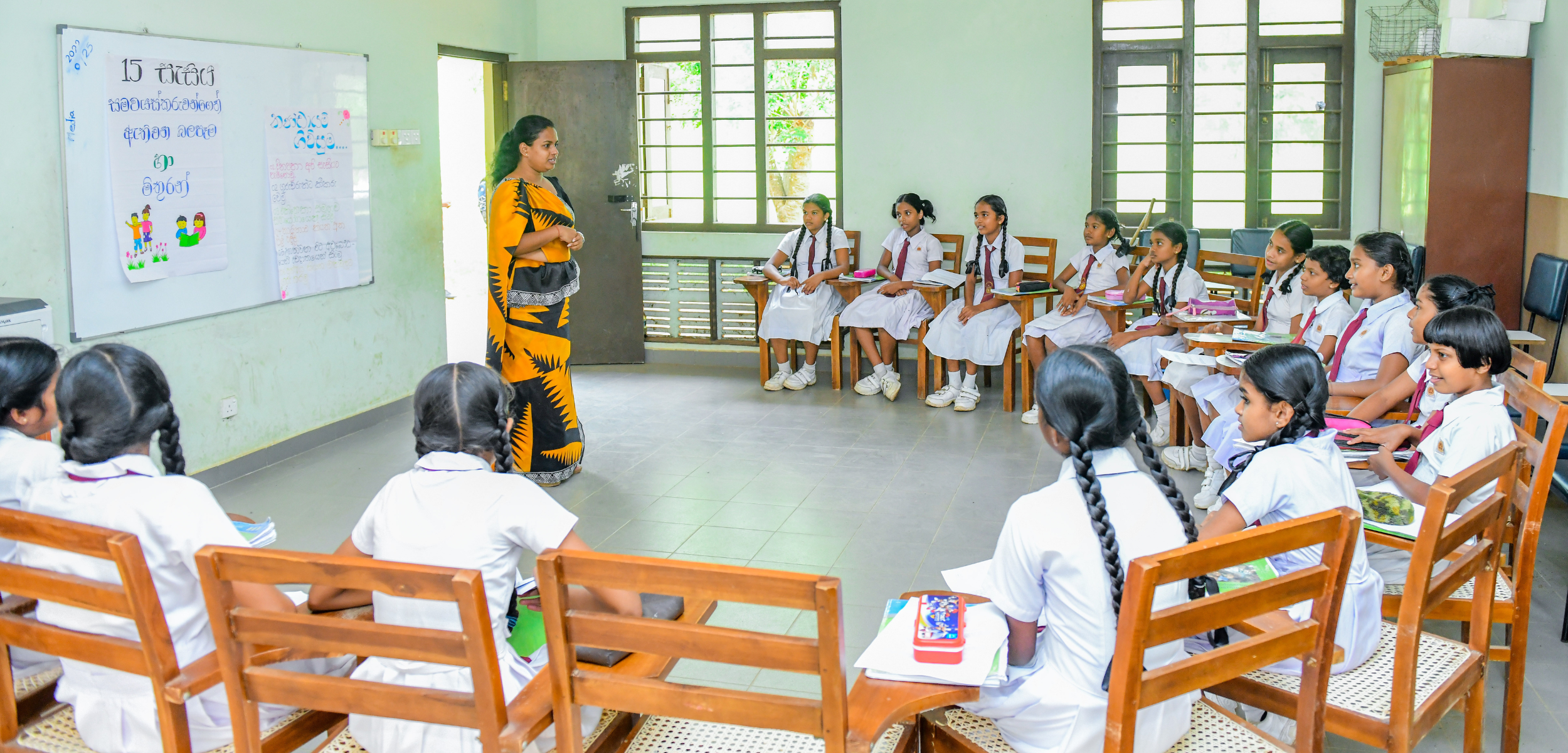
These are not abstract concepts. During training, counseling teachers reflect on real student experiences; moments of conflict, silence or distress, and practice how to respond in ways that are supportive, non-judgmental and empowering.
"I realized I don’t always need to give advice," one counseling teacher from the East expressed. "Sometimes, mentoring is about asking the right question and letting the student find their own strength."
Building capacity and strengthening existing systems
Room to Read’s mentoring scale-up works within Sri Lanka’s existing education system. By working directly with the Ministry of Education, the initiative aligns with national education priorities and strengthens existing structures — including school counselling and career guidance centers and the role of counselling teachers — enabling the model to be piloted across multiple provinces and diverse school contexts. This approach ensures that student wellbeing support is not limited to a small group of students but reaches thousands of adolescents within and beyond Room to Read’s core programming.
The initiative emphasizes capacity building at scale, combining:
- Structured, evidence-based training rooted in adolescent development
- Practical, activity-driven methodologies that teachers can apply immediately
- Ongoing monitoring, reflection and learning to adapt mentoring approaches to diverse school contexts
This design ensures that counseling teachers are not only trained but supported in translating learning into practice.
A holistic approach to student wellbeing support
While counseling teachers are at the heart of this mentoring initiative, Room to Read’s approach recognizes a simple truth: student wellbeing does not exist in isolation. A child’s experiences in the classroom are deeply influenced by their relationships at home, their peer networks and the wider community that surrounds them.
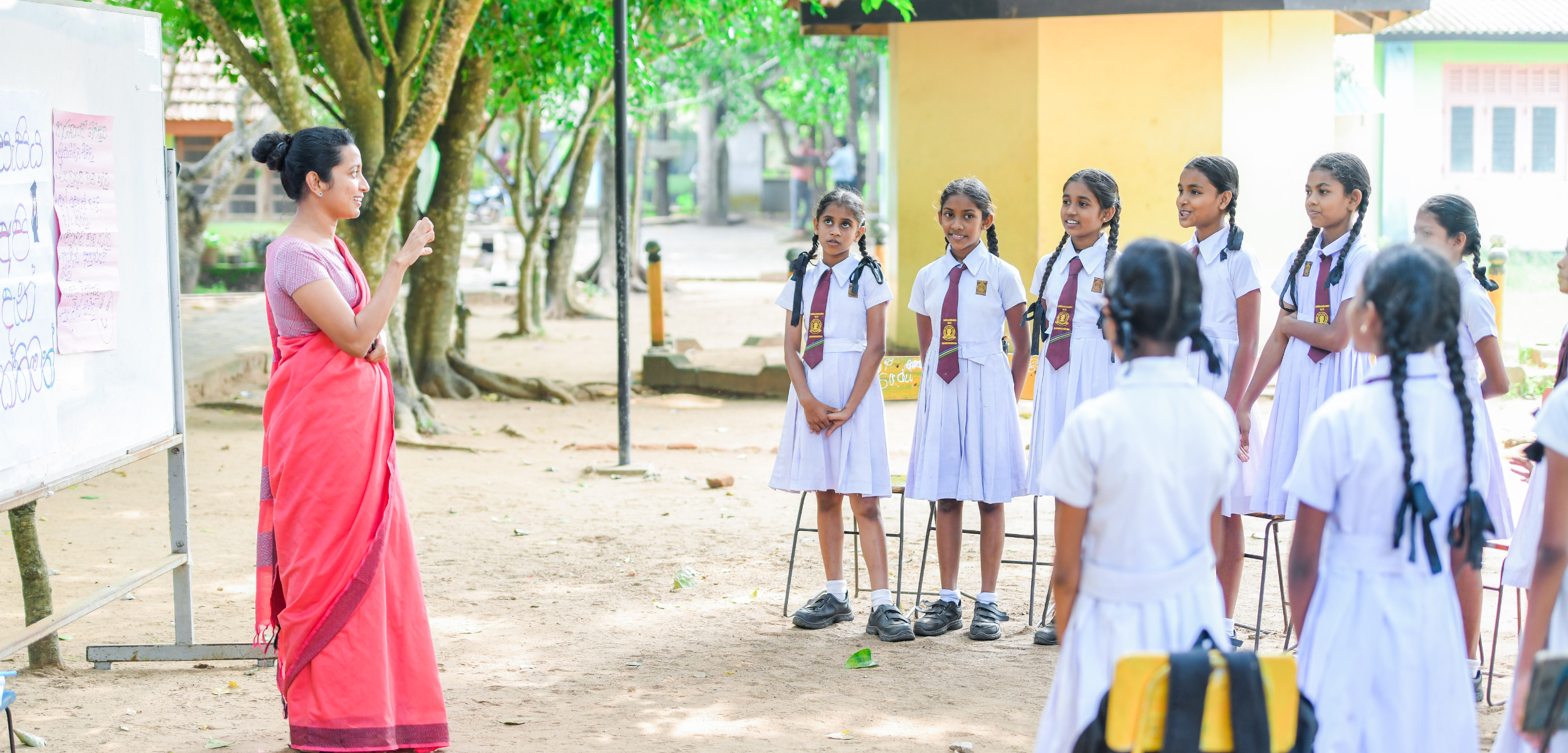
For this reason, our mentoring scale-up is intentionally designed as a holistic, school-ecosystem approach, one that extends beyond individual counseling sessions to engage educators, parents and external stakeholders who shape a student’s daily environment.
Counseling teachers are supported to act as both mentors to students and as connectors within the school community, working alongside class teachers, school administrators and families to create a more supportive and responsive environment for young people.
During trainings, teachers explore how mentoring principles and life skills can be reinforced through:
- Collaboration with subject teachers to identify students who may need additional support
- Engaging parents and caregivers in understanding adolescents’ emotional and social development
- Linking students to external services and stakeholders when needs extend beyond the school
Where students require support beyond the scope of school-based services, we were able to develop clear referral pathways, in close collaboration with the Ministry of Education and 15 government agencies engaged in child protection, such as the National Child Protection Authority, the National Women’s Bureau and the Sri Lanka CERT (Computer Emergency Readiness Team), to ensure adolescents can access appropriate care.
This broader lens helps shift student wellbeing from being seen as the responsibility of one individual teacher to a shared commitment across the school ecosystem.
"One of the biggest changes for me was realizing that I don’t have to work alone. When parents and teachers understand what students are going through, the support becomes stronger," a counselling teacher from Sabaragamuwa province reflected.
A model that resonates with government partners
For government partners, scalability, sustainability and evidence matter. Room to Read brings all three.
As a long-standing partner of governments across the world, Room to Read has demonstrated the ability to design programs that integrate seamlessly into public education systems, scale interventions without compromising quality and adapt global evidence-based approaches to local contexts.
In Sri Lanka, our mentoring scale-up builds on years of collaboration and trust with education authorities. The Ministry of Education recognized the value of a model that does not replace their existing structures, but strengthens them by investing in teachers, reinforcing national priorities around student wellbeing, and generating learning that can inform future policy and programming.
The initiative also reflects Room to Read’s commitment to co-creation. Our engagement is not only as an implementer, but as a strategic partner to the government, contributing our research and insights, identifying gaps and shaping the evolution of the model as it expands.
What makes Room to Read a partner of choice for government and local stakeholders across Sri Lanka is not only what we do, but how we do it, characterized by our deep technical expertise in mentoring, life skills and adolescent development, and our ability to design culturally sensitive programs at scale based on scientific evidence.
Looking ahead
As our mentoring initiative continues to expand in Sri Lanka, Room to Read and the Ministry of Education remain committed to learning, adaptation and shared leadership. Insights from the pilot phase outcome study will inform future training, strengthen national approaches to school counseling, and contribute to a growing body of evidence on how mentoring and life skills can support adolescent student wellbeing at scale.
In a time when young people face unprecedented challenges, this partnership demonstrates a powerful truth: When educators are empowered, systems are strengthened, and children are supported, not just academically, but emotionally and socially, schools can become spaces where every student has the opportunity to thrive.
For the counseling teacher who shared her story at the beginning of this journey, the change is already visible.
"Students are opening up more," she said. "They know someone is there for them."
In classrooms across Sri Lanka, those moments of connection —quiet, powerful and deeply human — are helping shape school environments where every student is supported to reach their full potential, in school and beyond.
You might also be interested in...


A climate change champion: Meet Dewmini from She Creates Change
Life skills curriculum for the 21st century
Abigail Spangler, Associate Director of Room to Read's Girls' Education Portfolio