
Reimagining school counseling and career guidance: A national milestone for student wellbeing
May 07, 2026

By Ishika Millaniyage
Manager of Room to Read's
Girls' Education Program in Sri Lanka
A powerful transformation is taking shape within Sri Lanka’s education system. With the national launch of the “Strengthening School Counselling and Career Guidance (C2) Centers” initiative, Room to Read in Sri Lanka and the Ministry of Education, Higher Education and Vocational Education have together set in motion a landmark effort to redefine how schools support children and adolescents beyond academics.
Overseen and supported by Dr. Harini Amarasuriya, Prime Minister and Minister of Education, Higher Education and Vocational Education, the launch marked a historic milestone for school counselling and career guidance in Sri Lanka, significantly elevating student wellbeing, emotional safety and psychosocial support to the national education agenda in an unprecedented way.
Why this moment matters
The launch comes at a critical moment for young people in Sri Lanka.
In recent years, adolescents across the country have faced mounting pressures shaped by economic instability, social uncertainty, mental health challenges and rapidly changing social environments. Schools are increasingly encountering students struggling with anxiety, emotional distress, low self-esteem, family hardship, peer conflict and uncertainty about identity, relationships and future aspirations.
Yet despite the growing need for support, school psychosocial support systems in Sri Lanka have historically lacked structured investment, consistent technical capacity-building and operational strengthening at scale.
This national initiative seeks to change that.
Grounded in research and learning
This is not the beginning of the work but rather the culmination of more than two years of pilot implementation, learning and evidence generation carried out collaboratively by Room to Read in Sri Lanka and the Ministry of Education across five provinces (Western, Eastern, Southern, Central and Sabaragamuwa). Built through continuous engagement with subject experts, academics, schools, counseling teachers, education officials and students themselves, the initiative has been shaped by experience, research findings and impact data that has demonstrated both the urgent need for strengthened school counseling systems and the transformative potential they hold for young people.
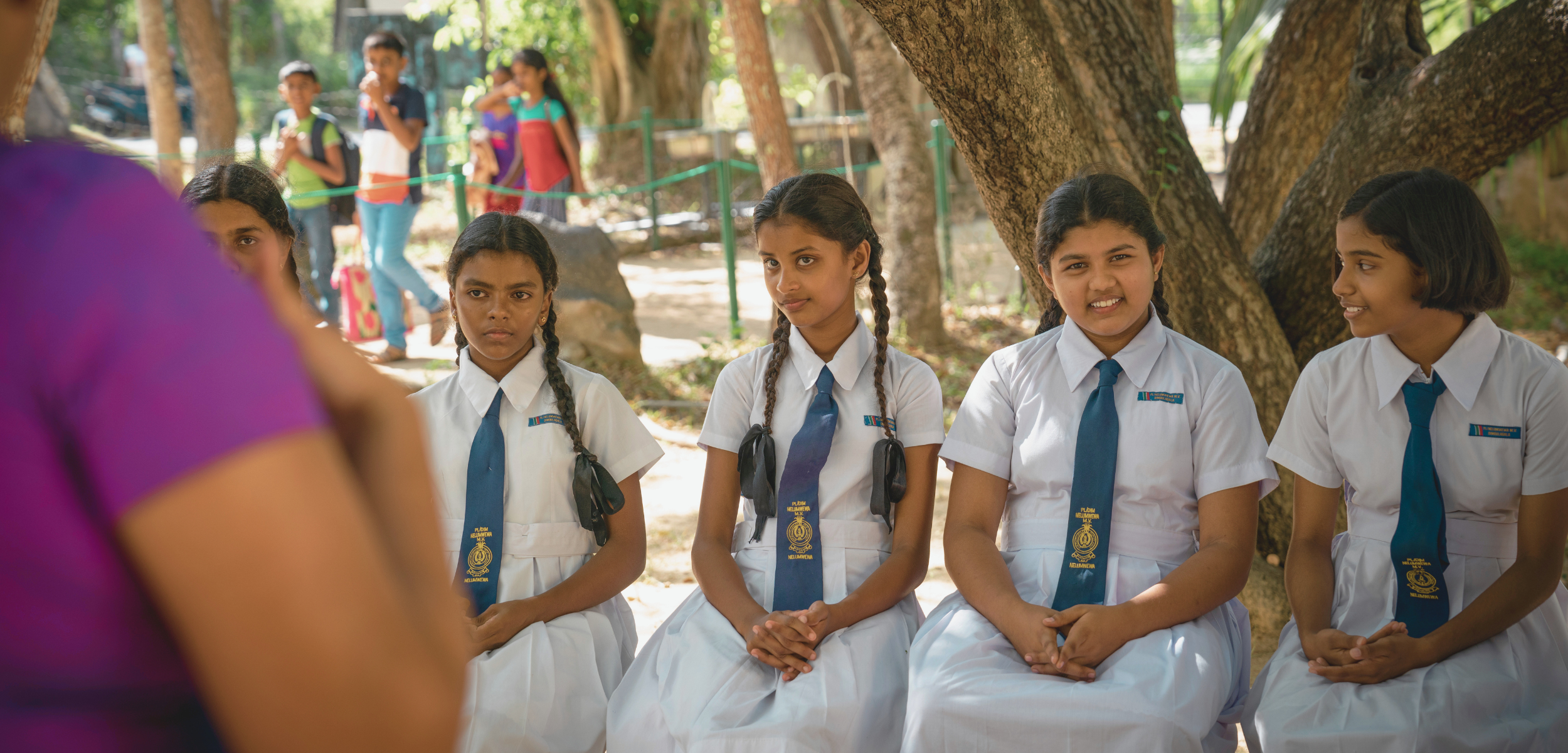
Bringing school counseling into the national spotlight
For decades, school counseling in Sri Lanka has often existed quietly in the background of the education system; important, but insufficiently prioritized.
This initiative changes that narrative.
The strengthening of School Counselling and Career Guidance (C2) Centers positions counselling and career guidance not as a peripheral or reactive service, but as an essential pillar of a child-centered education system. It recognizes that emotional wellbeing, psychosocial support and safe school environments are foundational to student development and learning outcomes.
For counseling teachers across Sri Lanka, this recognition carries deep significance. Many have long worked behind the scenes supporting students through some of the most difficult moments in their lives, often with limited resources and institutional support. The strengthening C2 Center initiative acknowledges the importance of their role while investing in the systems, structures and professional support needed to strengthen it further.
As Sri Lanka continues shaping the future of its education system, this initiative offers an important example of what holistic education can look like in practice.
Moving beyond academics alone
For too long, conversations around education success have been narrowly centered on grades, examinations and academic performance.
But every educator understands the reality inside classrooms: A child who feels overwhelmed, anxious, unsafe or emotionally unsupported cannot fully engage in learning.
Student wellbeing is not separate from education outcomes. It shapes them.
The strengthening C2 Center initiative recognizes this connection by placing emotional wellbeing, life skills development and trusted adult support at the center of the school experience. Through this collaboration, Room to Read in Sri Lanka is supporting the Ministry of Education in advancing a more holistic vision for education, one where students are not only expected to succeed academically but are also supported to navigate life’s challenges with resilience, confidence and hope.
This approach reflects Room to Read’s broader commitment to life skills and adolescent development programming, which emphasizes self-awareness, communication, decision-making, empathy and emotional resilience as critical foundations for long-term success.
Within schools, counseling teachers often become the first trusted adult a child turns to during moments of distress. Strengthening these systems, therefore, has implications far beyond individual counselling sessions. It contributes to:
- safer school environments,
- stronger referral pathways and student protection mechanisms,
- normalized conversations around emotional wellbeing,
- and, most importantly, ensuring more students feel seen, heard and supported.
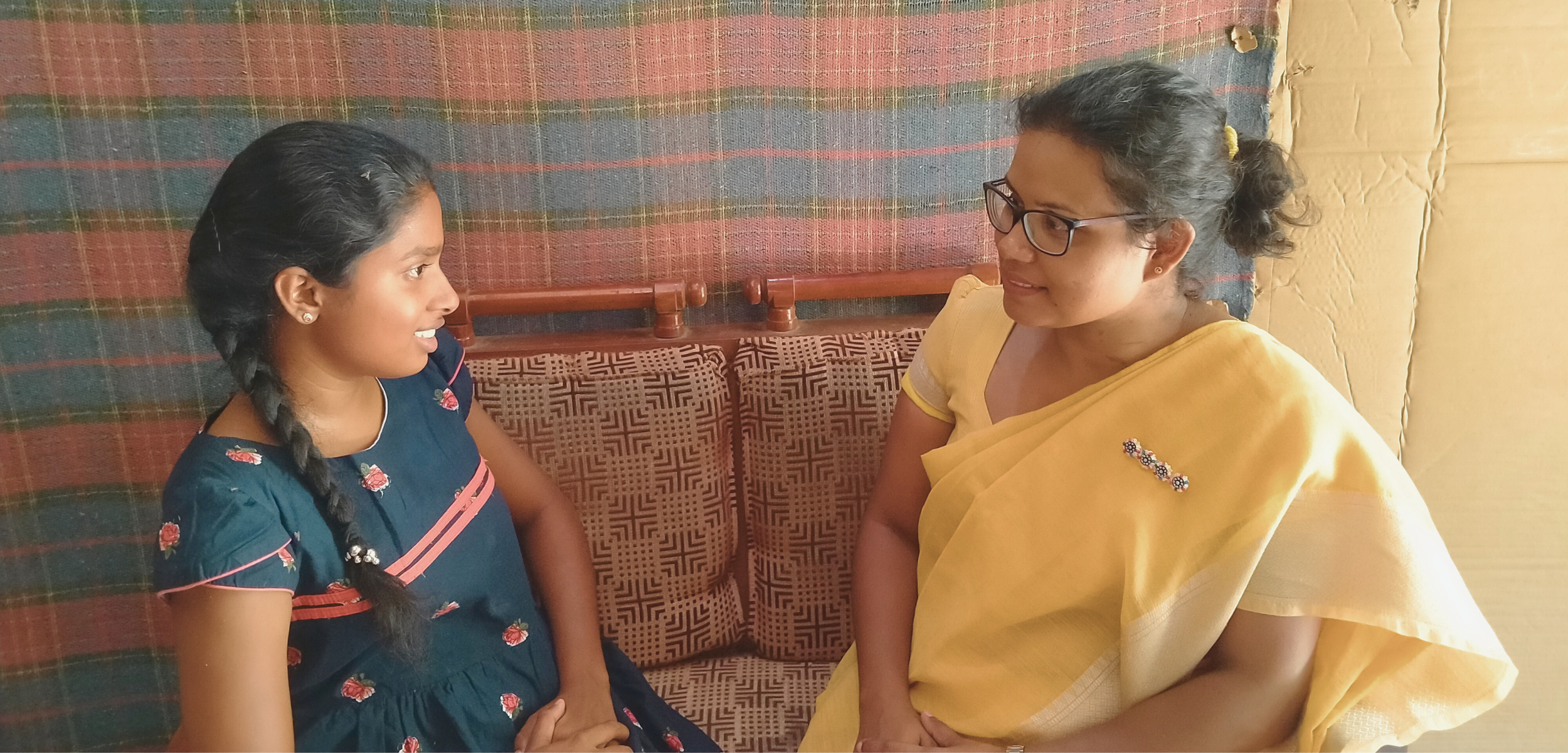
A partnership focused on systems change
What makes this initiative particularly significant is its system-strengthening approach.
Rather than functioning as a standalone project, the initiative is embedded within the national education structure through close collaboration with the Ministry of Education and National Institute of Education. This creates the foundation for long-term sustainability and institutional ownership.
The national launch itself reflected this shared commitment. Bringing together senior government representatives, education officials, school leaders and development partners under one platform demonstrated growing national recognition that student wellbeing must be prioritized as part of Sri Lanka’s broader education transformation agenda.
For Room to Read in Sri Lanka, the initiative also represents an important evolution in its longstanding partnership with the government.
For nearly two decades, Room to Read has worked alongside national and provincial education stakeholders to strengthen literacy, girls’ education and life skills outcomes for children across Sri Lanka. The launch of the strengthening C2 Center initiative builds on that foundation while expanding the organization’s contribution toward adolescent wellbeing and psychosocial support within schools.
At its core, this partnership demonstrates the power of collaborative action, not just with the Ministry of Education and National Institute of Education but also with 15 other government agencies, such as the National Child Protection Authority, Ministry of Health, National Women’s Bureau and more. Sustainable change cannot be achieved by a single institution alone. It requires government leadership, educator commitment, technical expertise and long-term partnerships working together toward a shared vision for children.
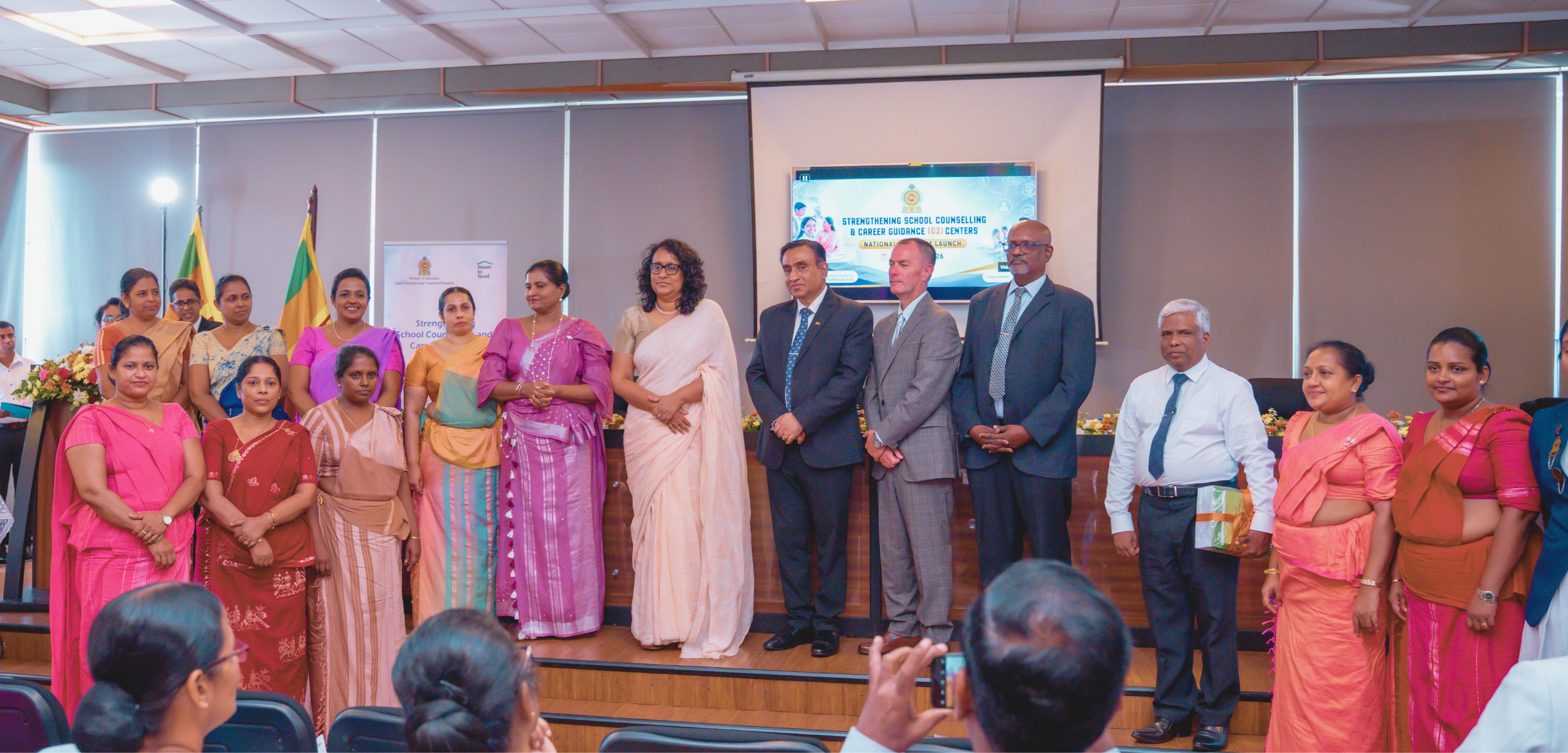
Looking ahead: Beyond the national program launch
The true impact of this initiative will not be measured only by the number of C2 Centers strengthened or teachers trained.
It will be reflected in:
- the student who finally feels safe enough to seek help,
- the adolescent who learns how to navigate conflict, pressure or self-doubt with confidence,
- and the school that becomes not only a place of academic instruction, but also a place of belonging, trust and care.
Perhaps the significance of this moment lies not only in the launch itself, but in what it represents for the future of education in Sri Lanka. It signals a gradual but important shift in how schools understand success, care and student development, recognizing that learning cannot be separated from wellbeing. In many ways, the strengthening of School Counseling and Career Guidance (C2) Centers is ultimately about creating school environments where young people feel supported as human beings first, and students second.

You might also be interested in...

Literacy interventions at scale: Building systems that deliver
Saktibrata Sen, Senior Director of Programming for Room to Read in India

Student wellbeing at scale
Ishika Millaniyage, Manager of Room to Read's Girls' Education Program in Sri Lanka
