
Before the first bell: Strengthening learning in the pre-primary years
December 30, 2025
By the time formal schooling begins, many learning gaps are already in place. Too many children around the world, especially those in historically low-income or ethnic minority communities, lack access to high-quality early learning opportunities. As a result, children often arrive at school unfamiliar with the language of instruction or basic classroom expectations.
These disparities leave them behind before Kindergarten or Grade 1 even start.
Room to Read believes in transforming education from the ground up, recognizing that foundational academic and social-emotional skills must begin early. We are now extending our proven literacy programming even earlier in a child's educational journey, helping the youngest learners build the foundation they need to thrive.
We ensure children have access to everything they need to get the most out of preschool: skilled teachers, well-equipped classrooms with books and learning materials, and opportunities to build foundational classroom skills and essential vocabulary. And by partnering with governments around the world, we can scale these approaches to help every child enter primary school ready to learn and succeed.
The pre-primary years: Our approach
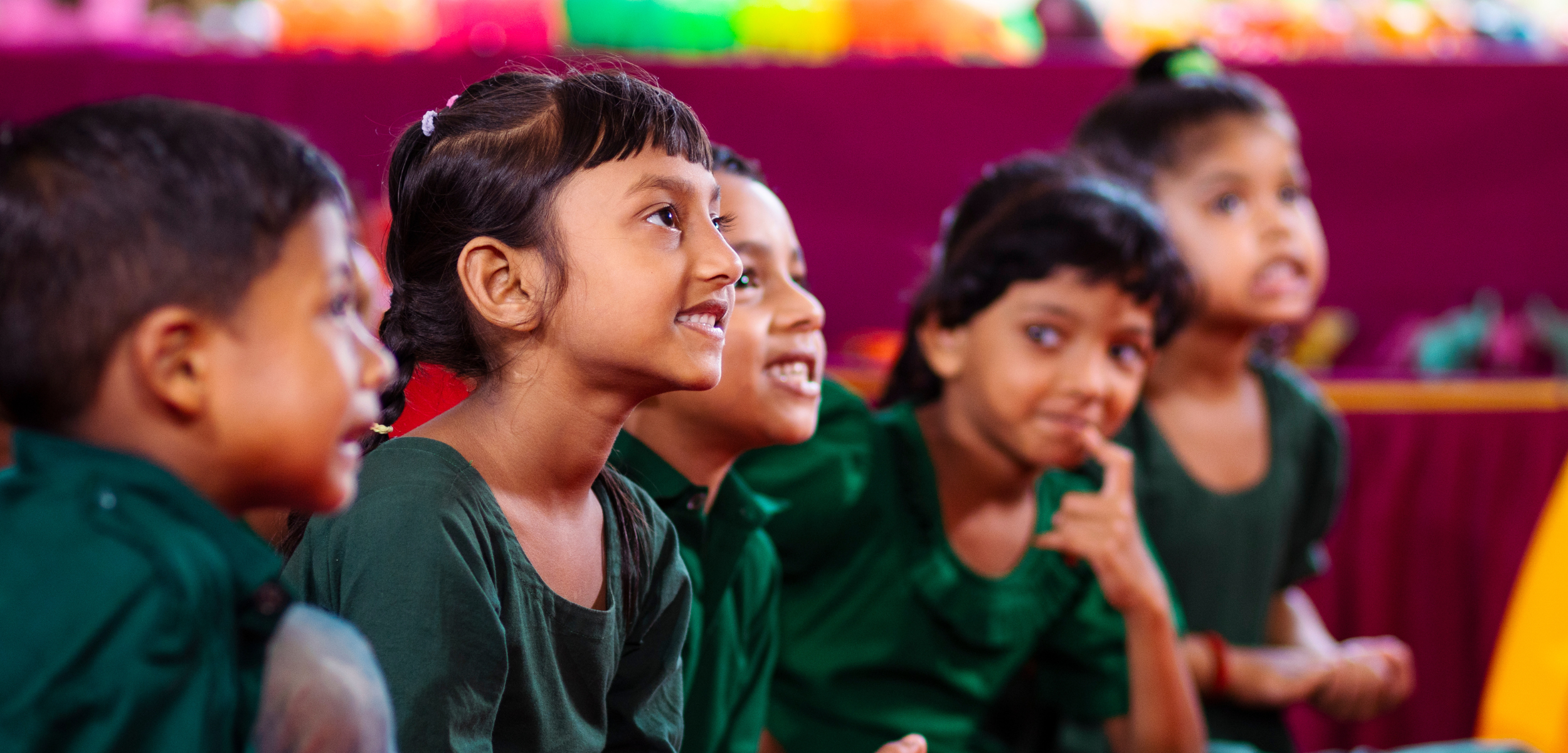
Our pre-primary approach cultivates play-based, child-centered learning that nurtures foundational literacy, numeracy, language and social-emotional skills.
Together with our local partners, we develop culturally responsive materials like storybooks, activity guides, teacher resources and more — making sure all are age-appropriate, aligned with national curricula and adapted for local languages and contexts. And through teacher training colleges and professional development workshops, we equip educators with the skills and knowledge they need to create engaging environments where the youngest learners are set up for success.
Robust evidence shows that the most impactful preschool programs share a common set of features. We integrate these evidence-based principles across our preschool initiatives, including:
- Thematic, child-led exploration that connects learning to children’s everyday experiences
- A balance of structured and free play embedded into daily classroom routines
- Hands-on, sensory-rich activities that support fine motor, language and cognitive development
- Dedicated play corners and space for free expression, encouraging creativity and independence
- Print-rich and language-rich environments that foster early literacy and oral language development
For example, in India, Room to Read is proud to be an early partner in the government-led Balvatika (meaning pre-primary) program. In Balvatika classrooms, weekly themes — such as “My Family,” “Fruits and Vegetables,” and “Community Helpers” — guide learning throughout the week. Each theme weaves together storytelling, songs, discussions, drawing and movement, helping children connect new ideas to their everyday lives. Daily activities include block building, puzzle play, clay modeling, chalk drawing and picture-reading games that strengthen fine motor skills, expand vocabulary and build early literacy abilities in joyful, age-appropriate ways.
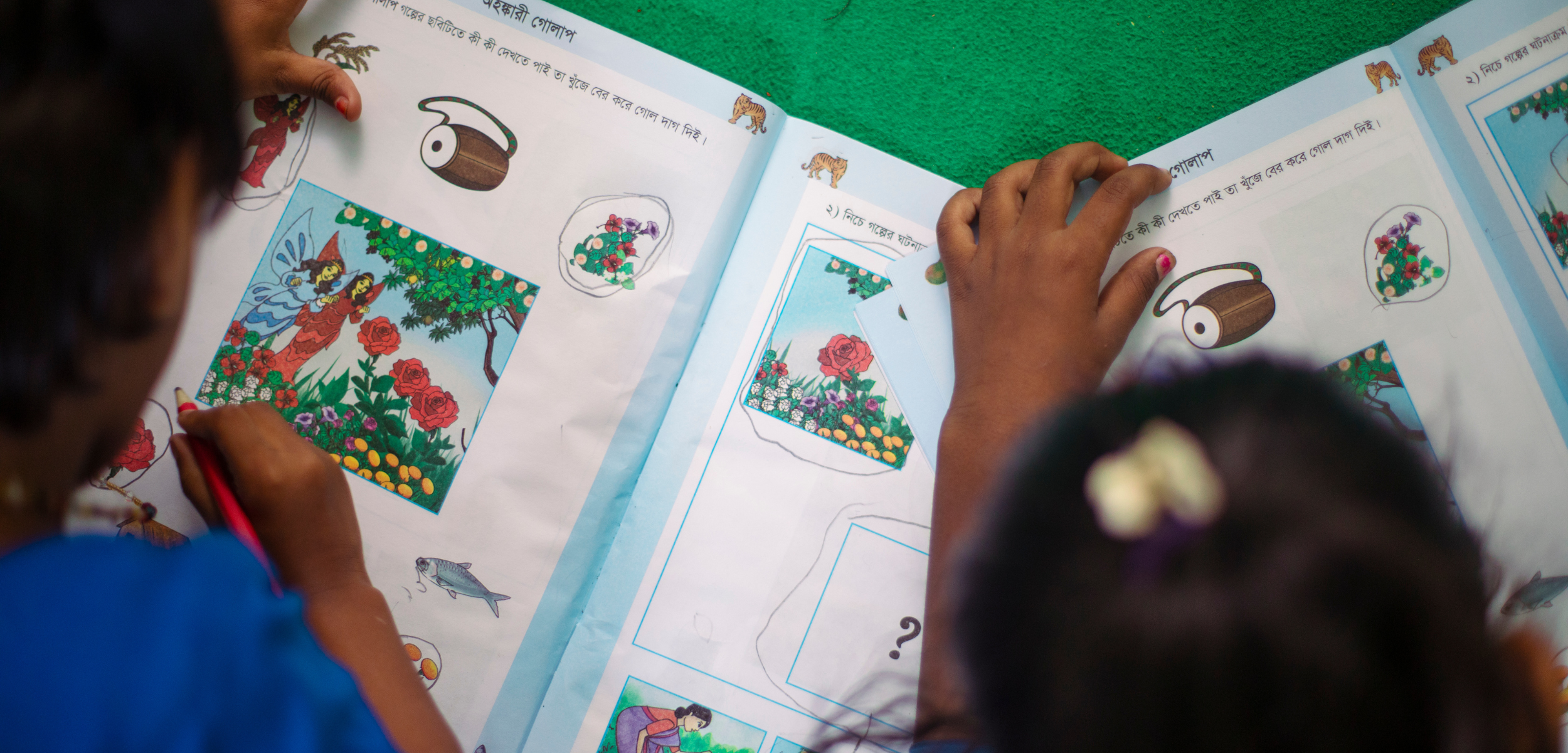
To support this initiative, we are sharing our expertise to review and revise localized pre-primary learning content and instructional guides to maximize the potential of these earliest learning spaces. This includes distributing our existing resources for early learners, such as wordless books like “A Hop, Skip and Jump,” and facilitating trainings to ensure that educators are prepared to lead interactive, joyful reading sessions with materials that foster early learning skills for pre-primary children.
As with all of Room to Read’s programs, we follow an evidence-driven approach: pilot, assess, then scale — ensuring our work fits into national education systems for lasting, widespread impact. Together with our partners, we are helping millions of children enter school prepared to succeed.
Interventions in the pre-primary years: Our global reach
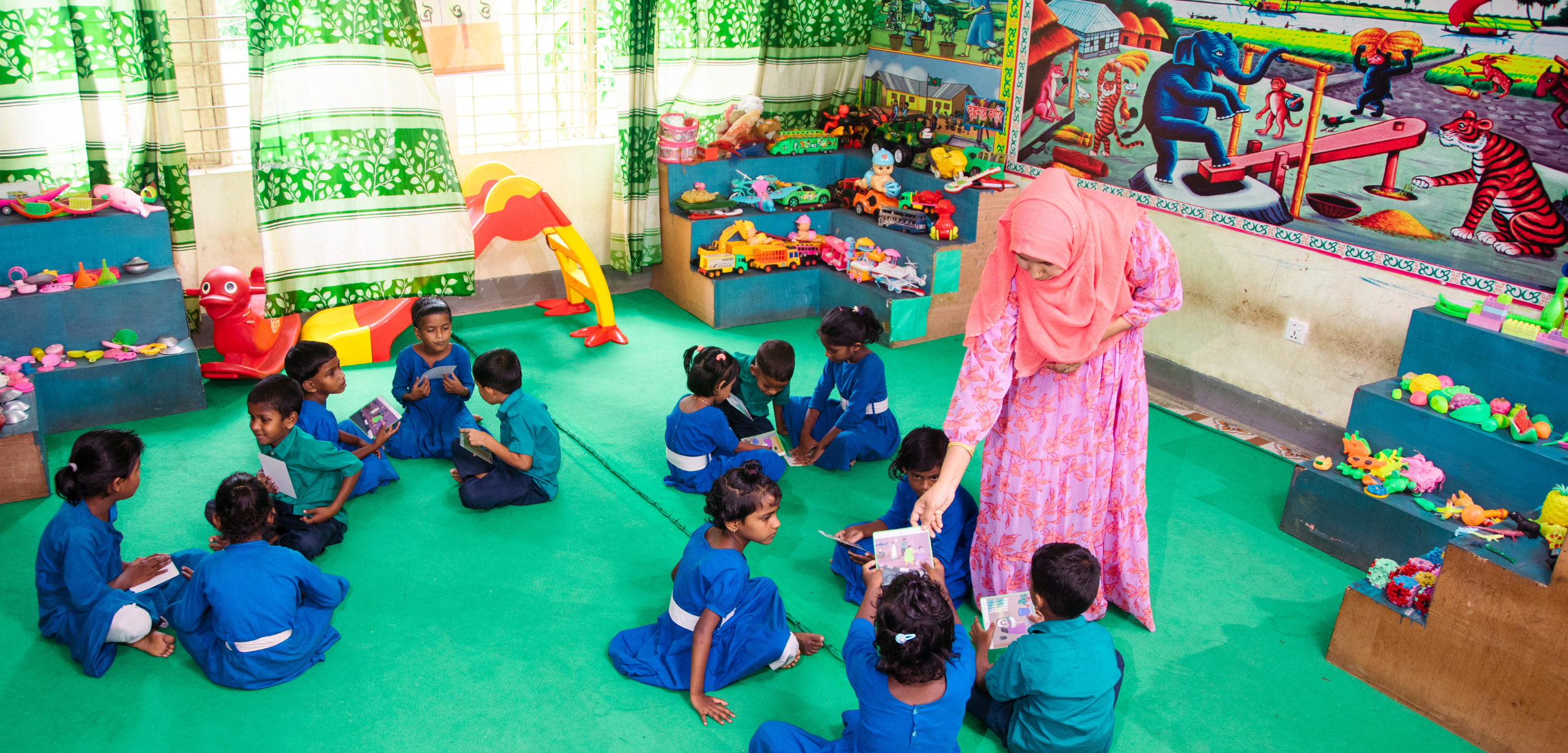
Governments around the world have seen how well our model works and increasingly seek our partnership. Across the globe, we are improving pre-primary education systems through our competencies in educator training and coaching and curriculum and content. The examples below reflect some of our most recent work in the pre-primary space, though they capture only a portion of our overall impact:
- Bangladesh: Room to Read is a member of the national pre-primary curriculum revision committee, through which we are providing technical input for curriculum development. As part of this work, ten of our titles have been integrated into the national pre-primary package, strengthening the quality of early learning content nationwide.
- Laos: In 2023, we published and distributed 51 children’s storybooks for pre-primary and early primary grades. After recently piloting a Room to Read-designed library course in Luang Prabang Teacher Training College, the government has approved to integrate our curriculum and content focused on managing high-quality children’s libraries as a formal subject within the Teacher Education Curricula for both pre-primary and primary education programs. The course will be rolled out to a growing number of Teacher Training Colleges across the country throughout the 2025-2026 academic year.
- Sri Lanka: Room to Read recently partnered with the Ministry of Education to pilot a pre-primary intervention in 40 preschools. In partnership with government trainers, Room to Read conducted capacity-building trainings with more than 90 pre-primary teachers across Tamil and Sinhala language contexts, benefiting more than an estimated 600 children.
- India: As an early partner in the government-led Balvatika initiative, Room to Read supported a 2025 pilot that trained 20 educators, benefiting approximately 200 pre-primary learners across Uttar Pradesh, paving the way for future rollout on a larger scale.
- Vietnam: Room to Read recently partnered with Vietnam’s Ministry of Education and Training to pilot a summer program supporting pre-primary children from ethnic minority communities, strengthening foundational Vietnamese language skills ahead of Grade 1.
Pre-primary years and a lifetime of learning
Pre-primary education is one of the highest-impact investments we can make, closing learning gaps before they widen in later grades. Our partnership-driven approach means high-quality pre-primary programming can benefit more children, more quickly — even across diverse countries and contexts.
When children arrive at school ready to learn, confident in their abilities, familiar with books and language, and equipped with foundational skills, they can shape their own educational journey from the very start. They enter schools not as students playing catch-up, but as learners prepared to succeed, with futures that are bright and unlimited.
You might also be interested in...


Room to Read's nonfiction children's book collection in Laos
Mahesh Pathirathna, Global Literacy Advisor, Room to Read’s Literacy Portfolio

Addressing linguistic complexity in Indian classrooms
Stuti Jain, Manager of Instructional Design and Structural Support