
Practicing self care: Life skills in action
September 15, 2026

By Chau Doan
Communication Manager
Room to Read in Vietnam
At 4:30 p.m., after a long day of classes, Nguyễn Lê Trúc Quỳnh hurries back to her dormitory to finish her English assignments and prepare for her evening plans with schoolmates. Few would imagine that this first-year English major at Vinh Long University of Technology Education was once a quiet, withdrawn girl who rarely spoke to others and struggled to make friends during her secondary school years.
More than seven years ago, when Quỳnh was in Grade 6, she joined Room to Read’s Girls’ Education Program. At the time, her family was facing significant financial hardship. Supporting the education of two daughters was already a challenge, and existing debts placed an even greater burden on her parents. For young Quỳnh, the possibility of continuing her education often felt uncertain.
Quỳnh recalls, “During my first interview with Room to Read, I was asked about my dream. Innocently, I answered that I wanted to become a singer. Looking back now, I’m still happy that I dared to dream so boldly.”
That simple answer marked the beginning of a journey that would span more than seven years. Financial support for school fees, uniforms and health insurance helped ease many of her family’s worries. Yet for Quỳnh, the most meaningful gift was not material support.
“The most valuable thing I received was care, and the feeling that there was always someone who believed in me and walked alongside me,” she shares.
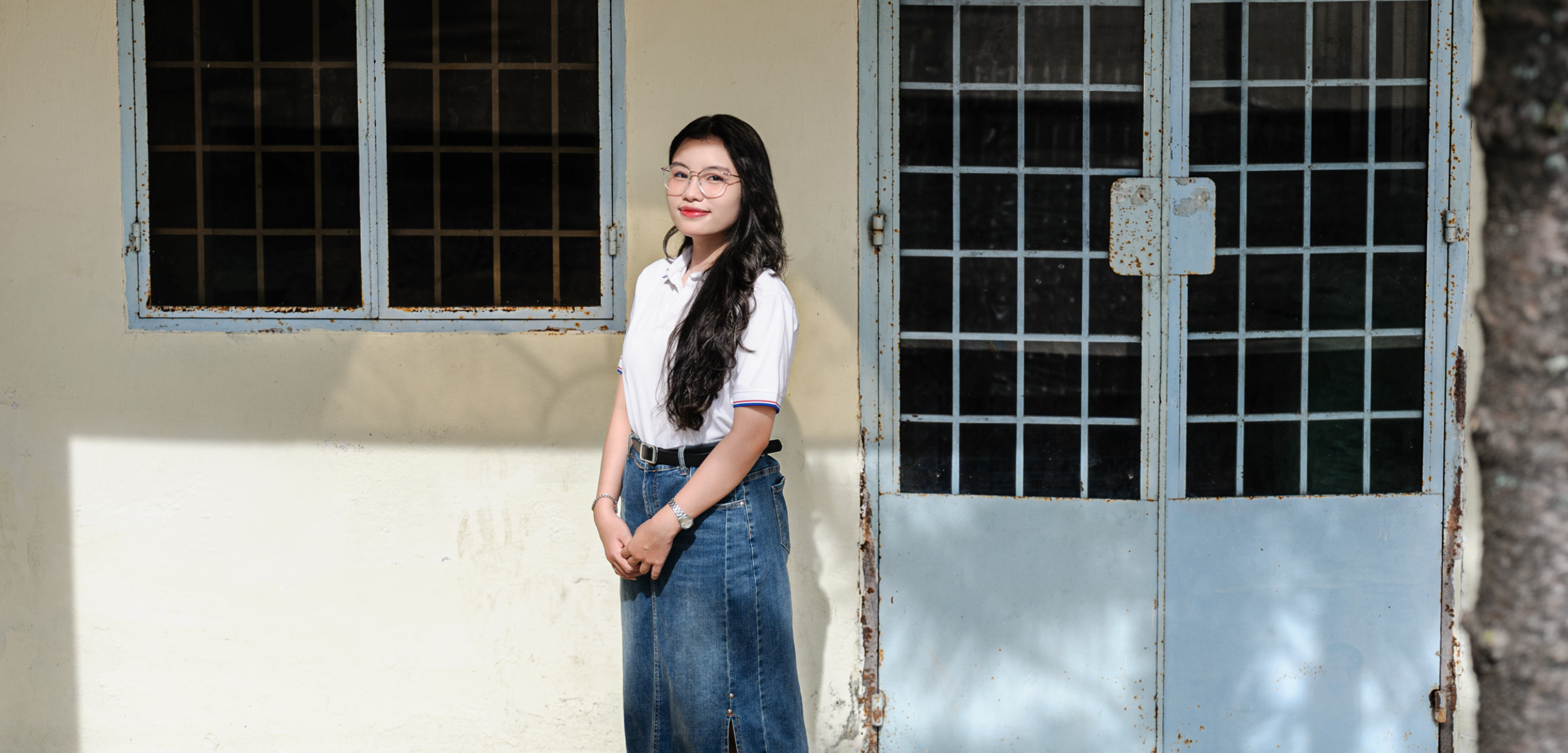
While financial assistance helped her stay in school, the life skills lessons provided by Room to Read opened the door to a different kind of journey: one of understanding herself, building resilience and learning the importance of practicing self care.
During her early secondary school years, Quỳnh found it difficult to navigate complex emotions, and her mental and emotional well-being began to suffer. Without the tools to manage these feelings, she isolated herself, avoided social interactions and rarely shared her emotions with those around her.
But through Room to Read life skills sessions, she learned to recognize her feelings, listen to herself and gradually open up to others. Conversations on key life skills like persistence, self-awareness and communication helped her understand that practicing self care can begin with simple actions: acknowledging how she feels, giving herself space to pause and finding healthy ways to cope with difficult emotions.
“I remember one day at school when something happened that made me very upset,” she shared. “Instead of dwelling on it, I recalled the life skills lessons. I stepped outside and took a moment to breathe. I could smell the ripening rice fields, hear the birds singing and the wind blowing. Suddenly, I felt so much lighter and calmer. I realized that I could nurture happiness within myself and find comfort in nature."
From a girl who carried many worries in silence, Quỳnh began learning how to find peace within herself. For her, practicing self care was not about making big changes. It was about noticing what she needed in difficult moments and giving herself permission to slow down, breathe and reconnect with what brought her comfort.
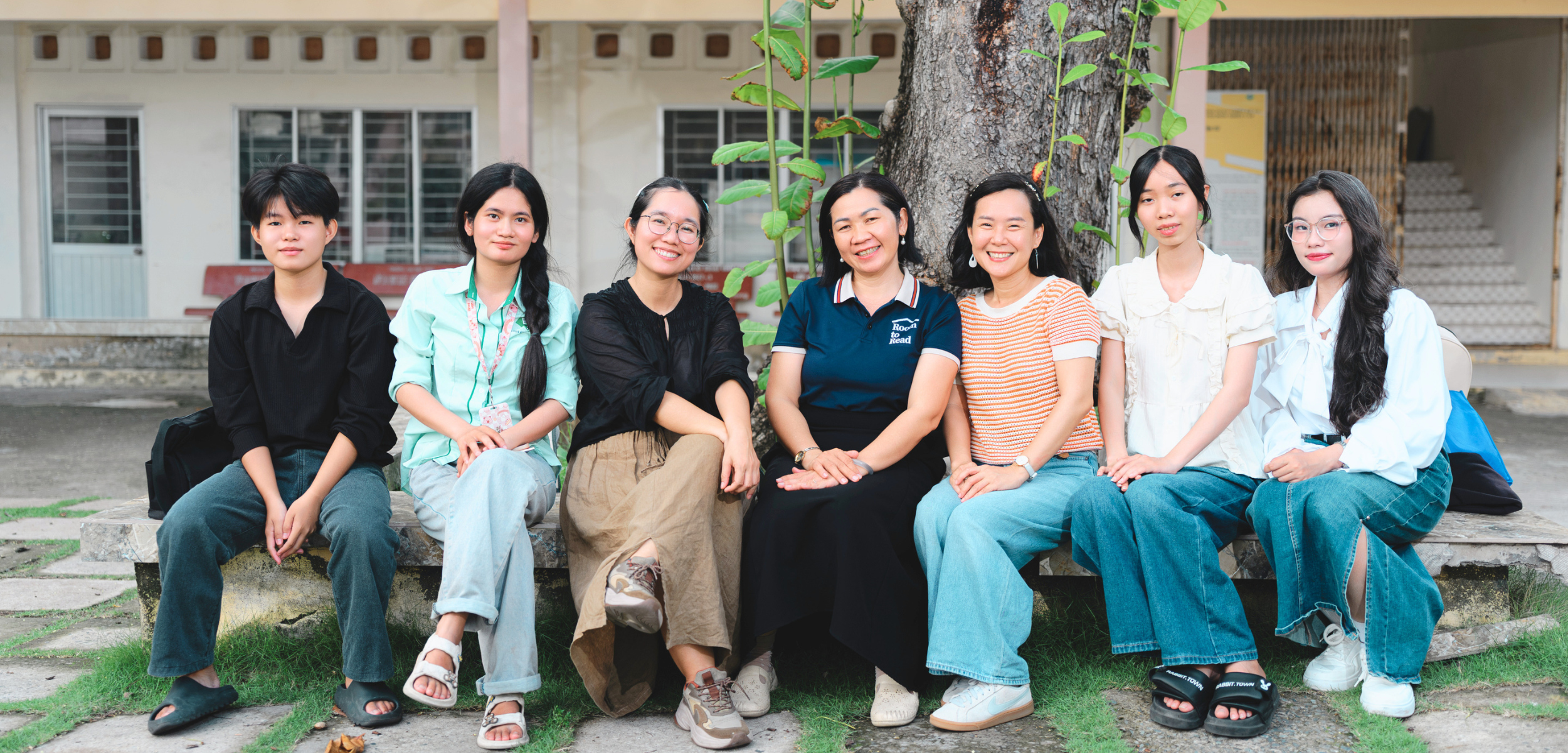
That experience became a turning point. Rather than suppressing challenging emotions, Quỳnh developed her own ways of practicing self care. Spending time in nature, pausing to breathe and allowing herself moments of reflection became simple yet powerful ways to help her regain balance.
Over time, she also began checking in with friends, starting conversations and building positive relationships. She discovered that listening is not simply about hearing words; it is about understanding the feelings and experiences that people may struggle to express.
Perhaps that is why, when asked during a life skills session what superpower she would most like to have, Quỳnh said she does not dream of flying or becoming extraordinarily strong. Instead, she said, “I want to understand every language in the world.”
This dream grew from her love of listening to people’s stories. Whenever she meets friends from different places and backgrounds, she wants to understand their words and their emotions — the experiences and perspectives behind the language they use. This passion eventually inspired her to pursue a degree in English, even though her educational path did not unfold exactly as she had originally planned.
Entering university brought new challenges. Many subjects were taught entirely in English, and the workload often felt overwhelming. Yet instead of giving up, Quỳnh chose perseverance. She expanded her vocabulary, watched cartoons in English, listened to English songs and read books to strengthen her language skills, little by little each day.
As she navigated university life, the lessons she learned about self-awareness and practicing self care continued to support her. Taking time to recognize her emotions, reflect on challenges and care for her own well-being gave Quỳnh tools she could carry with her into new and demanding environments.
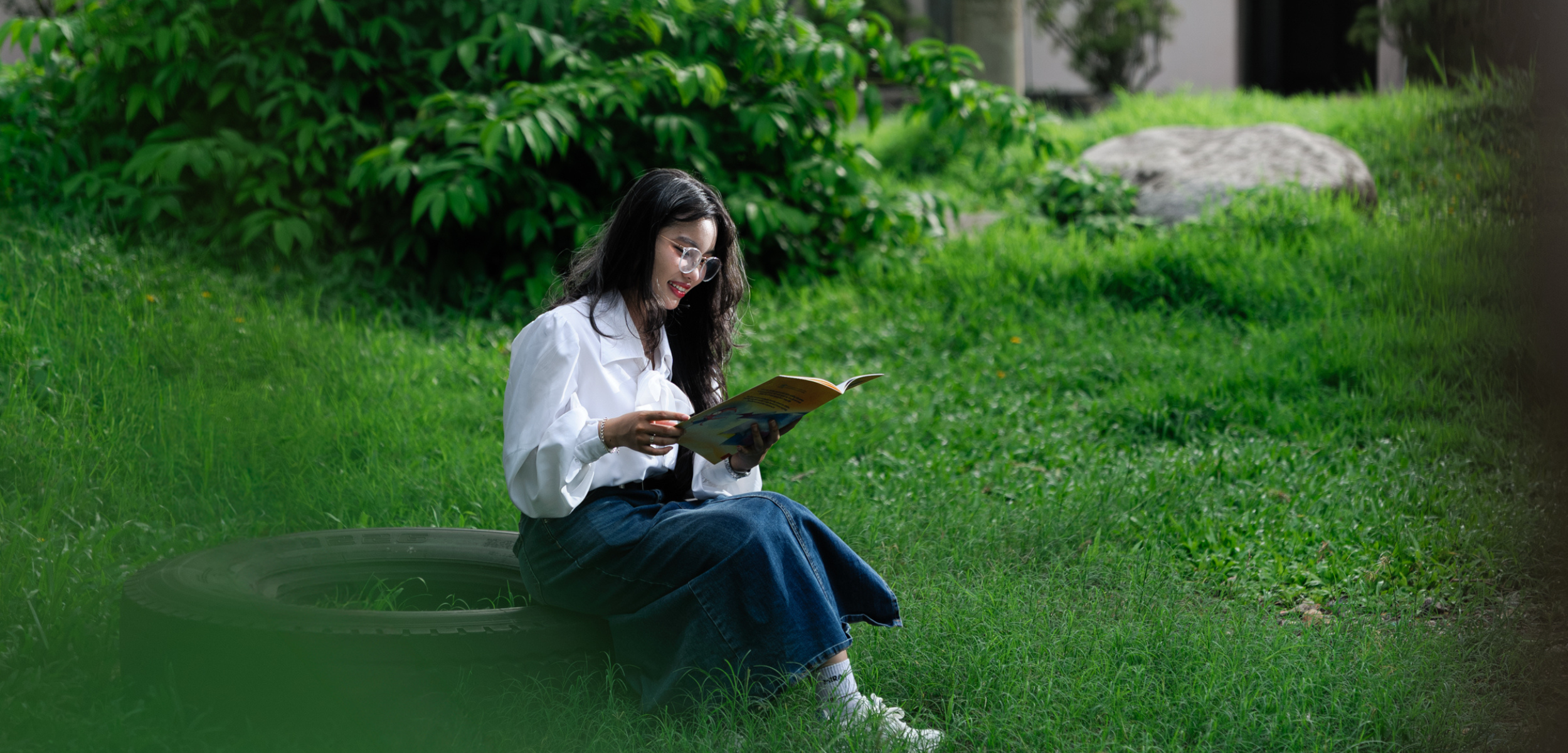
Perseverance is one of the qualities people often associate with Quỳnh. One experience she remembers clearly was the first time she stood before her entire school to share study strategies for literature.
“I didn’t think I had anything special to share. I was afraid of speaking badly and worried that nobody would want to listen,” she recalls.
Encouraged by her friends, Quỳnh wrote down her learning experiences, refined her ideas and practiced repeatedly. On the day of the presentation, she was still nervous, but she successfully delivered her speech.
“After that experience, I realized that I was capable of far more than I had imagined.”
This is one of the most important lessons Quỳnh believes Room to Read helped her discover: every person has value and every voice deserves to be heard.
Today, as a more confident and active university student, Quỳnh remains deeply grateful for the journey that has shaped her.
“When I was younger, I dreamed of becoming a singer, and I still love singing today. But now, more than anything, I hope to help others in the same way that Room to Read helped me.”
Looking back, what stays with Quỳnh most is not the scholarships or financial assistance she received, but the love and encouragement she experienced along the way. From her family, teachers and friends to the mentors and supporters within the program, each person helped her realize that she was never alone on her journey of growing up.
Through listening, self-reflection and practicing self care, the girl who once retreated into silence is gradually becoming a confident young adult — ready to care for herself, support others and share kindness with her community.
Discover our Gender Equality Portfolio
You might also be interested in...


Life skills for today
Abigail Spangler, Associate Director, Room to Read's Girls’ Education Portfolio

Life skills classes: Making room for empathy and understanding
Reema Shrestha, Director of Room to Read's Gender Equality Portfolio, South Asia

Measuring life skills among boys in India and Nepal
Dhiraj Anand, Associate Director, Research, Monitoring and Evaluation, Gender Equality Portfolio
