

By Daniel Oliver
Vice President
Room to Read's Research, Monitoring & Evaluation
In a Grade 2 classroom in Bangladesh, a young girl stands to read aloud. She stumbles on a word. The teacher doesn’t correct her sharply or move on. She just smiles, gives the student time and gently taps the word on the page as she helps her sound it out. The girl tries again. This time, she gets it.
Nothing dramatic happened. There aren’t results to report. But something important took place.
She tried.
She was supported.
She remained standing.
That’s dignity.
When we talk about improving literacy, we often focus on curriculum, teacher training or fluency rates. All of these matter. But literacy grows inside relationships. A child’s ability to attempt a difficult word, raise a hand or offer an interpretation depends on whether they feel safe, respected and capable.
Over the past several years, we have been exploring how dignity shows up across our programs, from early grade literacy to adolescent life skills. And rather than ask whether our programs create dignity, we’ve asked a quieter question: Where do we see dignity reinforced? How do learners describe themselves? And how does that evolve over time?
The answers are reassuring and humbling.
Safety comes first
In early grade classrooms across a range of our operating contexts, over 80 percent of classrooms were observed to be positive and encouraging environments. In nearly 95 percent of lessons, teachers offered respectful feedback. Negative interactions were rare.
These numbers point to something simple but powerful: Children are learning to read in emotionally safe spaces. That matters because reading is vulnerable work. A child decoding a new word is exposing uncertainty. A child answering a question in front of their class risks being wrong. If the classroom feels unpredictable or punitive, children withdraw.
Safety isn’t guaranteed. Even in calm, well-run classrooms, some children hesitate while others dominate. Inclusion can slip in small, almost invisible ways. And yet, across contexts, the broader pattern holds. When classrooms feel emotionally safe, children are more willing to take risks, participate and try again.
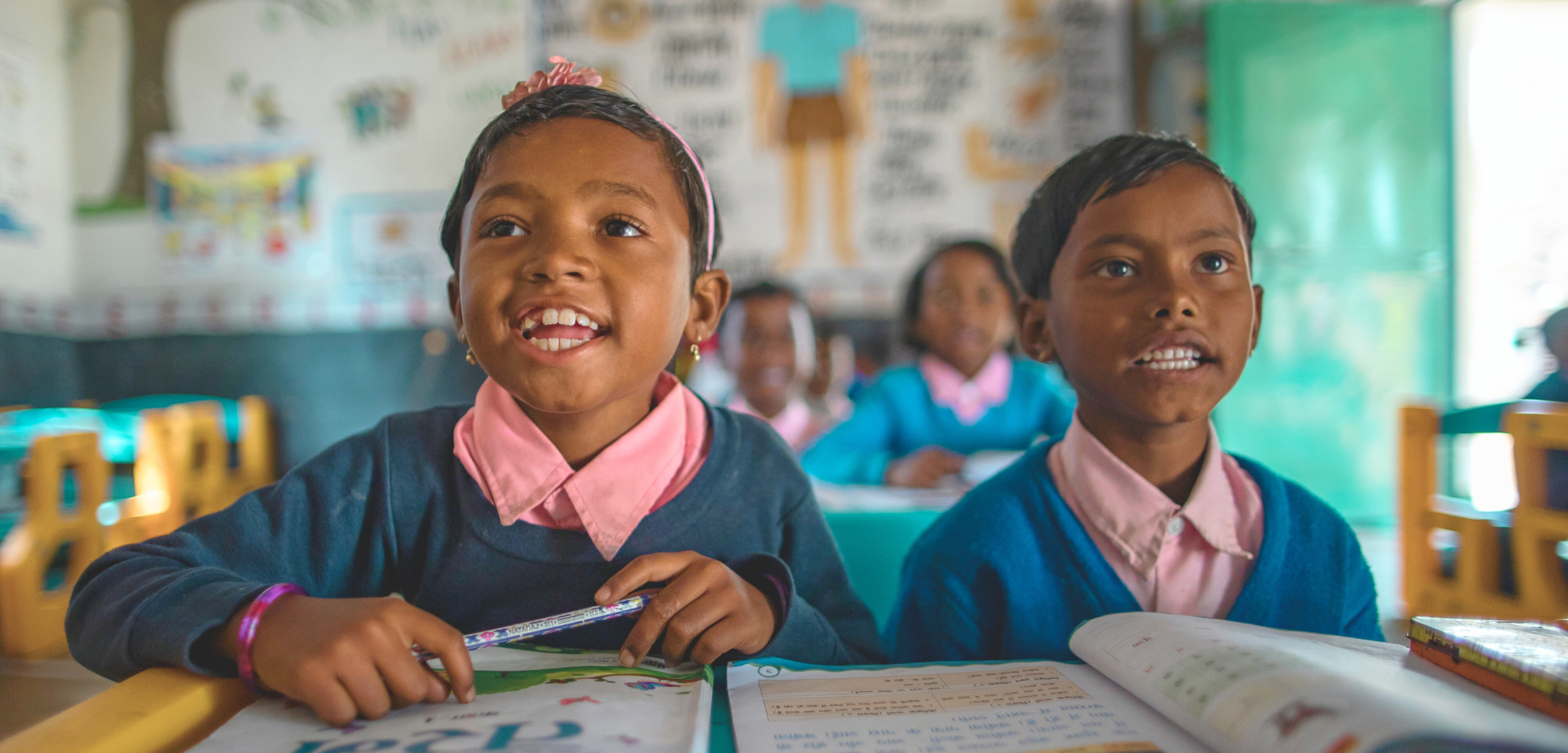
Voice begins early
Dignity is also visible in who gets to speak.
In Nepal, more than 90 percent of early grade classrooms we observed included students reading aloud or responding actively to teachers. In India, over 80 percent of teachers created opportunities for students to ask questions or share ideas. These moments may seem small, but they send a message. “Your voice belongs here!”
As children grow older, voice becomes identity.
When we compare girls who participated in Room to Read programs with those who did not, the differences are present but often modest. In Tanzania, for example, 68 percent of participants agreed with the statement “I love everything about myself,” compared with 67 percent of girls in a comparison group. In other countries, some responses favor participants and others do not.
We expected to see larger differences. In most cases, we didn’t. The takeaway is that dignity doesn’t suddenly arrive because of a program. It isn’t injected from the outside. Girls’ identity is shaped over years by families, peers, teachers and social norms.
What programs can do is reinforce it. They can protect it from erosion. They can create spaces where identity is affirmed rather than questioned, where voice is invited rather than dismissed. Over time, that reinforcement matters.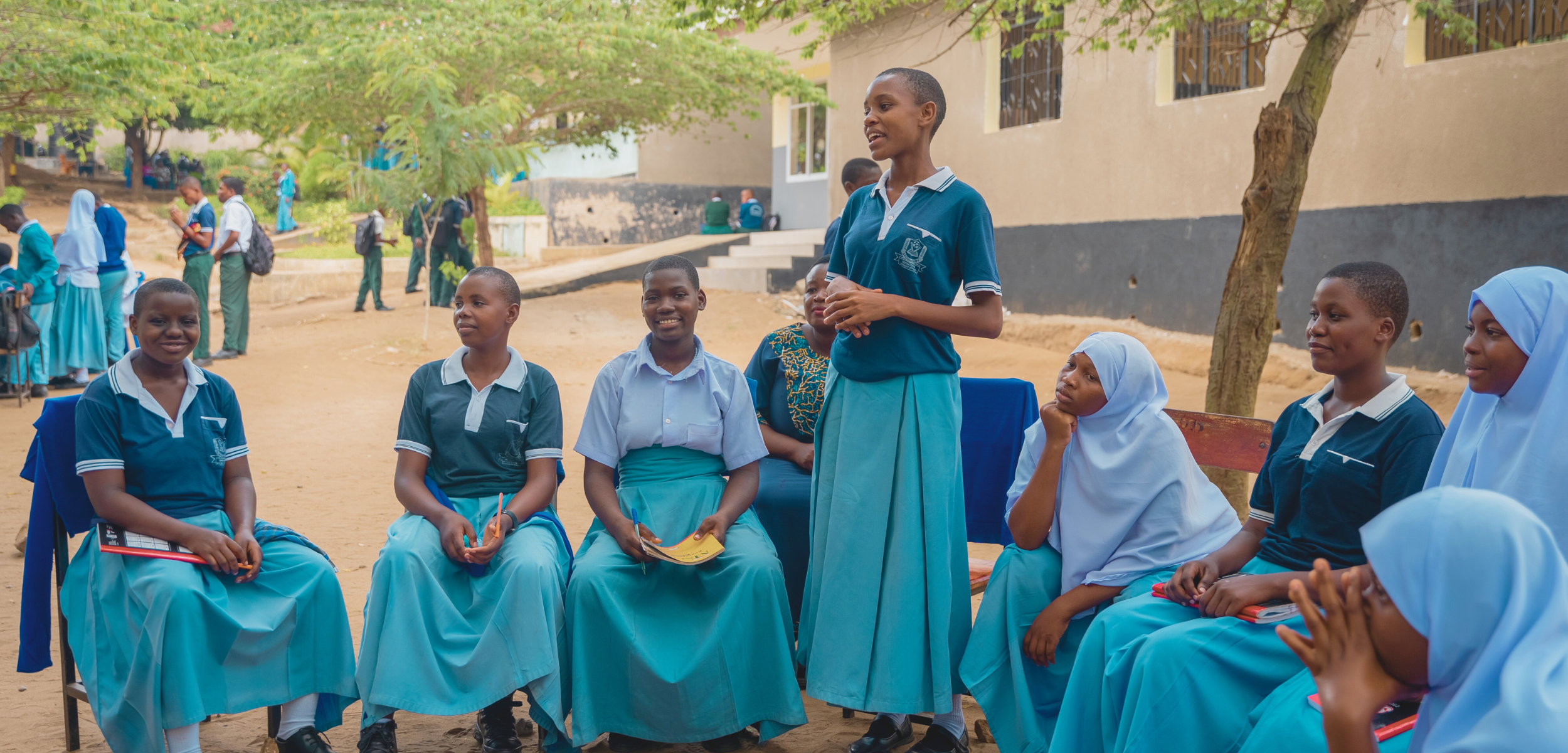
Confidence is often already there
Last October in Pakistan, we administered a child-friendly self-esteem scale to more than 500 primary school students. Eighty-eight percent fell within the normal range, indicating typical levels of self-esteem for children their age, while only 1 percent scored low. Students from urban communities tended to report slightly higher confidence than students from rural communities. Children whose caregivers were literate often showed stronger self-worth as they got older.
Across adolescent girls in multiple countries, self-perception is similarly strong. This might sound surprising. It’s often assumed that children in the Global South lack confidence. The data suggest something more nuanced. Many children already possess a sense of worth.
Programs do not create that worth. But, they can help protect it, strengthen it and prevent it from being eroded.
Representation is complicated
Dignity is also shaped by whether learners see themselves reflected in what they read and discuss. In early grade classrooms, read-aloud routines invite children to explore emotions, motivations and choices. Teachers ask questions like, “How do you think this character feels?” or “What would you do?” Stories reflect different communities and gender roles. Reading becomes not just decoding, but human connection.
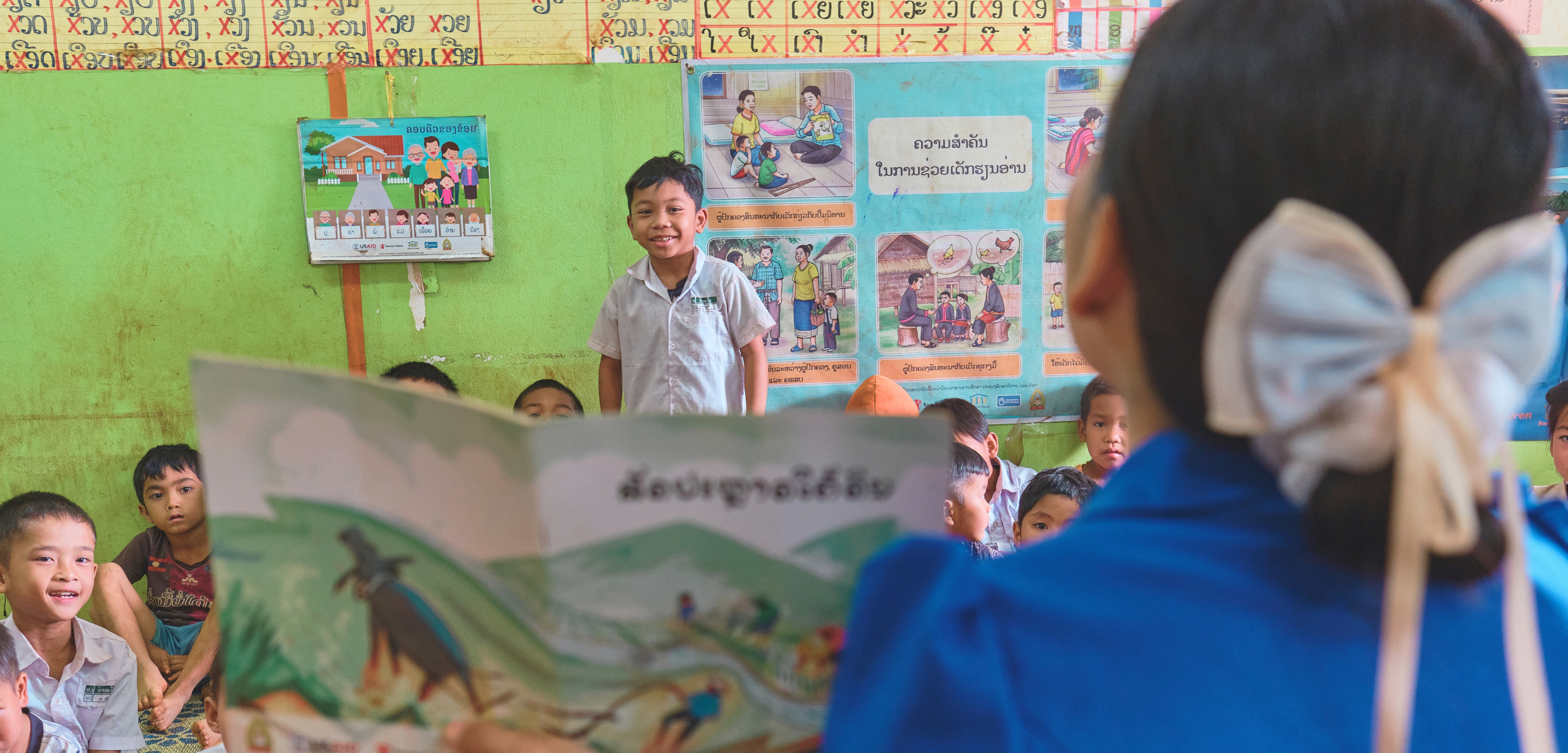
But identity doesn’t always look the same everywhere. When asked whether “Feeling proud about yourself is a bad thing,” adolescent girls responded differently depending on where they lived. In Bangladesh, about one in three agreed. In Laos, it was closer to one in seven. The contrast is important. Ideas about pride and humility are not universal. They’re learned. Dignity must be understood within those cultural frames. A girl who hesitates to claim pride may not lack confidence. She may be expressing it differently. What signals confidence in one context may signal arrogance in another.
Over time, agency becomes visible
Perhaps the most powerful evidence appears later. Five years after participating in our Girls’ Education Program, nearly 80 percent of surveyed alumnae had completed higher education. About 65 percent were working or enrolled in further study. Nearly 22 percent had started their own business.
Over time, something builds. Agency matures. The girl who once stood hesitantly in a Grade 2 classroom may later enroll in university, apply for a job or launch a business. Not because a program alone transformed her, but because the environments around her reinforced her sense of capability and self-worth.
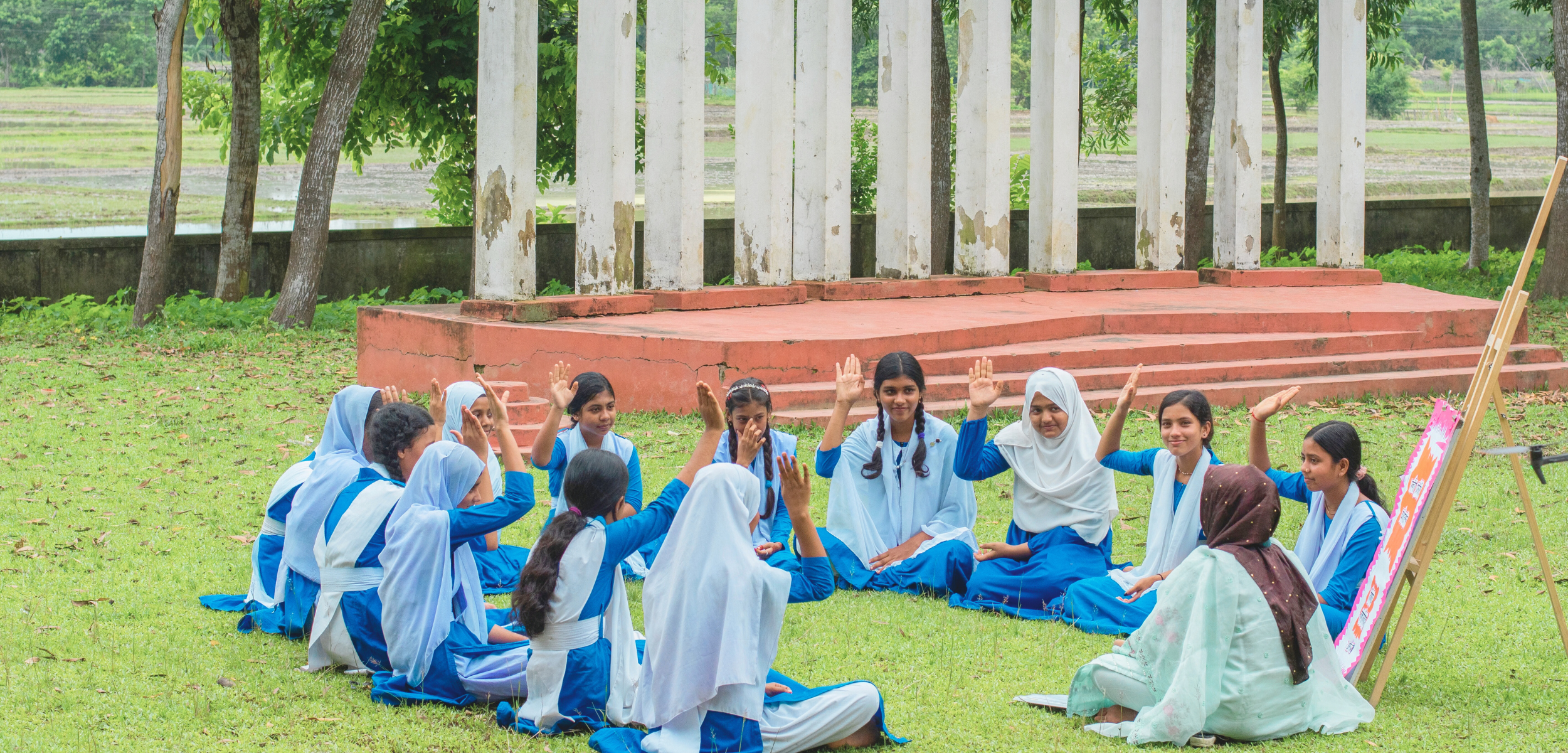
Dignity is reinforced, not manufactured
Step back and you begin to see the story repeat itself:
- In early grades, it looks like a child feeling safe enough to try.
- In adolescence, it looks like a young woman believing her voice matters.
- As a young adult, it looks like the confidence to pursue higher education, find a job or build something of her own.
At every stage, the effects are incremental. Program and comparison differences can be modest. Context matters. Culture matters. Family background plays a role. But when schools are intentionally designed to be respectful, participatory and inclusive, dignity is reinforced. And that reinforcement is powerful. Because literacy is not just about decoding words. It’s about believing you belong in the story.
Discover Room to Read's Unique Approach
You might also be interested in...

Student wellbeing at scale
Ishika Millaniyage, Manager of Room to Read's Girls' Education Program in Sri Lanka

I see me, I see you: Why diverse children’s books belong in every child’s hands
Janet Pagliuca, Associate Manager, Design & Illustration

Life skills classes: Making room for empathy and understanding
Reema Shrestha, Director of Room to Read's Gender Equality Portfolio, South Asia

Why are libraries important to a community: A Room to Read expert explains
Quynh Le, Global Literacy Manager

The healing power of books: Riyan finds refuge in reading
Nistha Shrestha, Senior Officer, Communications, Room to Read in Nepal