
Over the decades, Room to Read has become a trusted partner to Vietnam’s Ministry of Education and Training (MoET). Our Literacy Program and Girls’ Education Program are recognized as the most affordable and scalable interventions that improve educational outcomes. This foundational work is essential in addressing — and mitigating — recent learning losses, including poor reading habits and disproportionate dropout rates for girls.

Vietnam
Similar to nearby countries in the region, Vietnam’s not-so-distant history is rife with challenges and instability following a century of French colonial rule, driving divisions and inequities affecting social and economic systems that have been challenging to fully overcome. Only a decade after Vietnam’s independence, the country was divided and caught in widespread conflict during the Vietnam War from 1955–1975, which left many Vietnamese people displaced and the country’s infrastructure reeling. Today, Vietnam is still facing complex challenges to achieving long-term stability and societal progress, including high levels of vulnerability to climate change and drastic economic shifts that are negatively affecting families’ abilities to invest in their children’s education. Historical context
After the war ended in the 1970s and Vietnam was reunified under Communist rule, the country continued to face challenges as it worked to rebuild itself and establish its identity. Years of economic turmoil, social unrest, and international isolation followed, with a disrupted education system working to catch up to the needs of children across the country. In 1986, Vietnam implemented economic reforms known as Doi Moi, which gradually opened up the country’s economy to foreign investment and market forces. These reforms boosted economic growth and improved living standards for many people across Vietnam.
In recent years, Vietnam has continued to experience rapid economic growth and development, becoming an important manufacturing hub and a major player in the global economy. These positive effects of these efforts have also been reflected in education, as Vietnam achieved universal primary education in the early 2000s, and improved secondary school enrollment rates above 80 percent.
While Vietnam has become a success story in the region in many regards, longstanding barriers to quality education, such as income inequality, social unrest, poor habits of reading and growing environmental concerns, continue to threaten the futures of too many children and adolescents. 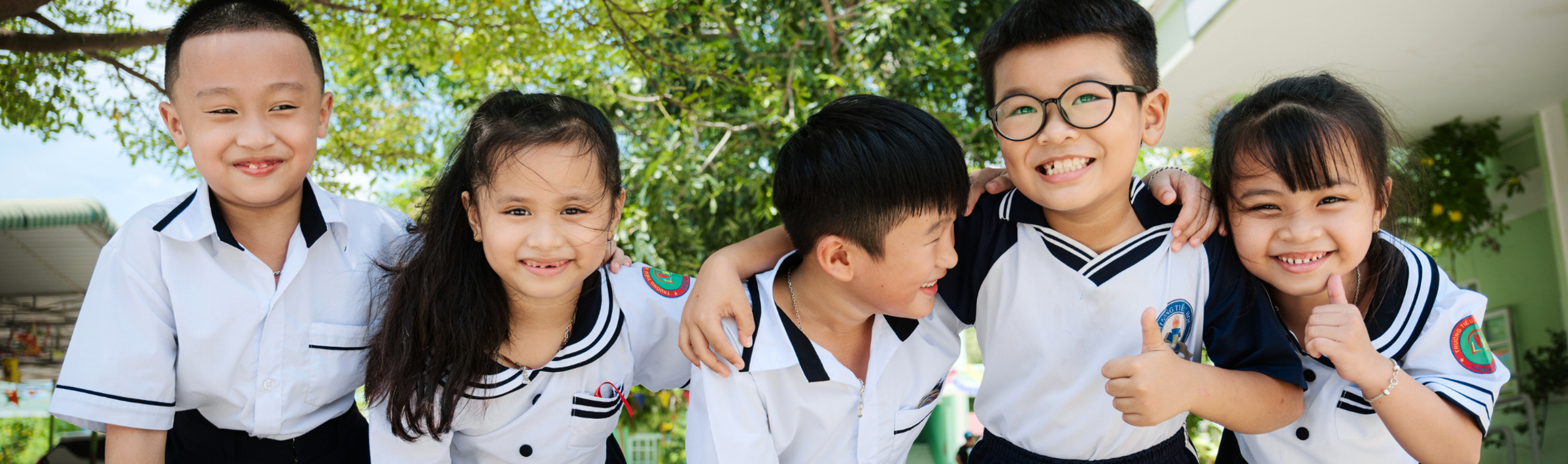
Current learning challenges
One of the main areas of concern is the persistent disparities in access and quality between rural and urban areas, and among different socioeconomic groups. While enrollment and completion rates have increased at the primary level, many children in rural regions, especially those from marginalized communities, still lack access to quality education — especially children who speak a different dialect at home than the one taught at school. As a result, children in these areas often demonstrate lower learning outcomes. UNICEF found that children from the wealthiest families have scored 13 percentage points higher in foundational reading skills than children from the poorest families; that 85 percent of children from the wealthiest families have foundational numeracy skills, compared to 55 percent of children from the poorest families; and there is substantial differences in foundational learning skills by ethnicity, with an estimated 50 percentage point gap between children from ethnic minorities and their peers.
Additionally, the focus on memorization and examinations rather than true skills-building continues to hinder the development of critical thinking and problem-solving abilities among early learners. A lack of overall quantity and preparedness among teachers is also compounding these challenges, compromising the quality of instruction and limiting opportunities for students to receive personalized attention.
In secondary school, especially in the upper levels, school completion rates notably drop, from an average of 87 percent in primary school to 59 percent in upper secondary school, with students from the poorest households and those living in rural areas the least likely to graduate secondary school.
For girls, the challenges they might face that are likely to pull them from school, including early marriage, domestic pressures and economic strains, are growing and pose severe threats to their learning and life outcomes. Particularly in Vietnam, effects associated with climate-related disasters pose acute risks to the life outlooks of girls and women.
Vietnam consistently ranks among the leading countries most affected by climate change and likely to experience climate-induced disasters, so there is an urgent need for youth, especially girls, to be informed of climate-related risks and to develop essential tools to navigate climate-induced challenges. As instances of climate volatility become increasingly common, girls and women in Vietnam will experience disproportionate and growing risks to access to essential resources like healthcare, food, and water, while becoming more exposed to displacement, violence, and loss of their education.
The Latest from Vietnam

The story of Sam Nang, in her final year of our Girls' Education Program
Chau Doan, Communication Manager, Room to Read in Vietnam

"I often ask myself: What would happen if every child had the chance to experience both Room to Read programs, as I did?"
Nguyễn Thị Ý Minh, Graduate of Room to Read's programs

In a residential school in Vietnam, children find comfort in evening visits to the library
Chau Doan, Communication Manager, Room to Read in Vietnam

Small steps, big dreams: Hằng’s journey from village roads to the track
Chau Doan, Communication Manager, Room to Read in Vietnam

Seeds of continuity: A Room to Read alumna returns to the classroom
Chau Doan, Communication Manager, Room to Read in Vietnam

Join Ms. Quyen for a lesson on climate change — and its impact on gender inequalities

Persevering in the face of adversity: Meet Trang from She Creates Change

"When we create something tangible for the students, that’s what love is."

The fragrant scent of tea leaves beside an open book
Chau Doan, Communication Manager, Room to Read in Vietnam

Lo Diem Thuy: The book-loving girl with far-reaching dreams
Chau Doan, Communication Manager, Room to Read in Vietnam